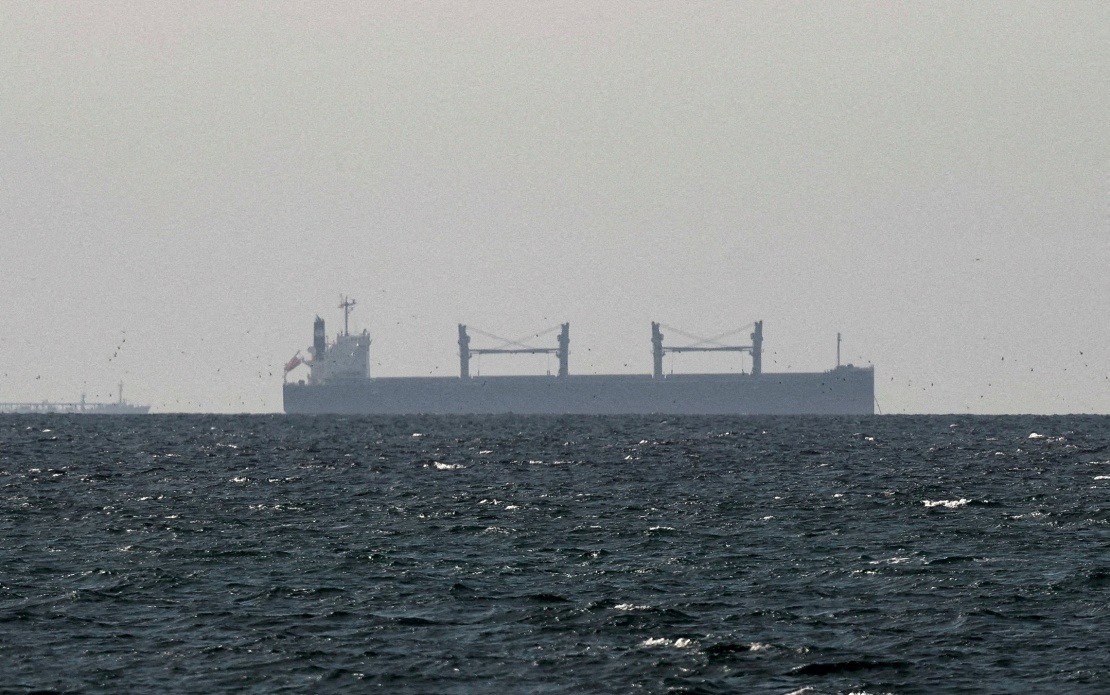
Iran's Islamic Revolutionary Guard Corps asserted on Friday that two oil tankers caught fire and sustained damage after striking mines while traversing the southern Strait of Hormuz, according to statements relayed through Tehran's state media outlets. The military branch did not release the identities of the vessels involved, nor did it disclose information about potential casualties, the flags under which the ships sailed, or their ownership details. Independent sources have not yet corroborated these claims, leaving questions about the incident's actual scope and consequences.
According to the IRGC's official statement transmitted via Iran's Fars News Agency, the military alleged that American intelligence services had deliberately steered the tankers into the dangerous waters earlier that same day. This assertion reflects deepening accusations between Washington and Tehran regarding intentional escalation and strategic manipulation of maritime traffic in one of the world's most vital shipping corridors. The claim underscores the information warfare dimension of current regional hostilities, where each side interprets the other's actions through a lens of deliberate provocation.
The IRGC issued a stark warning that the Strait of Hormuz had become "extremely unsafe" and declared it "completely closed" for normal commercial operations. The military announced that regional exports of petroleum, natural gas, and chemical fertilisers would remain disrupted until American military activities in the area ceased. This declaration effectively weaponised control of one of global commerce's most essential arteries, using shipping safety as both a justification for closure and a negotiating tool in broader regional power dynamics.
Commercial shipping operators worldwide received warnings from the Iranian military to avoid entering the contested waters entirely, with explicit threats that vessels attempting passage risked catastrophic damage and loss of crew lives. Such advisories create genuine dilemmas for international maritime companies, forcing difficult decisions about routing, insurance, and operational costs. Even unconfirmed claims of mines or attacks elevate insurance premiums substantially and may force ships to take longer, more expensive alternative routes around Africa—a decision that ripples through global supply chains and consumer prices.
The Strait of Hormuz functions as perhaps the world's most strategically significant maritime chokepoint, serving as the sole passage connecting the enclosed Persian Gulf to international waters via the Gulf of Oman and Arabian Sea. Approximately one-third of global seaborne traded oil and a substantial portion of liquefied natural gas exports transit through these narrow waters annually. Any genuine disruption to traffic through the strait immediately threatens energy security for nations across Asia, Europe, and beyond, making incidents here far more consequential than similar events in less critical waterways.
For Southeast Asian economies particularly, disruptions to Hormuz traffic carry acute implications. Malaysia, Singapore, Indonesia, and Thailand depend heavily on stable energy imports and the maintenance of predictable global energy prices. Regional refineries and petrochemical industries calculate their economics based on assumptions about uninterrupted supply flows. Supply shocks triggered by Hormuz incidents translate into increased fuel costs that ultimately affect transportation, electricity generation, manufacturing competitiveness, and consumer prices across the region.
Regional tensions have intensified considerably around the strait despite international efforts to establish stability. The United States and Iran continue engaging in tit-for-tat military and intelligence operations despite Pakistan reportedly brokering a memorandum of understanding between the parties last month intended to conclude hostilities and establish durable peace arrangements. The apparent ineffectiveness of this agreement, or its limited scope, has allowed confrontations to persist and even escalate, suggesting that diplomatic initiatives have failed to address the underlying strategic competition between the regional and global powers.
The pattern of unverified or disputed incidents in the Strait of Hormuz creates persistent uncertainty for international commerce. Maritime insurers struggle to properly price risk when the frequency and severity of threats remain ambiguous and claims lack independent verification. This uncertainty itself functions as a destabilising force, encouraging some shipping to avoid the route entirely even during periods of relative calm, thus reducing trade efficiency and raising costs. The psychological impact of threat claims—whether or not substantiated—can prove as economically disruptive as actual attacks.
The incident illustrates how regional conflicts no longer remain contained within their immediate geography but instead impose costs and risks on distant economies that depend on stable access to Middle Eastern energy resources. Malaysian policymakers and business leaders watch developments in the Strait of Hormuz with considerable attention, as energy price volatility stemming from Hormuz disruptions directly affects national competitiveness, inflation rates, and economic growth trajectories. Understanding these regional incidents requires recognising their transmission mechanisms to Southeast Asian prosperity and security.

