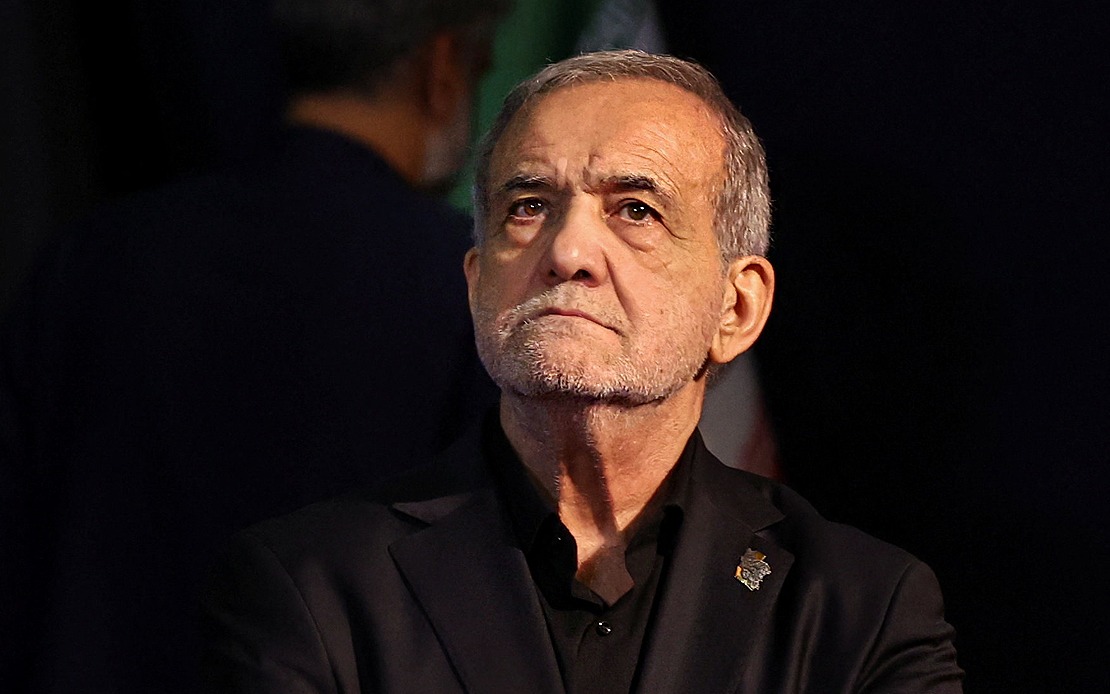
Iranian President Masoud Pezeshkian has escalated diplomatic and legal rhetoric by demanding that competent international organizations pursue formal action against the United States for harm inflicted on Iran's transport and infrastructure networks. During a Sunday inspection of the Ministry of Roads and Urban Development, Pezeshkian characterized the American strikes on civilian facilities as constituting war crimes under international law, signaling Tehran's intention to pursue accountability through established global legal frameworks rather than purely military or retaliatory channels.
The presidential visit, part of Pezeshkian's ongoing monitoring programme of government agencies, focused on assessing the comprehensive scope of infrastructure damage across Iran's vital logistics systems. Ministry officials presented the president with detailed briefings on the operational status of border terminals, commercial ports, major road networks, rail transport systems, maritime routes, and aviation infrastructure. The comprehensive nature of these briefings underscores the systemic nature of the damage inflicted, suggesting that the strikes targeted multiple critical nodes in Iran's interconnected transport network.
Roads and Urban Development Minister Farzaneh Sadegh provided specific documentation of destruction across key infrastructure assets including port facilities, border crossing terminals, bridge structures, highway networks, railway lines, and centralized logistics hubs classified as strategic national assets. The detailed inventory implies that the attacks were not isolated incidents but rather a coordinated campaign aimed at degrading Iran's overall transport capacity and economic connectivity. For regional observers, such systematic targeting of civilian infrastructure carries implications for broader Middle Eastern stability and the vulnerability of transport networks across the region.
In response to the damage assessment, Pezeshkian issued directives aimed at accelerating reconstruction efforts while simultaneously implementing strategic resilience measures. His orders prioritized the rapid repair of damaged infrastructure, activation of secondary and alternative transport routes to maintain economic functionality, and the implementation of defensive measures to enhance the durability and redundancy of the transport network. These commands reflect a dual strategy of immediate practical recovery combined with longer-term structural hardening against future attacks.
The president publicly commended ministry staff for their efforts in sustaining transport operations despite the infrastructure damage, framing the continuation of services as evidence of national determination to resist external pressure. Pezeshkian's rhetoric connected public support and government coordination as complementary forces capable of thwarting what he characterized as deliberate enemy attempts to destabilize Iran's economic infrastructure and disrupt essential supply chains. This messaging strategy serves to consolidate domestic political support while signaling resolve to regional and international audiences.
Pezeshkian's legal action initiative follows a period of heightened military tensions in which Iranian Armed Forces conducted what Tehran describes as decisive retaliatory operations against American military positions throughout the region. The timing of Pezeshkian's international legal call is significant, arriving as renewed direct American military aggression against Iranian territory has reportedly ceased following Iran's demonstrated military capability and willingness to respond with strikes of their own. This sequence suggests that Iran views the pause in attacks as an opportune moment to shift the confrontation from the military arena to the legal and diplomatic sphere.
The referenced air campaign lasted approximately two weeks and resulted in documented damage to transportation infrastructure concentrated in southern Iranian territories. Intelligence assessments and official Iranian accounts indicate that American forces specifically targeted bridges and road networks in this region, strategic assets that form crucial links in Iran's north-south and east-west transport corridors. The targeting of such infrastructure demonstrates the strategic value assigned to disrupting Iran's ability to move goods, military assets, and personnel across its territory.
For Southeast Asian readers and policymakers, Iran's situation carries instructive implications regarding the vulnerability of critical national infrastructure to external military action and the limited protective capacity of international legal mechanisms when major powers act unilaterally. Malaysia and other ASEAN nations maintain significant maritime and aviation infrastructure that similarly could be subjected to foreign military pressure during regional conflicts or great power confrontations. The precedent of systematic infrastructure targeting without formal declaration of war, and the subsequent recourse to international legal channels by the affected nation, may influence how Southeast Asian states structure their own infrastructure resilience and diplomatic response strategies.
Pezeshkian's invocation of international legal process through competent organizations suggests Iran intends to pursue claims before bodies such as the International Court of Justice or pursue mechanisms embedded in international humanitarian law frameworks. This approach reflects a calculated assessment that military deterrence alone may be insufficient for long-term security, and that establishing legal precedent and international condemnation could constrain future hostile actions. The strategy also positions Iran within the global legal order rather than outside it, a positioning that carries diplomatic and soft-power dimensions extending beyond the immediate infrastructure dispute.
The emphasis on maintaining uninterrupted transport services despite infrastructure damage serves multiple purposes for the Iranian government. Operationally, it prevents cascading economic effects that could severely impact civilian population welfare and government revenue. Politically, it demonstrates state capacity and resilience to the Iranian public during a period of military confrontation. Regionally, it signals to neighboring states and international actors that Iran retains functional capacity despite external pressure, a message relevant to deterrence calculations and negotiations.
Looking forward, the intersection of Iran's infrastructure reconstruction efforts with its pursuit of international legal accountability will likely shape how the Islamic Republic navigates future confrontations with external powers. The success or failure of legal remedies pursued through international channels could influence whether Iran prioritizes similar diplomatic approaches in future crises or returns to purely military and strategic responses. For regional stability, the effectiveness of international legal mechanisms in addressing infrastructure warfare may establish precedents that either deter or permit similar tactics in future conflicts.

