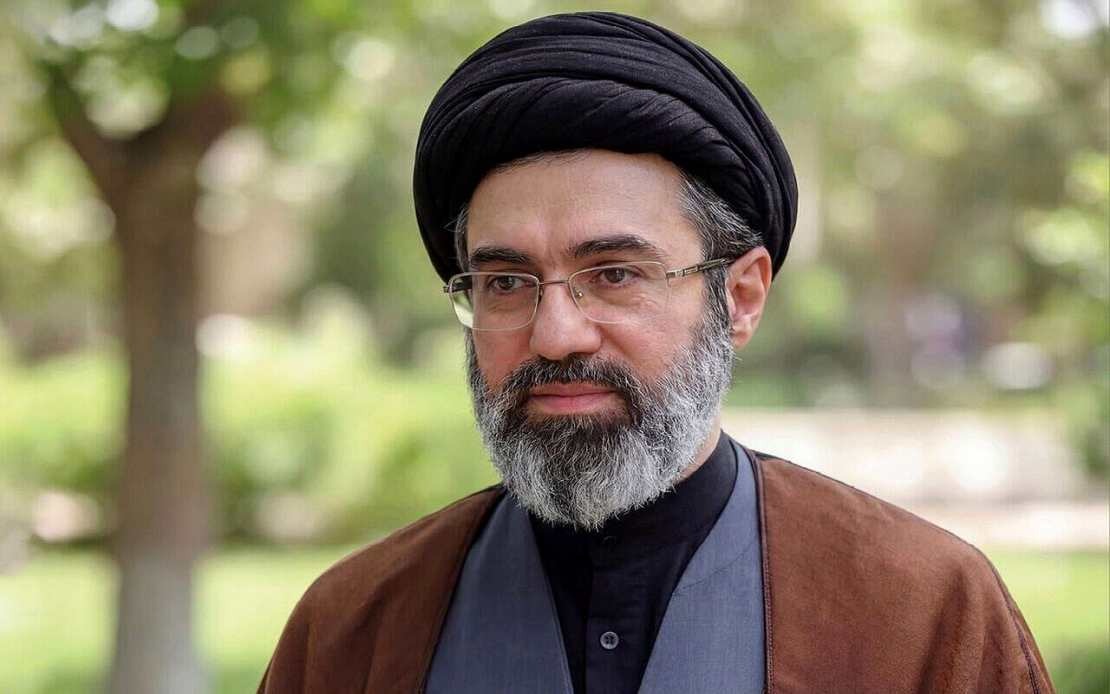
Iranian President Masoud Pezeshkian moved to dispel any lingering uncertainty about the health of the country's Supreme Leader Mojtaba Khamenei on Monday, publicly declaring him to be in perfect condition during an interview with state television. The assurance came after Pezeshkian spent seven hours in direct consultation with Khamenei, marking a significant moment in Iran's political calendar as the nation enters a new chapter following the dramatic change in its supreme leadership earlier this year.
The timing of Pezeshkian's remarks carries particular weight given the opacity that has long characterised the Iranian leadership's public communications. By explicitly addressing Khamenei's health status in a televised interview, the president appeared to be addressing unspoken concerns about continuity and stability at the highest levels of Iran's theocratic system. Such reassurances are rarely offered without purpose, suggesting the administration views public confidence in the supreme leader's wellbeing as strategically important to maintaining domestic cohesion.
According to Pezeshkian's account, the extensive meeting between the two officials focused heavily on preserving national unity and cohesion—themes the supreme leader apparently emphasised throughout their discussions. This concentration on internal solidarity hints at potential fractures or concerns about public confidence that Iran's leadership may be monitoring carefully. The emphasis placed by Khamenei on maintaining unified backing suggests he and his advisors recognise that leadership transitions, even within Iran's tightly controlled system, carry inherent risks to institutional legitimacy.
The substantive agenda discussed during the seven-hour session ranged across a spectrum of domestic challenges that directly affect ordinary Iranians' daily lives. Pezeshkian identified employment opportunities, residential housing, and mechanisms for improving general livelihoods as central topics, reflecting the persistent economic pressures that have dogged Iran's population. These issues remain politically sensitive given the cumulative toll of sanctions and economic mismanagement on purchasing power and standards of living, making them focal points for both leadership concern and potential public discontent.
The conversation between president and supreme leader also touched explicitly on the economic consequences of international sanctions, which continue to constrain Iran's access to global markets and financial systems. Pezeshkian's mention of this discussion underscores how deeply sanctions have embedded themselves into Iran's strategic thinking and policy discussions at the highest levels. The fact that this issue warranted specific mention suggests it remains a persistent challenge without easy resolution, requiring continuous top-level attention and coordination.
The meeting itself occurred as Pezeshkian entered his third year in office, a milestone that typically prompts reflection on governance achievements and agenda-setting for the period ahead. The decision to hold such an extended consultation at this juncture indicates both officials recognised the moment warranted comprehensive strategic alignment. In Iran's political system, where the supreme leader holds ultimate authority over key state institutions including the military and judiciary, such extended sessions serve to reinforce the hierarchical chain of command and ensure presidential initiatives align with the supreme leader's broader vision.
Mojtaba Khamenei's path to supreme leadership represents one of the most significant transitions in Iran's contemporary political history. Following the death of his father and predecessor Ali Khamenei in joint United States and Israeli military strikes on February 28, the country's Assembly of Experts convened to select the new supreme leader. Mojtaba Khamenei's election in March represented a continuation of the Khamenei family's dominance over Iran's highest office, a development with profound implications for the nation's political trajectory and succession patterns.
What distinguishes this transition is the relative invisibility that has characterised the new supreme leader's public profile since taking office. Mojtaba Khamenei has deliberately maintained a low public profile, avoiding the kinds of public appearances and direct media engagements that typically accompany assumption of such a powerful position. This strategic withdrawal from public view stands in sharp contrast to conventional leadership practice and has likely fuelled speculation and concern both within Iran and among international observers about the health, stability, and legitimacy of the transition. Pezeshkian's explicit health confirmation appears designed to counter such speculation directly.
For Malaysia and other Southeast Asian nations with interest in Middle Eastern stability, Iran's leadership continuity carries broader regional significance. Iran's capacity to project influence throughout the region depends substantially on perceptions of internal stability and coherent decision-making at the highest levels. Leadership transitions, even when carefully managed, can create windows of uncertainty that affect external policy consistency and regional behaviour patterns. Pezeshkian's public reassurance serves not only a domestic audience but also signals to international actors that Iran's power structure remains stable and functioning.
The emphasis placed on national unity during this meeting also reflects awareness within Iran's leadership that the transition period itself creates potential vulnerabilities. By repeatedly stressing cohesion and solidarity, both Khamenei and Pezeshkian appear to be working to prevent any fragmentation of state institutions or factional competition that might emerge from perceptions of weakness or instability at the top. This proactive messaging strategy suggests the leadership recognises that information vacuums and public uncertainty could become sources of domestic political tension if left unaddressed.
The extended nature of Pezeshkian and Khamenei's meeting—seven hours is considerable for such high-level consultations—indicates the depth of alignment required between president and supreme leader as Iran navigates concurrent challenges. Managing sanctions-affected economics, addressing employment and housing crises, and maintaining state coherence through a succession period represents a multifaceted agenda that demands sustained coordination. The detailed discussion across these varied domains suggests a functioning system of shared governance, despite the supreme leader's formal constitutional supremacy.
Moving forward, how successfully Mojtaba Khamenei establishes his independent authority while managing the complex relationship with the presidential office will significantly shape Iran's internal stability and external posture. Pezeshkian's public affirmation of the supreme leader's health and the productive nature of their consultations represents an important early signal that this critical relationship is functioning smoothly. For the region and international observers, such signals of institutional stability carry weight in assessing whether Iran's transition represents a transition or a transformational moment in its political development.

