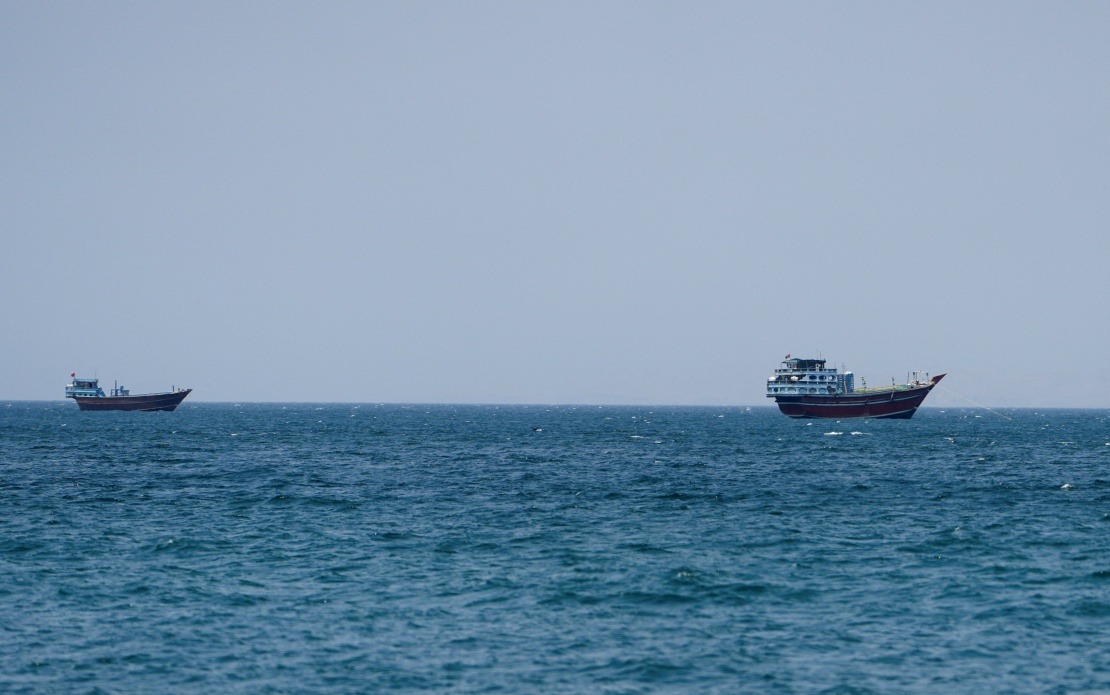
Iran's newly appointed Supreme National Security Council chief Mohsen Rezaei has set strict preconditions for the reopening of the strategically vital Strait of Hormuz, signalling that Tehran will maintain its grip on one of the world's most important maritime chokepoints until the United States fundamentally alters its approach. Speaking during a meeting with China's ambassador to Tehran, Zong Piyu, Rezaei articulated Iran's hardline stance with blunt clarity: the waterway will remain partially closed as long as American policy remains unchanged.
The Strait of Hormuz, through which roughly one-fifth of global oil consumption passes annually, has been subject to Iranian transit restrictions since March in response to what Tehran characterises as US-Israeli military aggression. This strategic chokehold carries enormous implications for global energy markets and regional stability, making Rezaei's pronouncement significant not merely as a diplomatic statement but as a potential economic lever with worldwide ramifications. For Malaysian readers and other Southeast Asian nations dependent on stable energy supplies, such disruptions carry direct consequences for fuel prices and manufacturing costs.
Resolution of the impasse, according to Rezaei, requires the United States to fundamentally reverse course on multiple fronts. The Iranian official specified that Washington must terminate military operations against Iran and its regional allies, whilst simultaneously releasing Iranian government funds that remain frozen under international sanctions regimes. These demands represent core grievances in Iran's foreign policy and suggest that any pathway to normalisation faces formidable obstacles given Washington's own strategic interests in the region.
Beyond these primary conditions, Rezaei indicated that Iran has communicated additional stipulations to American officials through intermediaries who have facilitated back-channel discussions between Tehran and Washington over recent weeks. The existence of these indirect negotiations, conducted through third-party mediators, reflects the persistent hostility between the two nations whilst simultaneously acknowledging mutual incentives to prevent further escalation. The deliberate use of intermediaries rather than direct diplomatic channels underscores the depth of mistrust characterising contemporary US-Iran relations.
During his conversation with the Chinese ambassador, Rezaei underscored that any separate agreement between Iran and Oman regarding shipping corridors through the Strait would remain entirely independent of Iran's decision-making regarding the waterway's overall accessibility. This clarification prevents external parties from circumventing Iranian restrictions through bilateral arrangements and reinforces Tehran's assertion of unilateral control over maritime access through its territorial waters. The Strait's geography affords Iran considerable leverage, with the Iranian coastline narrowing the navigable passages and placing shipping lanes within Iranian territorial jurisdiction.
The Iranian security chief's comments also highlighted Beijing's diplomatic positioning, praising China for opposing what Tehran describes as an anti-Iranian and patently unlawful draft resolution at the UN Security Council during the March escalation. This reference reflects Iran's appreciation for Chinese votes and procedural obstruction at the Security Council, where Beijing's permanent membership grants it veto authority. For regional observers, China's diplomatic support represents a crucial counterweight to Western pressure on Iranian policy.
Rezaei expanded his remarks to encompass the broader strategic partnership between Iran and China, emphasising shared membership in organisations including the Shanghai Cooperation Organisation and BRICS. These multilateral frameworks represent Iran's effort to build alternative networks of influence and economic cooperation outside Western-dominated institutional structures. For Malaysian policymakers monitoring regional alignments, Iran's deepening partnerships with China and other non-Western powers signal evolving geopolitical configurations that could reshape Southeast Asian diplomatic calculations.
The appointment of Rezaei himself as SNSC head carries significance for forecasting Iranian decision-making trajectories. As a seasoned security establishment figure, his rhetoric typically reflects Iran's consensus leadership positions rather than outlying factions, suggesting that the conditions he articulated represent official policy rather than negotiating posturing. His background and institutional position lend weight to interpretations that Iran intends to maintain its maritime restrictions indefinitely absent fundamental American policy reversals.
For global energy markets and maritime commerce, the implications extend beyond petroleum pricing. Insurance costs for vessels transiting contested waters rise substantially, shipping companies divert routes at tremendous expense, and logistics networks face disruption. These cascading effects ultimately touch Malaysian consumers and businesses through higher input costs and reduced economic efficiency. The blockade fundamentally challenges the principle of freedom of navigation and international law governing straits used for international commerce.
The standoff reveals the profound structural difficulties in US-Iran relations, where neither side appears willing to offer unilateral concessions without receiving reciprocal movement from the other. Washington maintains that Iranian threats to regional security justify continued pressure, whilst Tehran insists that American military presence and sanctions constitute the original provocation demanding reversal. Breaking this deadlock requires either fundamental shifts in either government's strategic calculations or mediation by credible third parties capable of brokering comprehensive settlements.
Observers should note that maritime closure tactics, whilst economically damaging to Iran itself, provide Tehran with tangible leverage unavailable through conventional military means. The restriction affects global energy supplies and induces international pressure on American policymakers, potentially forcing Washington to reassess costs and benefits of maintaining current hostilities. This asymmetric bargaining dynamic suggests that Rezaei's conditions, however stringent they appear, represent calculated positioning within a protracted negotiation rather than immovable obstacles.
The broader context involves American concern that Iranian restrictions might eventually trigger military confrontation, with Western navies potentially moving to ensure maritime access through force. Rezaei's statements acknowledge this risk implicitly, as Iran's ability to maintain restrictions depends ultimately on its capacity to resist military intervention. The Strait therefore remains a volatile flashpoint where strategic competition, economic interests, and military capabilities converge, with ramifications extending far beyond Middle Eastern borders to affect global stability and prosperity.

