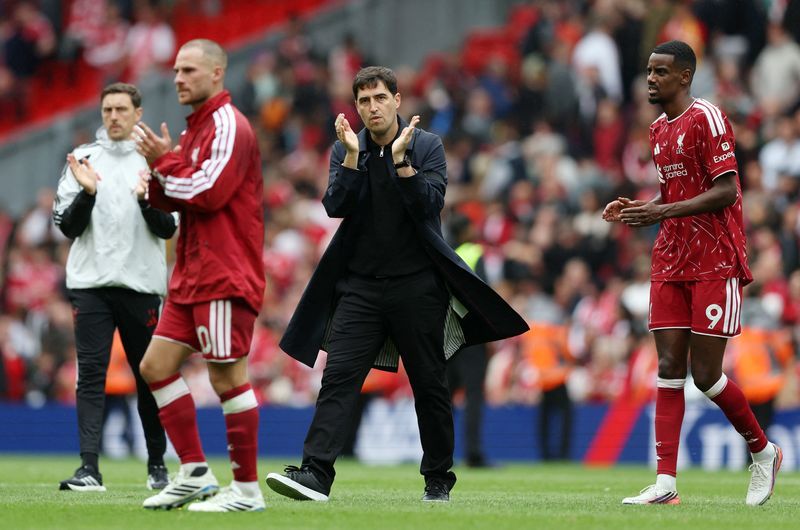
Andoni Iraola has yet to taste victory in the Premier League since taking charge at Liverpool this summer, but the Spanish manager's assessment of Saturday's 2-2 draw against Nottingham Forest suggests he is unconcerned about the early setback. Instead, Iraola has focused on the trajectory of improvement shown across the ninety minutes, particularly a commanding second-half performance that allowed his side to come from behind and rescue a point from a position of vulnerability.
The appointment of Iraola represents a significant philosophical shift for the Merseyside giants. Brought in to resurrect a club reeling from a catastrophic defence of their 2025 championship, Liverpool spent an eye-watering £446 million on fresh personnel during the off-season yet finished fifth, a jarring comedown that prompted the board to seek new direction. The former Bournemouth manager's challenge extends beyond merely improving results—he must restore the club to its position as England's premier force while rekindling the passionate, aggressive football that once made Anfield a fortress in European competition.
Iraola's blueprint differs markedly from his predecessors. Where Jürgen Klopp earned renown for his "heavy-metal football" and Arne Slot adopted a more measured tempo during his two seasons in charge, the new regime demands relentless pressing, rapid transitions, and constant attacking intent. This philosophical reset offers Liverpool supporters a return to the high-octane style they embraced during the Klopp era, though the implementation remains incomplete. The opening forty-five minutes against Forest illustrated the gulf between ambition and execution, with periods of sluggish play allowing the visitors to carve out dangerous opportunities and take the lead through Dan Ndoye's direct counter-attack.
The contrast between halves proved instructive for both manager and observers. Iraola's half-time adjustments sparked a transformation that saw Alexander Isak equalise shortly after the interval, while new signing Victor Munoz struck the late equaliser to earn a point. This pattern repeated Liverpool's opening fixture against Newcastle six days earlier, where they also recovered from a deficit to draw 2-2. For Iraola, the resilience demonstrated matters less than the underlying cause of sluggish starts—a defensive passivity when Liverpool lack possession that he regards as the core problem requiring attention.
The manager's post-match analysis revealed frustration tempered by recognition of progress. He acknowledged that while the second-half intensity and ball retention improved substantially, the opening period's lethargy cost his side all three points. His complaint centred not on personnel but on application, specifically the excessive space Liverpool afforded opponents and the comfort they seemed to invite during moments when they should have pressed with urgency. This diagnosis suggests Iraola views the current predicament not as a talent deficit but as a transitional phase where his squad must absorb and internalise new demands.
Victor Munoz, the winger and author of Saturday's leveller, has received particular praise from Iraola despite the team's stuttering start. The manager highlighted Munoz's persistence, defensive contribution, and threat in advanced areas across both matches, indicating satisfaction with a player who embodies the tireless running and attacking threat the new system demands. Such recognition signals Iraola's commitment to building chemistry around players who embrace his intensity, even if results remain elusive.
The broader context of Liverpool's transition involves recent disappointment and the weight of expectation. The club's fall from champions to fifth place created internal pressure that necessitated change, and while Iraola's appointment signals ambition, the timeline for results remains uncertain. The manager has publicly acknowledged that this tactical reset requires adaptation time, tempering expectations around Anfield and suggesting supporters should anticipate growing pains before consistent victories materialise. This patient approach contrasts with the immediate pressure often placed on new managers at traditional powerhouses.
Reinforcement of the squad represents another avenue through which Iraola intends to accelerate progress. Liverpool have reached an agreement to acquire French winger Bradley Barcola from Paris Saint-Germain, according to reports, with the 23-year-old's explosive pace and direct running seen as tailor-made for the high-tempo system being implemented. Barcola's potential arrival suggests the club recognises gaps in personnel that new coaching philosophy alone cannot bridge, offering Iraola tools explicitly designed for his attacking vision.
For Malaysian football enthusiasts and Southeast Asian observers, Liverpool's transformation carries broader implications for the Premier League's competitive landscape. The injection of £446 million in failed spending last season, combined with Iraola's appointment and incoming signings, demonstrates how established clubs attempt to recalibrate when traditional methods falter. The experiment unfolds with significance beyond Anfield's boundaries, as other major institutions monitor whether investment and tactical innovation can restore dominance in an increasingly competitive environment.
The contradiction between promise and results currently defines Liverpool's campaign. Supporters and neutrals alike have noted the increased entertainment value and attacking ambition compared to previous campaigns, yet the scoreline remains the ultimate arbiter in football. Iraola appears unshaken by early draws that might unsettle other managers, viewing them as waypoints rather than destinations. His conviction that the foundations are solidifying, coupled with the squad's capacity to recover from losing positions, suggests he possesses the mental resilience required to weather the early phase of substantial tactical change.
Looking forward, the trajectory of Liverpool's season will likely hinge on whether Iraola's demands become embedded in team behaviour, particularly in opening phases where the side has appeared sluggish. Should the early-match intensity improve, the second-half excellence currently displayed could extend across full matches, translating draws into victories. Until that conversion occurs, however, Liverpool remain trapped in limbo—a team showing glimpses of what Iraola envisions while falling short of delivering the consistent results that define successful campaigns in the Premier League.

