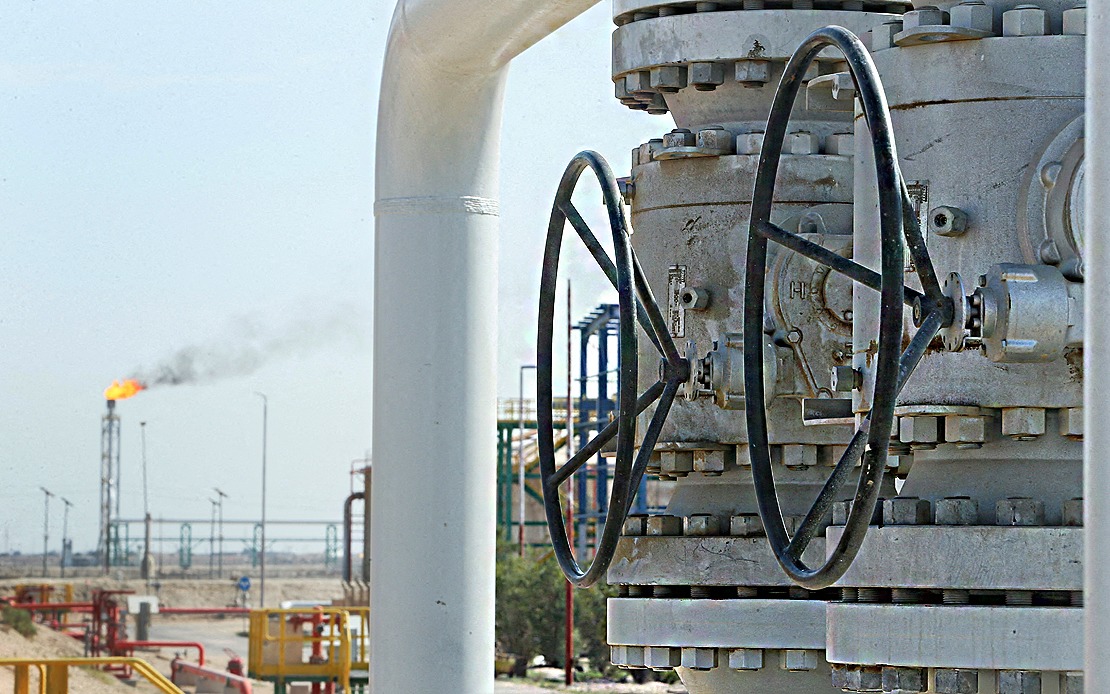
Iraq is moving ahead with ambitious plans to construct a major oil pipeline connecting its primary producing regions to Mediterranean ports, responding to the strategic vulnerability created by prolonged disruptions in the Strait of Hormuz. Oil Minister Bassim Khudair disclosed that Baghdad has commissioned a comprehensive feasibility study for infrastructure that would link oil-rich Basra in the south and Kirkuk in the north to the Turkish port of Ceyhan and the Syrian facility at Baniyas. The proposal demonstrates a fundamental shift in how Iraq views its export infrastructure, recognizing that reliance on a single maritime chokepoint exposes the nation's entire economy to geopolitical risk.
The significance of this initiative cannot be overstated for Iraq's fiscal stability. The country generates more than 90 percent of government revenue from petroleum sales in ordinary circumstances, and millions of Iraqis—civil servants, retirees, and social welfare beneficiaries—depend directly on monthly state payments funded by oil exports. When the Strait of Hormuz becomes congested or contested, Iraq's capacity to sustain these critical government functions deteriorates rapidly. The current situation, where hostilities between Iran and the United States have effectively constrained passage through the waterway for months, has compounded the pressure on Baghdad to identify alternatives.
The proposed pipeline architecture reflects Iraq's determination to establish multiple export pathways. Officials in Baghdad envision the Mediterranean route eventually extending southward to Aqaba, a port on Jordan's Red Sea coast, providing yet another outlet for crude exports. Khudair characterized this diversification effort as reflecting a "clear vision and strategy" within the government, suggesting broad consensus among Iraqi policymakers that overdependence on the Hormuz route represents an unacceptable strategic vulnerability. Such unified messaging from the oil ministry indicates that energy officials have successfully convinced senior leadership of the urgency involved.
However, the practical obstacles to realizing this vision are substantial. Moving oil overland through pipelines is inherently more expensive and operationally less efficient than maritime transport, which has historically allowed Iraq to deliver crude to global markets at competitive prices. Constructing thousands of kilometers of pipeline infrastructure across multiple countries requires not only enormous capital investment but also sustained diplomatic cooperation with transit nations. Iraq must negotiate passage rights with Turkey, Syria, and potentially Jordan, each with its own strategic interests and domestic political constraints.
More troubling for planners in Baghdad is the sobering reality that alternative infrastructure does not guarantee immunity from disruption. Iraqi officials privately acknowledge that pipelines and other energy installations outside the Strait of Hormuz remain vulnerable to Iranian military action. Tehran has demonstrated both the capability and willingness to target energy infrastructure in the region, as evidenced by previous attacks on Saudi facilities. A Mediterranean pipeline, while reducing Iraq's exposure to Hormuz-specific threats, could become an alternative target, rendering the investment only a partial solution to underlying security challenges.
Iraq already operates one functioning pipeline carrying oil northward through Turkey, routing through the autonomous Kurdish region of northern Iraq. This existing corridor provides an outlet for some crude supplies, though it operates at limited capacity. Khudair indicated that a second pipeline, designed specifically to bypass Kurdish territory and thereby avoid transit fees and political complications associated with the regional government, has nearly completed testing and could commence operations within days. This additional conduit would increase Iraq's current throughput capacity independent of the Mediterranean proposals, offering near-term relief without awaiting the multi-year construction timelines required for new international routes.
For Malaysia and other Southeast Asian nations heavily dependent on Middle Eastern oil and gas supplies, Iraq's strategic dilemma carries important implications. The persistent instability affecting the Strait of Hormuz—through which approximately one-third of global seaborne traded oil passes—represents a structural risk to regional energy security. If Iraq successfully develops alternative export routes, it could paradoxically increase supplies available through Hormuz for other producers, theoretically benefiting Asian importers. Conversely, any new pipeline project might redirect supplies toward European markets, potentially tightening Asian markets and elevating prices.
The broader geopolitical context involves intensifying competition among regional and global powers to shape Iraq's energy infrastructure investments. Turkey views participation in Iraqi energy projects as advancing its regional influence and economic interests. Syria, despite international sanctions and domestic instability, seeks to recover from its decade-long civil conflict partly through transit revenues and energy cooperation with Baghdad. The United States and its Gulf allies monitor these developments carefully, concerned that major infrastructure projects might inadvertently strengthen Iranian influence or create dependencies inimical to Western interests in the region.
Iraq's production capacity itself has suffered during the recent period of heightened tensions, compounding the urgency of the export diversification strategy. Lower output combined with constrained shipping capacity creates a double pressure on government revenues. This combination explains why Khudair and other officials are willing to pursue expensive infrastructure solutions—the cost of inaction, measured against lost export revenues and unpaid government salaries, exceeds the substantial capital requirements of pipeline construction.
The feasibility study now underway will need to assess not only engineering challenges and construction costs but also political sustainability across multiple borders and shifting regional relationships. Iraq's experience with previous energy projects demonstrates that even well-planned infrastructure initiatives can encounter years of delays due to security concerns, financing disputes, and diplomatic complications. Nevertheless, the fundamental logic driving Baghdad's interest in Mediterranean outlets—diversifying away from a single chokepoint and reducing vulnerability to disruption—remains compelling regardless of specific timeline or routing details.

