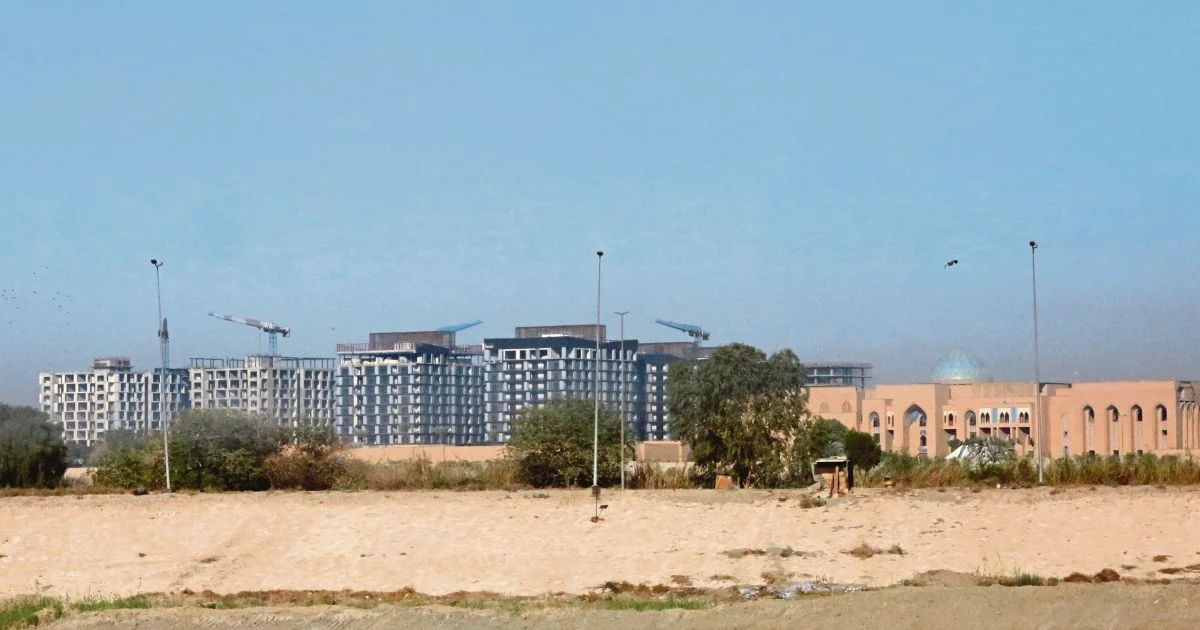
Iraqi security forces descended on Baghdad's fortified Green Zone in the early hours of Sunday, conducting an extensive operation that resulted in the detention of multiple government officials and members of parliament on suspicion of corruption-related offences. The coordinated raids, supported by a substantial security deployment throughout the diplomatic and administrative enclave, represent another significant attempt by authorities to tackle the persistent problem of graft within Iraq's state institutions.
The scale of the operation underscores mounting pressure within Iraq's political establishment to demonstrate tangible results in the fight against endemic corruption, a scourge that has undermined public confidence in government institutions and drained national resources. Corruption remains a chronic challenge in Iraq's post-2003 political system, with various international transparency organisations consistently ranking the country among the world's most corrupt nations. The problem has proven particularly stubborn despite repeated pledges by successive governments to reform and strengthen institutional accountability.
The Green Zone itself, officially known as the International Zone, serves as the nerve centre of Iraq's political power. Housing parliament, the prime minister's office, and numerous ministry headquarters alongside foreign diplomatic missions, the zone represents a symbol of both governmental authority and the security apparatus that underpins it. The concentration of high-level political and administrative personnel within this relatively small, heavily guarded area makes it an obvious focal point for any coordinated anti-corruption campaign. Sunday's raids represent a dramatic show of force within what is ostensibly Iraq's most secure location.
The involvement of parliamentarians in the detentions carries particular significance within Iraq's factionalised political environment. Members of parliament occupy privileged positions within the country's sectarian and ethnic power-sharing framework, making their arrest potentially controversial depending on which blocs they represent. The willingness of security forces to target MPs suggests either genuine institutional independence or a carefully orchestrated political manoeuvre designed to advance the interests of particular faction within Iraq's complex governance structure.
Corruption within Iraqi state institutions has manifested across multiple channels. Officials allegedly exploit procurement processes, siphon budgetary allocations, and leverage administrative positions for personal enrichment. The military and security services have been particular flashpoints, with investigations periodically revealing embezzlement schemes involving weapons procurement and personnel funding. The humanitarian toll has been substantial, with resources intended for public services, infrastructure development, and security operations diverted into private hands. This systematic plundering has left Iraq's underfunded institutions struggling to deliver basic services to a population already traumatised by conflict.
Prime Minister's repeated anti-corruption initiatives have yielded mixed results. While occasional high-profile arrests generate headlines and temporarily satisfy public demand for accountability, the underlying institutional culture often persists. Prosecutions frequently stall within an overburdened and sometimes compromised judicial system. The challenge extends beyond mere enforcement; it requires fundamental reforms to oversight mechanisms, financial transparency, and institutional cultures deeply embedded in patronage networks that cut across Iraq's sectarian boundaries.
From a regional perspective, Iraq's corruption challenges have broader implications for Southeast Asian observers. The Iraqi model demonstrates how post-conflict state-building in environments of weak institutional capacity and powerful factional competition creates vulnerabilities to graft. Similar vulnerabilities exist within Southeast Asia, where several nations grapple with comparable governance challenges. Iraq's experience suggests that anti-corruption efforts require more than periodic raids; they demand sustained institutional reform, genuine judicial independence, and political consensus across competing factions—conditions that remain elusive in Baghdad.
The timing of Sunday's operation may also reflect pressure from international partners and international financial institutions. Iraq's reconstruction efforts depend substantially on external financial support and technical assistance. International donors increasingly condition aid on demonstrable progress against corruption. The visible action in the Green Zone provides external stakeholders with evidence of serious government commitment, even as fundamental problems persist within state institutions. This dynamic creates an incentive structure where dramatic operations serve multiple audiences simultaneously—satisfying domestic constituencies demanding accountability while reassuring international partners of governmental sincerity.
Looking forward, the sustainability of anti-corruption efforts in Iraq remains uncertain. Previous campaigns have foundered when political circumstances shifted or when particular factions concluded that continued pressure threatened their interests. The current operation's success will ultimately depend not on the number of detainees but on whether prosecutions proceed fairly, sentences are imposed and served, and whether institutional reforms genuinely restrict future wrongdoing. Without such structural changes, Sunday's Green Zone raids risk becoming merely another episode in an unending cycle of scandal and selective enforcement that characterises contemporary Iraqi politics.

