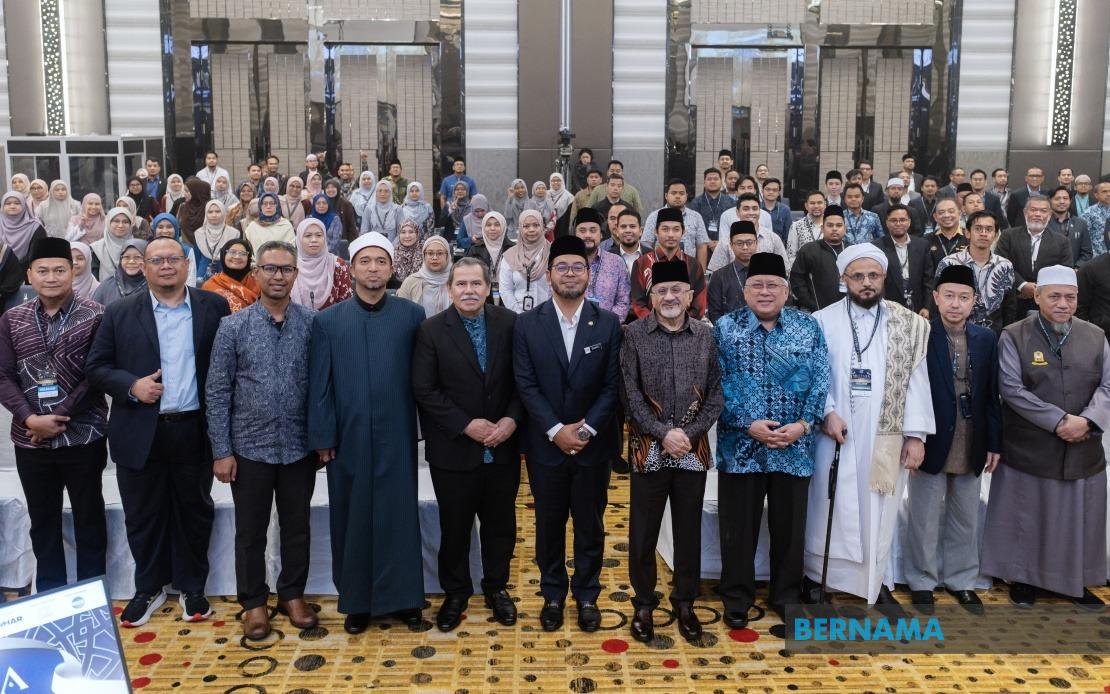
Malaysia's Minister in the Prime Minister's Department (Religious Affairs) Dr Zulkifli Hasan has underscored the transformative potential of Islamic social finance as a mainstream economic instrument capable of addressing poverty while advancing national development. Speaking at the MULTAQA SIDR Islamic Social Finance Conference in Kuala Lumpur, the minister articulated a vision in which Islamic financial mechanisms transcend their traditional charitable role to become embedded within the country's broader financial architecture alongside conventional banking and investment sectors.
The strategic repositioning of Islamic social finance reflects growing recognition within Malaysian policymaking circles that the sector represents an underdeveloped asset in the nation's poverty-alleviation toolkit. By framing Islamic finance not merely as welfare provision but as an integrated development strategy, the government signals commitment to harnessing religious endowment structures and zakat mechanisms—foundational Islamic financial instruments—toward sustainable economic empowerment rather than temporary relief measures. This conceptual shift aligns with global trends in development economics, where social finance increasingly occupies space between traditional charity and commercial investment.
To realize this ambition, Dr Zulkifli announced that the government would pursue collaborative partnerships spanning multiple institutional spheres. The Department of Waqf, Zakat and Haj (JAWHAR) has been designated as the lead agency responsible for elevating governance standards and professional capacity within Islamic organizations, particularly non-governmental organizations operating in the social development space. This institutional designation carries significant implications for the sector's credibility and operational sophistication, as JAWHAR assumes authority over organizational accountability mechanisms that have historically varied across the Islamic NGO landscape.
The minister emphasized that meaningful advancement requires genuine partnership between universities, higher education institutions, and voluntary organizations. This tripartite collaboration model addresses a critical vulnerability in Islamic social finance delivery: the governance and management deficiencies that plague some Islamic NGOs. Without strengthened institutional frameworks and professional standards, the sector risks reputational damage that could undermine broader efforts to mainstream Islamic finance throughout Malaysia's economy. The emphasis on academic institutions reflects recognition that knowledge production, capacity building, and research infrastructure form essential foundations for sectoral professionalization.
The conference also witnessed the official launch of Malaysia's Islamic Social Finance Report 2026, a comprehensive examination of the ecosystem's current state, emerging challenges, and expansion opportunities. Developed jointly by the Zakat Collection Centre (PPZ-MAIWP) and CoEISF ISRA Institute-INCEIF University, the report positions Malaysia as a regional knowledge hub in Islamic social finance. For policymakers and practitioners across Southeast Asia grappling with similar development imperatives, Malaysian experiences and institutional innovations offer instructive models, potentially elevating the nation's thought leadership in Islamic finance governance.
Dr Zulkifli's conceptualization of Islamic social finance as 'The Third Force' represents a deliberate philosophical reframing. Traditional dichotomies positioning state welfare against market mechanisms leave limited space for faith-based social provisioning systems. By designating Islamic social finance as a distinct and complementary pillar, the government acknowledges that neither government agencies nor commercial entities alone can effectively address Malaysia's development gaps. Community-centered, religiously-motivated mechanisms operating according to Islamic principles offer alternative pathways to resource mobilization and distribution that neither state apparatus nor profit-oriented enterprises conventionally provide.
This developmental framing directly contrasts with consumption-focused charity models. Rather than perpetuating dependency through handouts, Islamic social finance under this new paradigm would facilitate productive capacity-building, skills development, and entrepreneurial opportunity creation. Such productive empowerment addresses poverty's root causes rather than merely alleviating symptoms, potentially generating sustainable livelihood improvements and reduced reliance on ongoing assistance. For Malaysian communities experiencing chronic poverty or economic marginalization, productive engagement mechanisms offer pathways toward dignity-preserving economic participation.
However, Dr Zulkifli's pointed warnings regarding governance and integrity failures inject sobering realism into the development optimism. His explicit reference to parliamentary debate surrounding the Royal Commission of Inquiry report on Tabung Haji signals concern that governance failures within major Islamic financial institutions could contaminate perceptions of the broader Islamic finance sector. When institutional leaders mismanage resources or prioritize personal interests over fiduciary obligations, public confidence erodes—a particularly acute threat for faith-based finance operating on legitimacy rooted partly in religious authority and moral expectations.
The minister articulated a crucial insight: integrity failures within Islamic institutions do not merely constitute governance lapses but carry spiritual and reputational dimensions with implications extending to Islam itself. This perspective reflects understanding that Islamic finance operates within distinctive institutional and cultural contexts where religious authority undergirds institutional legitimacy. When governance failures occur, they risk delegitimizing not only specific institutions but potentially damaging broader perceptions of Islamic finance as a trustworthy development mechanism. For practitioners and policymakers committed to mainstreaming Islamic social finance, therefore, governance reform becomes not merely administrative necessity but theological and cultural imperative.
The minister's silence regarding renewed calls for investigation into Tabung Haji investment losses suggests political sensitivity surrounding the issue, though his broader governance messaging indicates the government views institutional accountability as essential to sectoral credibility. Moving forward, any comprehensive strategy to mainstream Islamic social finance must simultaneously advance both institutional innovation and governance rigor. Without demonstrable commitment to transparency and accountability, even theoretically sound Islamic finance models struggle to gain the public confidence necessary for scaled implementation. For Malaysia's Islamic social finance ambitions to succeed in poverty reduction while enhancing regional influence, governance excellence must accompany developmental vision.

