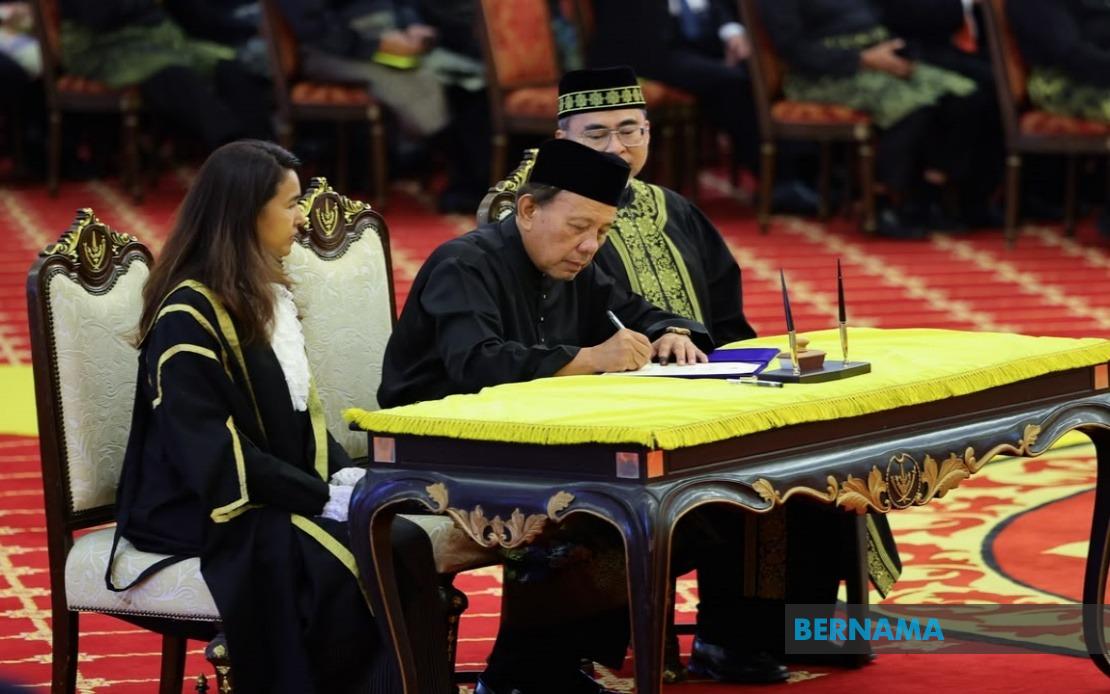
Datuk Ismail Lasim has been formally inaugurated as the Menteri Besar of Negeri Sembilan, taking his oath before the Yang Dipertuan Besar, Tuanku Muhriz Tuanku Munawir, at the Balairong Seri in Istana Besar Seri Menanti on August 2. The 67-year-old represents a rare combination of legal professionalism and sustained political engagement, bringing nearly three decades of accumulated experience in state governance and legislative affairs to Malaysia's leadership landscape during a period when institutional experience has become increasingly valued across the federation.
Ismail's political journey commenced in 1999 when he secured election to the Negeri Sembilan State Legislative Assembly, initially representing the Senaling constituency before transitioning to the Juasseh seat. His early entry into state politics coincided with a transformative period for Negeri Sembilan, and his presence across four consecutive electoral cycles demonstrates both personal political durability and the confidence placed in him by his constituents. The continuity he represents stands in contrast to the volatility characterising Malaysian electoral politics over the past decade, offering a stabilising presence as the state navigates post-election coalition dynamics.
Prior to his elevation to the chief executive position, Ismail had accumulated substantial executive experience through multiple tenures on the State Executive Council. His first appointment came in 2004, and he subsequently served three consecutive terms until 2018, during which his responsibilities centred on the education portfolio. His extended stewardship of education policy positioned him as an architect of Negeri Sembilan's human capital development strategies, a portfolio that gained particular significance as Malaysia faced evolving challenges in workforce readiness and digital transformation across the education sector. Following the 15th state election and the formation of the Unity Government framework, he returned to executive duties as Chairman of the Education and Human Capital Action Committee, maintaining his focus on the knowledge economy.
Beyond his political roles, Ismail brings a distinct professional pedigree rooted in legal training and corporate management. He obtained his Bachelor of Laws (LL.B Hons) from the University of Malaya, one of Malaysia's premier institutions, and built a sustained legal career before transitioning into full-time political engagement. His board-level corporate experience adds a dimension often absent from state leadership, introducing exposure to private sector governance structures and commercial accountability frameworks. This hybrid background—combining legal rigour, boardroom discipline, and electoral legitimacy—reflects a modernising trajectory in Malaysian state administration where technical competence increasingly complements party affiliation.
Ismail's most recent electoral victory in the 16th Negeri Sembilan state election demonstrated the security of his political base in Juasseh. He secured the seat with a majority of 4,091 votes, defeating challengers from both Pakatan Harapan and Parti Pribumi Bersatu Malaysia. This decisive margin, in an election where neither opposition coalition achieved breakthrough penetration, underscored the depth of local support and reflected his established credibility within his constituency. The result formed part of a broader Barisan Nasional performance that secured 18 of the state's seats, establishing the electoral foundation upon which the Unity Government's two-thirds majority in Negeri Sembilan rests.
The coalition mathematics underlying Ismail's appointment deserve scrutiny. Barisan Nasional's 18-seat achievement, combined with Perikatan Nasional's seven seats, created the numerical foundation for the current administration. This alignment, formalised after the 15th state election, represents a broader national trend toward grand coalition governance following the 2022 federal elections. For Negeri Sembilan specifically, the arrangement has provided stability and enabled the state to avoid the fractious coalition negotiations that have characterised some neighbouring states, though questions persist regarding the durability and ideological coherence of such broad partnerships.
Ismail's appointment also reflects UMNO's continued dominance within the BN framework at state level. As Negeri Sembilan UMNO Information Chief and Kuala Pilah Division chief, he embodies the party machinery that has sustained the coalition's electoral base, despite national challenges to UMNO's brand and governance record. His elevation signals the party's intention to leverage experienced hands rather than promoting generational change, a strategic choice with implications for how the state will address pressing issues ranging from infrastructure development to economic diversification in an era of competing regional pressures.
The education portfolio's prominence in Ismail's career warrants particular attention for Malaysian observers. As Southeast Asia confronts questions about curriculum relevance, technical skills deficits, and the intersection of traditional and digital learning, state-level education leadership becomes increasingly consequential. Ismail's sustained focus on education and human capital reflects recognition that competitive advantage in the regional economy depends fundamentally on workforce quality. His appointment as Menteri Besar positions him to integrate education priorities into broader state development strategy, potentially creating coherence between skills development and economic planning that has often remained fragmented.
Ismail's personal background offers additional texture to his profile. Born in Juasseh and educated through Malaysian vernacular and national schools—Sekolah Kebangsaan Pusat Juasseh and Sekolah Menengah Kebangsaan King George V—before university education, his trajectory mirrors pathways available to previous generations through Malaysia's public education system. His family, comprising his wife Datin Noraishah Othman and five children, grounds him within Negeri Sembilan's social fabric. These biographical elements, while seemingly routine, matter in Malaysian politics where personal networks and community rootedness continue to influence political trust and effectiveness.
Looking forward, Ismail assumes leadership at a juncture when state governments have become crucial laboratories for policy innovation within Malaysia's federal system. The education and human capital focus he has maintained throughout his career positions him to potentially pioneer approaches to skills development, vocational education, and workforce transition that could gain national resonance. The state's economic performance, infrastructure development, and social cohesion will provide measures of his stewardship, while his ability to navigate the Unity Government's inherent tensions will test his political acumen and consensus-building capabilities.

