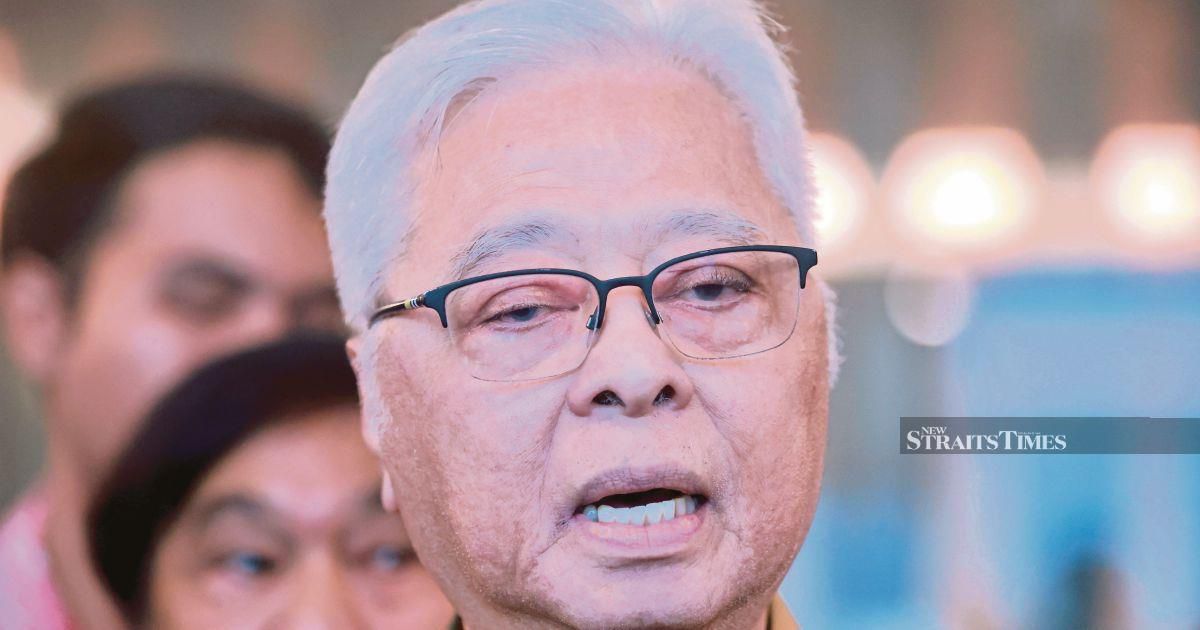
Datuk Seri Ismail Sabri Yaakob stands on the precipice of becoming the third former Malaysian Prime Minister to confront criminal charges, a development that underscores a troubling pattern in the country's political landscape where high office offers no sanctuary from judicial accountability. His anticipated prosecution will extend a remarkable sequence that began with Datuk Seri Najib Razak and continued with Tan Sri Muhyiddin Yassin, each having navigated courtroom battles after leaving the Prime Minister's office.
The prospect of Ismail Sabri facing charges marks a significant moment in Malaysian governance, reflecting both the country's commitment to legal proceedings against public figures and the mounting political turbulence that has characterised the past half-decade. Unlike some Southeast Asian democracies where former leaders enjoy de facto immunity or face selective prosecution weaponised against rivals, Malaysia's judiciary has demonstrated willingness to pursue cases against individuals who once held the nation's highest executive position. This pattern, while concerning in its implications for political stability, suggests institutional mechanisms are functioning to examine conduct regardless of former rank.
Najib Razak's prosecution, which commenced in 2018 following his 2016 departure from power, centred on the 1Malaysia Development Berhad (1MDB) scandal that captivated global attention and resulted in substantial convictions for financial misconduct and abuse of power. His case prompted broader introspection within Malaysian political circles about governance standards and accountability mechanisms. The extensive legal proceedings that followed established precedent, demonstrating that even former prime ministers would face rigorous cross-examination in open court rather than enjoying privileged status.
Tan Sri Muhyiddin Yassin's subsequent legal entanglement, involving charges related to party financing and other matters, reinforced the emerging reality that Prime Minister tenure did not shield individuals from prosecution once they departed office. Muhyiddin's situation, compounded by his relatively brief tenure and the fractious circumstances of his 2020 appointment, presented a different political backdrop yet similar constitutional framework for judicial action. The combination of Najib and Muhyiddin facing charges established the institutional precedent now extending toward Ismail Sabri.
Ismail Sabri's potential prosecution arrives against the backdrop of his own contentious tenure as Prime Minister from 2021 to 2022, a period marked by economic challenges, political uncertainty, and questions about governance effectiveness. His government navigated pandemic-related difficulties while managing internal coalition tensions, and subsequent scrutiny of his administration's conduct and decisions has apparently warranted formal investigation. The nature of charges anticipated against him remains a matter of public interest, though they likely relate to matters that emerged either during his premiership or stemmed from investigations into his broader political activities.
This triple jeopardy affecting recent former prime ministers raises profound questions about Malaysian political cycles and institutional dynamics. The concentration of criminal proceedings against multiple ex-premiers suggests either genuine deficiencies in governance standards among recent administrations or alternatively, investigations prompted by shifting political coalitions that now wield prosecutorial influence. The distinction between legitimate accountability and partisan prosecution remains contested terrain in Malaysian civil society discourse.
For regional Southeast Asian observers, Malaysia's treatment of former leaders presents both contrast and parallel to developments elsewhere in the region. Thailand's military-influenced justice system has pursued former Prime Ministers including Yingluck Shinawatra through channels widely viewed as politically motivated, whereas Indonesia's peaceful democratic transitions have generally spared former presidents from criminal prosecution despite sometimes-controversial tenures. Malaysia's approach occupies middle ground—technically independent institutions pursuing cases that nonetheless occur within politically charged environments.
The implications extend beyond individual accountability toward broader questions about political governance and institutional development. If criminal charges against Ismail Sabri proceed, they will necessitate careful navigation by courts to distinguish legitimate prosecution from perception of partisan weaponisation. Public confidence in Malaysia's judicial system depends partly on demonstrating that such proceedings follow consistent legal standards regardless of political currents.
Moreover, the pattern creates deterrent effects potentially reshaping how future prime ministers and senior officials conduct governance, potentially encouraging either heightened caution or alternatively, more aggressive pre-emptive political maneuvering to secure protective positioning before departing office. Malaysian political economy may already be adapting to this new reality where high office carries substantial legal exposure.
The unfolding situation regarding Ismail Sabri also reflects Malaysia's broader democratic maturation alongside institutional vulnerabilities. Unlike authoritarian systems where political prosecution operates without pretence of legality, Malaysia's courts function within constitutional frameworks requiring genuine legal argumentation and public scrutiny. This transparency provides checks against purely arbitrary persecution, though it cannot entirely eliminate political dimensions from proceedings occurring within contested polity.
Moving forward, how Malaysia manages the Ismail Sabri prosecution and shapes policies preventing future executive misconduct will significantly influence both domestic governance standards and the country's regional standing. Demonstrating that rule of law operates impartially across political divides remains essential for consolidating institutional legitimacy and democratic development.

