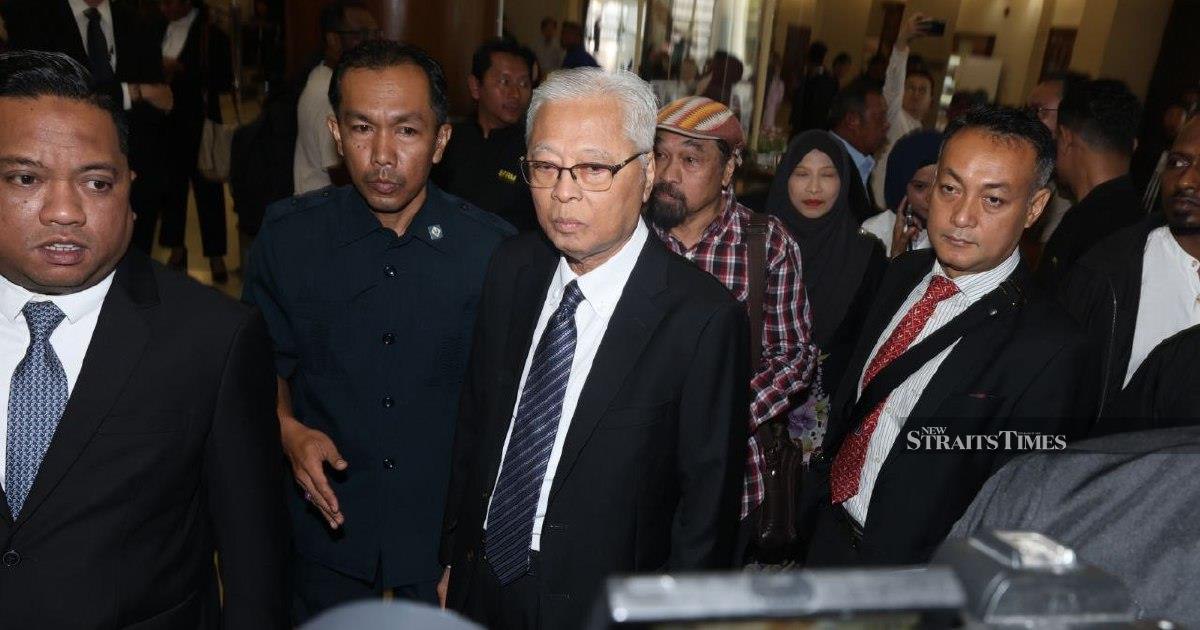
Former Prime Minister Datuk Seri Ismail Sabri Yaakob has departed the Kuala Lumpur court complex following the posting of RM300,000 bail by his son, signalling his temporary release from custody. The bail arrangement represents a significant development in the legal matters that have seen the once-prominent political figure navigate the Malaysian justice system in recent times.
The bail amount of RM300,000 falls within moderate range for cases involving public figures of Ismail Sabri's stature. His son's swift action in securing the bail demonstrates the family's commitment to addressing the immediate custody situation, allowing the former premier to return to his residence pending further legal proceedings. This arrangement is typical in Malaysian court practice, where family members often facilitate bail to enable defendants to maintain personal and business affairs while awaiting trial or hearing dates.
Ismail Sabri's legal challenges underscore the heightened scrutiny facing Malaysia's political establishment in recent years. The nation has witnessed numerous high-profile investigations and prosecutions involving senior politicians and government officials, reflecting broader governance concerns and anti-corruption efforts that have captured public attention. His case contributes to the ongoing discourse surrounding accountability and transparency within Malaysia's political sphere.
The former premier, who served as Malaysia's third Prime Minister from August 2021 to November 2022, has maintained a lower public profile since stepping down from high office. His tenure was marked by navigating challenging political dynamics, economic uncertainties, and pandemic-related governance issues during a particularly turbulent period in Malaysian politics. The subsequent developments in his legal situation contrast sharply with his earlier prominence in national affairs.
Court proceedings involving prominent political figures typically attract considerable media attention and public interest, reflecting the Malaysian electorate's investment in matters of governance and institutional accountability. The bail posting represents a procedural milestone rather than a resolution, with the legal process expected to continue through subsequent hearings and court appearances. Such cases often unfold over extended periods, involving multiple court visits and administrative processes.
The involvement of family members in bail arrangements is commonplace in Malaysia's legal system, where close relatives frequently step in to support defendants during initial custody phases. The RM300,000 figure suggests the court determined this amount as appropriate security for Ismail Sabri's release, balancing considerations of flight risk, ties to the community, and the seriousness of the underlying allegations. This judicial determination reflects standard considerations applied across similar cases in Malaysian courts.
The political landscape's reaction to Ismail Sabri's legal challenges has been relatively muted compared to responses to some other high-profile cases. This reflects the complex positioning of his United Malays National Organisation faction within the broader coalition framework that currently governs Malaysia. Political alliances and shifting power dynamics have influenced how various stakeholders publicly comment on or engage with his situation.
Regional observers have noted how Malaysia's legal system continues addressing questions surrounding high-level political accountability, positioning the nation within broader Asian governance trends. Several neighbouring countries have similarly grappled with comparable investigations into political figures, creating a regional context where Malaysia's approach to such matters carries comparative significance. The proceedings reflect institutional mechanisms being tested and refined through real-world application.
Ismail Sabri's presence at the court complex and subsequent departure mark another visible moment in the ongoing legal narrative. His appearance maintains public awareness of the case while the bail arrangement preserves his liberty pending further judicial processes. Such developments often catalyse renewed discussion among legal analysts, political commentators, and citizens regarding institutional performance and fairness within Malaysia's justice framework.
The posting of bail does not conclude the matter but rather represents a transitional phase where legal proceedings continue through different modalities. Subsequent court dates will determine the trajectory of the case, with potential implications extending beyond individual outcomes to affect broader perceptions of judicial consistency and political accountability. The bail arrangement enables Ismail Sabri to participate actively in his legal defence while maintaining personal and family stability during what remains a protracted legal engagement.
Observers of Malaysian politics and governance continue monitoring how such high-profile cases develop, as they carry implications for institutional legitimacy and public confidence in judicial processes. The bail posting demonstrates the functionality of Malaysia's legal mechanisms in initial custody determinations, though final outcomes will depend on evidence presentation and judicial deliberation throughout the trial phase. These developments will likely continue generating discussion within political, legal, and civil society circles as the case progresses through subsequent procedural stages.

