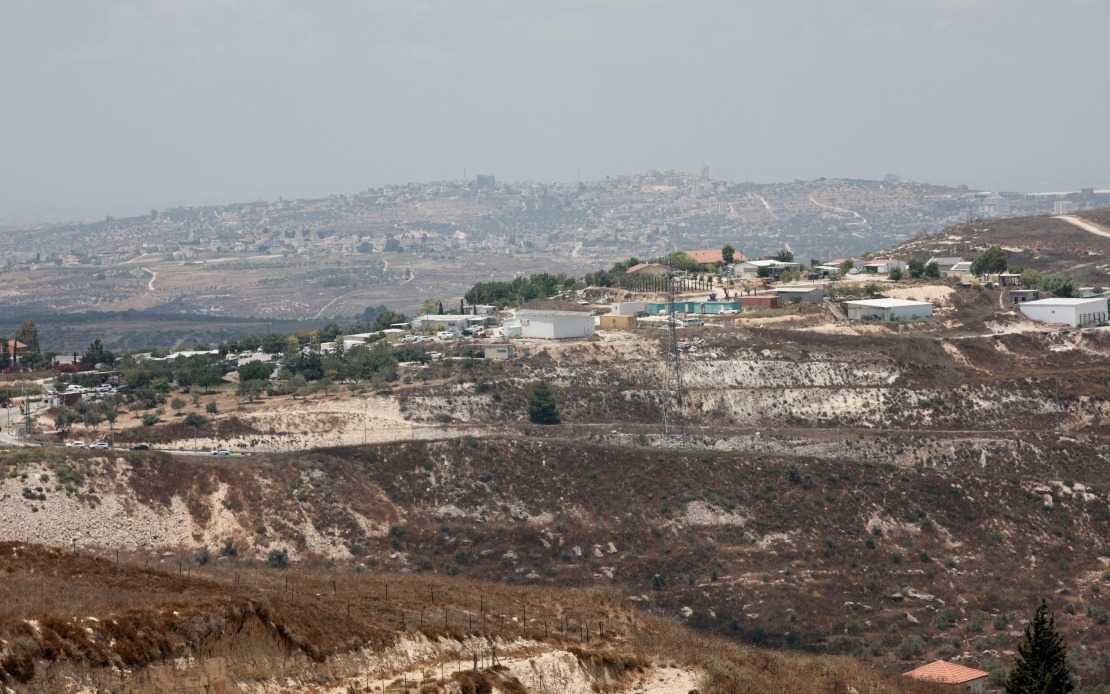
Israeli military forces swept through the West Bank town of Tell near Nablus on Saturday, apprehending more than 40 young Palestinian men in what represents an intensification of security operations across occupied Palestinian territories. According to the Voice of Palestine radio, the raid involved surrounding the town from multiple directions while troops moved systematically through residential areas. The scale and coordination of the operation underscore the renewed momentum of Israeli military activities in the region.
During the operation, Israeli troops commandeered a residential structure within Tell and repurposed it as a field interrogation centre, according to Palestinian broadcasters. This tactic of converting civilian buildings into military detention facilities has become increasingly commonplace in recent operations, effectively turning ordinary houses into temporary holding and questioning sites. The appropriation of private property for military interrogation purposes raises significant humanitarian concerns regarding civilian access to legal representation and adherence to international detention protocols.
The raid came as part of a broader military campaign ordered by Israeli Prime Minister Benjamin Netanyahu and Defence Minister Katz on Friday. The leadership issued directives for a wide-scale military operation targeting Palestinian villages throughout the West Bank following an attack that occurred near the Havat Gilad settlement. That incident resulted in the deaths of two Israeli soldiers and left three others wounded, providing the immediate justification for the expanded military response.
Retaliation for the Havat Gilad attack extended beyond Tell. Israeli forces launched strikes against multiple Palestinian communities within the Nablus governorate, where witness accounts and local sources documented assaults on Palestinian residential areas and property. These operations included instances where Israeli troops set fire to Palestinian homes and other structures, causing significant material destruction across the region. The pattern of systematic property damage alongside military detention operations suggests a coordinated approach to security operations that extends beyond conventional counterinsurgency measures.
The human cost of these operations became apparent when Palestinian Health Ministry figures confirmed that four Palestinians were killed during Friday's attacks in Tell. These deaths occurred amid the broader military incursion and add to the mounting toll on the civilian population caught between Israeli security responses and Palestinian armed resistance. The circumstances surrounding these deaths remain contested, with Israeli officials characterizing operations as targeted military responses while Palestinian authorities emphasize civilian casualties and alleged excessive force.
For Malaysian and Southeast Asian observers, these developments highlight the persistent cycle of violence and military escalation in Palestinian territories. The region's instability has historical roots stretching back decades, but recent weeks have witnessed a marked uptick in operational tempo and the scale of detentions. The conversion of civilian infrastructure into interrogation facilities and the reported property destruction reflect tactics that have drawn criticism from international human rights organizations concerned about protection of civilian populations under occupation.
The broader context involves long-standing disputes over settlements, with locations like Havat Gilad representing Israeli communities established in occupied territory. These settlements remain internationally controversial, with most countries recognizing them as violations of international law. The security incidents surrounding such settlements frequently trigger military responses that extend far beyond the immediate area, affecting Palestinian towns and villages whose residents have no direct connection to any attack.
The detention of over 40 individuals raises questions about due process protections and the legal framework governing interrogations in occupied territories. International humanitarian law establishes standards for detention practices, yet enforcement mechanisms remain limited in conflict zones. The mass detention approach, coupled with field interrogation centres, suggests authorities are casting wide nets in security sweeps rather than conducting narrowly targeted operations based on specific intelligence.
For the region more broadly, these operations contribute to an atmosphere of instability that constrains diplomatic progress. Previous attempts at negotiated settlements have repeatedly foundered on questions of security arrangements, settlement expansion, and Palestinian self-determination. Military operations of this magnitude suggest that security concerns continue to override diplomatic initiatives, perpetuating cycles where military responses generate grievances that fuel further resistance.
Malaysia, as chair of the Organisation of Islamic Cooperation and a prominent voice within the Non-Aligned Movement, has historically advocated for Palestinian rights within international forums. The detention and reported violence documented in Tell add to the body of incidents that Malaysian diplomatic representatives reference in their statements concerning the situation in occupied Palestinian territories. These developments inform Malaysia's position on Middle Eastern affairs and its engagement with international mechanisms addressing humanitarian concerns.
The involvement of both military and political leadership in ordering the operation indicates this represents a deliberate policy choice rather than localized tactical response. Netanyahu and Katz's explicit authorization of wide-scale operations suggests the Israeli government is pursuing an aggressive security posture despite ongoing international scrutiny. This approach carries implications for regional stability, Palestinian civilian populations, and the prospects for eventual resolution of the underlying conflict.
Looking ahead, the pattern of escalating operations raises concerns about further cycles of violence. Military sweeps that result in mass detentions and property destruction typically generate grievances among affected populations, potentially motivating renewed resistance activities. This dynamic has characterized Palestinian-Israeli relations for decades, creating a pattern where security operations intended to prevent future attacks inadvertently create conditions for their recurrence.

