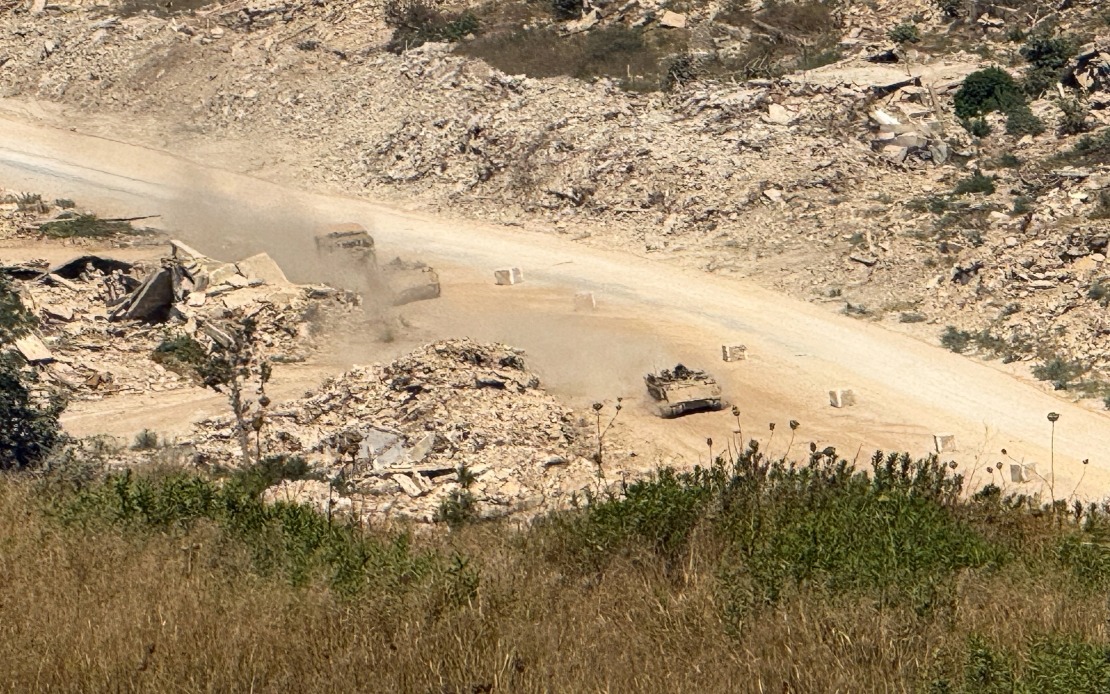
Heightened military activity by Israeli forces across southern Lebanon has once again undermined diplomatic efforts aimed at ending months of armed conflict in the region. On Monday, the Israeli army executed a series of coordinated operations spanning multiple towns and districts in the southern governorates, prompting Lebanon's National News Agency to document what it characterised as systematic violations of established ceasefire arrangements. The operations encompassed artillery bombardment, targeted explosions, infantry incursions, and the deliberate destruction of residential properties, marking a significant escalation despite parallel negotiations between the two nations.
The scope of Monday's military activities demonstrated the breadth of Israeli engagement across the disputed southern border region. Machine gun fire from Israeli positions struck the Wadi al-Salouqi area in Nabatieh governorate, while sustained artillery shelling targeted the town of Mansouri. The Mansouri district additionally experienced two separate explosive detonations, suggesting coordinated strikes against specific locations. In the Nabatieh district itself, Israeli forces detonated a substantial explosive device in the locality of Kfar Tebnit, and the surrounding outskirts of Nabatieh al-Fawqa endured repeated waves of artillery fire throughout the reporting period. These attacks represent only the latest in a protracted campaign that has fundamentally altered the security landscape across Lebanon's southern territories.
Beyond conventional military strikes, Israeli operations have directly targeted civilian infrastructure in ways that underscore the humanitarian dimension of the conflict. In the town of Khiam, Israeli forces systematically burned multiple residential properties during ongoing military operations within the settlement. The western periphery of Mays al-Jabal witnessed Israeli ground force advancement supported by artillery targeting residential structures. Separately, Israeli military drones conducted low-altitude surveillance flights over the Zahrani region, a tactic consistent with ongoing reconnaissance activities. Lebanese authorities reported no immediate casualties or documented property damage assessments, though such reporting often lags behind the actual incidents being documented.
The timing of these military operations carries particular significance given the diplomatic momentum that had briefly emerged from negotiating channels. A seventh round of Lebanese-Israeli talks had recently concluded in Rome on Thursday under American sponsorship, with both delegations examining implementation mechanisms for a comprehensive framework agreement originally established on June 26. These discussions specifically addressed the contentious issues of border demarcation and the status of detained individuals held by either side. The framework itself envisions a graduated Israeli military withdrawal from occupied Lebanese territory, beginning with designated pilot zones, coupled with deployment of Lebanese armed forces and the disarmament of non-state military organisations, most notably Hezbollah.
Lebanese leadership had publicly signalled optimism regarding the trajectory of negotiations. During a Cabinet meeting on Friday, Lebanese President Joseph Aoun characterised the Rome discussions as having achieved positive momentum on the twin priorities of border delineation and detainee-related matters. These statements reflected a cautious diplomatic approach aimed at maintaining the negotiating process despite longstanding mutual suspicions and the structural asymmetries in military capabilities between the parties. The apparent willingness to engage constructively on substantive issues suggested that a diplomatic pathway remained theoretically viable, even as on-the-ground military realities continued to shift.
However, the contradiction between diplomatic engagement and military escalation reveals the fundamental disconnect undermining the peace process. Israel's continued military operations in Lebanon commenced on March 2 and have produced devastating human consequences according to Lebanese official accounting. The cumulative toll encompasses 4,335 fatalities and 12,277 individuals sustaining injuries across Lebanon's civilian and military populations. Furthermore, the campaign has displaced more than one million people from their homes, creating a humanitarian crisis of massive proportions that strains Lebanon's already fragile infrastructure and social services. These figures represent not merely abstract statistics but reflect the lived experiences of families whose lives have been fundamentally disrupted by the protracted armed conflict.
The occupation question extends far beyond the immediate context of current hostilities. Israeli military forces maintain control over substantial portions of southern Lebanese territory, some areas occupied continuously for decades while others have been seized during the 2023-2024 conflict cycle. During the present military campaign alone, Israeli forces have advanced more than ten kilometres into Lebanese sovereign territory, effectively expanding the geographic scope of occupation beyond previously established boundaries. This territorial expansion occurs even as diplomatic representatives of both nations engage in discussions ostensibly designed to reverse such occupations and restore Lebanon's territorial integrity.
The Middle Eastern conflict architecture extends well beyond the Lebanese-Israeli context, creating layers of complexity that influence regional stability considerations. Israel maintains occupation of Palestinian territories and Syrian lands while maintaining a categorical refusal to withdraw from these territories or facilitate the emergence of an independent Palestinian state as specified in relevant United Nations resolutions. This broader pattern of occupation and territorial control raises fundamental questions about the credibility and sustainability of any negotiated settlement in the Lebanese context, as it suggests a systematic approach to territorial acquisition across multiple borders and conflicts. For Malaysia and Southeast Asian observers, these dynamics illustrate how unresolved historical grievances and territorial disputes can perpetuate cycles of violence despite repeated diplomatic initiatives.
For regional stakeholders including Malaysia, which maintains significant economic and diplomatic interests across the Middle East, these developments underscore the fragility of conflict resolution mechanisms in the region. The simultaneous pursuit of negotiation and military escalation creates profound uncertainty regarding the trajectory of Lebanese-Israeli relations and broader regional stability. The humanitarian consequences of this extended conflict period continue to mount, affecting not only Lebanon but also creating ripple effects across the broader Mediterranean and Middle Eastern region through refugee flows, economic disruption, and the strengthening of extremist narratives that capitalise on grievance and instability. The international community's limited capacity to enforce negotiated agreements or establish meaningful consequences for violations suggests that sustainable peace in this context requires genuine commitment from the principal parties themselves rather than external mediation alone.
Looking forward, the sustainability of diplomatic processes hinges on whether military operations can be genuinely constrained through agreed mechanisms and verified compliance frameworks. The pattern of violations documented by Lebanese authorities suggests that existing ceasefire arrangements lack either adequate enforcement mechanisms or genuine commitment from all parties to observe their terms. For the framework agreement negotiated in June to achieve meaningful implementation, both Israel and Lebanon must demonstrate that they prioritise diplomatic progress over tactical military advantage. The window for achieving such a transformation appears to be narrowing as military operations continue to reshape facts on the ground and deepen communal trauma across Lebanon's civilian population. The coming weeks will prove critical in determining whether the negotiation process can regain momentum or whether military escalation will continue to dominate the trajectory of Lebanese-Israeli relations.

