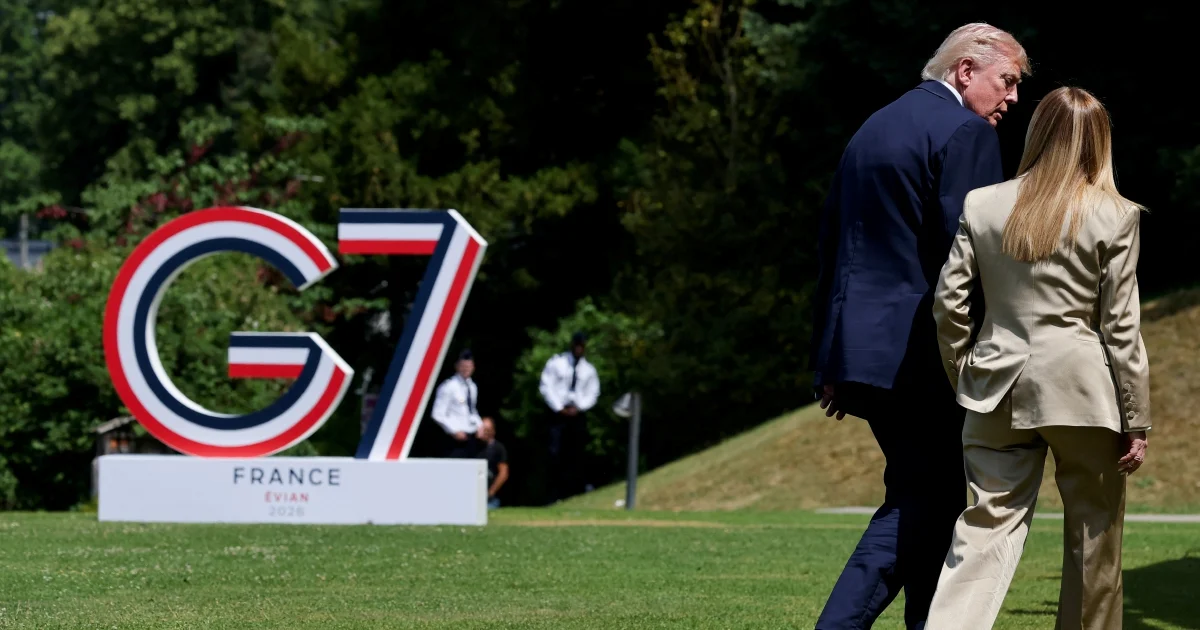
Italy's government responded with palpable indignation on Friday following reported statements by US President Donald Trump in which he allegedly characterised Prime Minister Giorgia Meloni as having sought a photograph opportunity with him. The inflammatory remarks escalated diplomatic tensions between the two Western allies and prompted the Italian Foreign Minister to cancel an upcoming trip to the United States, signalling the severity of Rome's displeasure.
The reported comments represent an unusual public criticism of the Italian leader by Trump, who has historically cultivated a close relationship with right-wing and nationalist governments across Europe. Meloni, who leads the Brothers of Italy party with its roots in the post-fascist tradition, has been broadly aligned with Trump's political approach and had been expected to develop strong bilateral ties with his administration. The tension therefore underscores the unpredictable nature of Trump's diplomatic style and his willingness to publicly belittle allied leaders regardless of ideological affinity.
For Malaysian and Southeast Asian observers, the incident illuminates the fragility underlying Western alliance structures. Countries in the region have watched carefully as the European Union and NATO navigate their relationship with Trump following his return to the presidency. If tensions between Rome and Washington can surface so rapidly over perceived personal slights, this raises questions about the reliability of security commitments and trade partnerships that smaller nations depend upon. The episode demonstrates that personal chemistry and individual temperament—rather than institutional frameworks or shared interests—can become destabilising factors in international relations.
Italy's swift diplomatic response, manifested through the Foreign Minister's cancelled visit, represents a calculated act of protest that maintains the country's dignity while avoiding irreversible escalation. Rome calibrated its response carefully, signalling displeasure through concrete action rather than inflammatory rhetoric. This measured approach reflects Italian diplomatic tradition and the country's recognition that it cannot afford a prolonged rupture with Washington, despite the provocation. For regional powers, the episode illustrates how smaller nations must often absorb affronts to preserve strategic relationships.
The timing of Trump's remarks carries particular significance given the ongoing geopolitical turbulence affecting Europe. With Russia pursuing military operations in Ukraine and tensions simmering across multiple security flashpoints, European leaders have been anxious to maintain coherent Western unity. Italy, as a European Union member and NATO ally, plays a crucial role in that cohesion, particularly given its geographic position as a gateway to the Mediterranean. Trump's public mockery threatens to fracture European consensus at a moment when unity is strategically valuable.
Meloni's relationship with Trump had been carefully cultivated by her administration, which sought to position Italy as a reliable partner for the incoming US government. Italian officials had calculated that the Prime Minister's ideological affinity with Trump's nationalist platform would create partnership opportunities and buffer Italy from potential transatlantic disputes. The reportedly derisive comments therefore represent a significant miscalculation by the Italian side, suggesting that ideological alignment offers no guaranteed insulation against Trump's unpredictable personal preferences.
The incident also exposes domestic political vulnerabilities for Meloni within Italy. Opposition parties and critics have long warned that her government's cultivation of relationship with Trump carried risks and compromised Italian independence. Trump's public treatment of the Prime Minister will likely fuel such criticism at home, potentially weakening her political standing among voters who view uncritical alignment with Washington with suspicion. Italian political discourse has historically contained strain of Atlanticism scepticism, and Meloni's difficulty in managing the American relationship may reignite that debate.
For Southeast Asia, the episode reinforces lessons learned through decades of engagement with powerful external actors. Nations in the region have long understood that great power relationships require patient management and emotional resilience in the face of indignities. Vietnam, Thailand, Philippines, and Indonesia have all experienced moments when powerful allies or rivals treated them dismissively, yet persisted in maintaining relationships that served strategic interests. Italy's experience mirrors dilemmas that regional powers regularly navigate: how to preserve core interests while managing relationships with volatile and temperamental powerful states.
The cancelled Foreign Minister visit suggests that Italy's diplomatic establishment recognises the need for strategic patience rather than sustained confrontation. Diplomatic channels remain open, and future engagement will likely proceed once immediate tensions cool. This pattern reflects how modern states manage crises in alliance relationships—maintaining formal engagement while creating space for both sides to retreat from inflammatory positions. For regional observers, the outcome provides reassurance that even significant diplomatic incidents need not precipitate complete ruptures in bilateral relationships.
Moving forward, this incident will likely shape how European governments calibrate their engagement with Trump's administration. Leaders may become more circumspect about seeking high-profile interactions, aware that Trump may subsequently mock or belittle them publicly. This creates subtle chilling effects on diplomatic engagement and requires Western allies to develop more sophisticated strategies for managing relationships with unpredictable American leadership. The European Union and individual member states will need to reinforce internal cohesion while protecting against further public embarrassments from Washington.