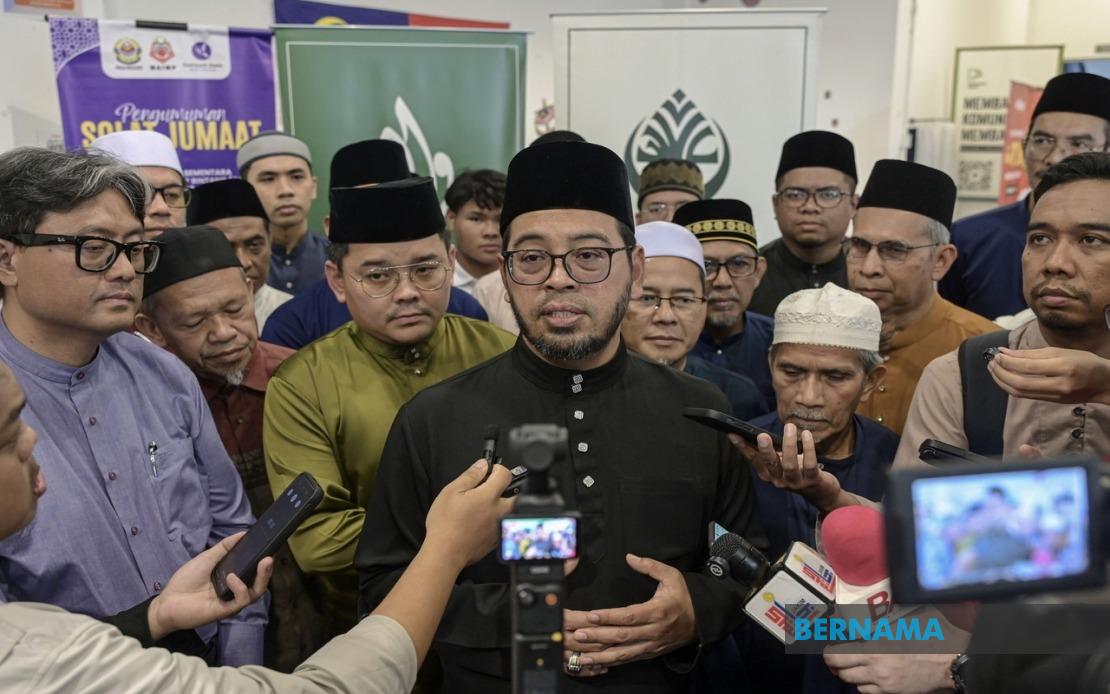
Malaysia's Minister in the Prime Minister's Department (Religious Affairs) Dr Zulkifli Hasan has unveiled plans for a substantial new mosque in the heart of Kuala Lumpur's Bukit Bintang district, marking a significant expansion of Islamic infrastructure in one of the country's most vibrant commercial and residential hubs. The facility, designed to serve more than 1,500 congregants, represents a recognition of growing religious and community needs in the area and reflects ongoing investment in religious facilities across the Federal Territories.
The proposed mosque will be constructed on the site currently occupied by the Outreach Oasis Bukit Bintang (OOBB) community centre, which has been functioning as a temporary Friday prayer surau since receiving formal approval from the Federal Territories Syariah Law Consultative Committee during a special session on June 8. This institutional endorsement cleared the path for the facility to serve religious purposes while permanent infrastructure could be developed. Dr Zulkifli announced the project after performing Friday prayers at the temporary venue, underscoring the practical pressures that have driven the decision to build dedicated mosque facilities in this location.
The transition from the OOBB community centre to a purpose-built mosque reflects a pattern seen across urban Malaysia, where rapid population growth and demographic shifts have outpaced religious infrastructure. The minister indicated that construction timelines are progressing well, with architectural designs and detailed plans already finalised. He projected that the new mosque would be operational by early 2025, providing a more substantial and permanent home for the growing congregation. This relatively ambitious timeline suggests that preliminary site preparation and approval processes have advanced considerably.
Notably, Dr Zulkifli stressed that the OOBB community centre will maintain its broader social and religious outreach functions after the mosque's completion. This dual-purpose approach reflects a strategic understanding that mosque buildings serve not only as prayer spaces but as anchors for wider dakwah, or Islamic education and missionary work, activities. By preserving the community centre's role alongside the new mosque, authorities aim to sustain existing social programmes and community engagement initiatives that have already taken root in Bukit Bintang.
The construction project is being undertaken through coordinated efforts across multiple government and civil society institutions. The Federal Territories Islamic Religious Department (JAWI) and the Federal Territories Islamic Religious Council (MAIWP) are partnering on the initiative, alongside several non-governmental organisations. This multi-stakeholder approach is typical of major religious infrastructure projects in Malaysia's federal territories, distributing responsibility and resources across established ecclesiastical hierarchies and community-based organisations.
For Kuala Lumpur residents and regular visitors to Bukit Bintang, the new mosque addresses a practical gap in religious facilities within a densely populated area. Bukit Bintang encompasses shopping districts, residential towers, and office complexes that attract thousands of daily commuters and residents, many of whom require prayer facilities. The 1,500-person capacity should comfortably accommodate demand from the local workforce and neighbourhood population during prayer times, though peak hours during Friday prayers may still present logistical considerations.
The announcement also signals the federal government's continued prioritisation of religious infrastructure development within the Federal Territories, where religious affairs fall under federal jurisdiction rather than state control. This project aligns with broader capital development goals and reflects demographic realities: even as Malaysia's urban centres grow increasingly diverse, Islamic religious facilities remain essential public infrastructure and serve as community anchors across religious, educational, and social dimensions.
From a broader Southeast Asian perspective, Malaysia's ongoing investment in mosque infrastructure demonstrates how the region's Muslim-majority and Muslim-plurality nations continue to expand religious institutional capacity alongside economic and urban development. The Bukit Bintang project exemplifies this dynamic, combining prayer spaces with community engagement functions. Such developments often attract interest from international Islamic architectural and design practitioners, potentially establishing benchmarks for mosque design in other regional contexts.
The completion timeline of early 2025 places the mosque's opening within the national planning cycle, potentially positioning it as part of broader Federal Territories development narratives. For property investors and businesses in Bukit Bintang, the new mosque represents institutional stability and continued government commitment to the area's long-term viability as a mixed-use urban district. The facility's presence may also subtly influence local real estate valuations and neighbourhood character, as religious institutions often serve as focal points for community identification and cohesion.
Looking ahead, the successful completion of this project will provide valuable insights into the pace and scale of religious infrastructure development that federal authorities can sustain. If the early 2025 deadline is met, it may establish a template for additional mosque construction elsewhere in the Federal Territories, where similar demographic pressures and infrastructure gaps exist. The project thus carries implications extending well beyond Bukit Bintang itself, potentially shaping how Malaysia's religious authorities approach urban mosque planning and construction in coming years.

%22%2F%3E%3C%2Fpattern%3E%3C%2Fdefs%3E%3Crect%20width%3D%22100%25%22%20height%3D%22100%25%22%20fill%3D%22url(%23ph4sh09g)%22%2F%3E%3Crect%20width%3D%22100%25%22%20height%3D%22100%25%22%20fill%3D%22url(%23ph4sh09p)%22%2F%3E%3Ctext%20x%3D%2250%25%22%20y%3D%2250%25%22%20text-anchor%3D%22middle%22%20dominant-baseline%3D%22central%22%20fill%3D%22rgba(255%2C255%2C255%2C0.95)%22%20font-family%3D%22Georgia%2C%20'Times%20New%20Roman'%2C%20serif%22%20font-weight%3D%22700%22%20font-size%3D%22272%22%20letter-spacing%3D%22-0.02em%22%3EAnwar%3C%2Ftext%3E%3C%2Fsvg%3E)