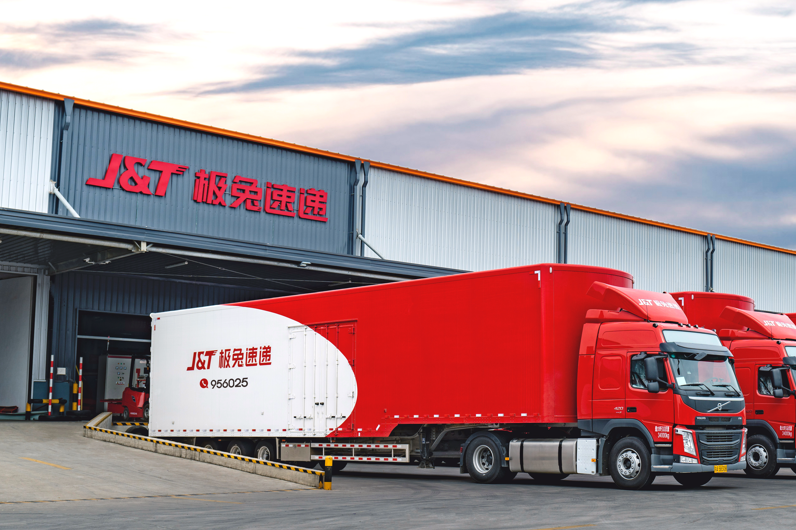
Hong Kong-listed logistics company J&T Global Express Ltd has marked a significant milestone by processing more than 100 million parcels daily during the second quarter of 2026, underscoring the mounting scale of cross-border commerce in Asia. The achievement reflects not merely operational capacity but the reshaping of regional trade patterns, with emerging markets increasingly driving parcel traffic growth at rates that dwarf traditional hubs. For Malaysian businesses and consumers plugged into the e-commerce ecosystem, the data signals accelerating competitiveness in last-mile delivery and expanding logistics choices as the company invests heavily in infrastructure across Southeast Asia.
The company processed 9.18 billion parcels in the April-to-June period, representing a 24.2 percent increase compared with the same quarter last year. More striking still, international parcel volume—those crossing borders outside mainland China—climbed 66.9 percent annually to reach 2.97 billion shipments, now comprising nearly a third of J&T's worldwide throughput. This compositional shift reveals how rapidly overseas markets are contributing to the firm's profit mix, reducing reliance on the more fiercely competitive domestic Chinese market and positioning J&T as a genuinely multinational player rather than a China-centric operator.
Southeast Asia emerged as the clear engine of J&T's expansion strategy during the quarter. The region generated 2.76 billion parcels, a 63.2 percent surge from the prior year, with the company's sorting infrastructure processing an average of 30.3 million parcels daily from the region alone. Over the first six months of 2026, Southeast Asian volumes reached 5.52 billion, up 71.2 percent year-on-year. These figures outpace growth in China itself, signalling that J&T has successfully pivoted its global strategy towards markets where e-commerce penetration and cross-border shopping remain in earlier expansion phases, offering higher growth trajectories. For Malaysian stakeholders, this implies improving service redundancy and competition, as successful logistics firms invest to capture regional demand.
The company's physical expansion throughout Southeast Asia reinforces its commitment to the region's long-term potential. By the end of June 2026, J&T had added six new sorting centres since year-end 2025, bringing its Southeast Asian footprint to 127 facilities. Equally important, the firm deployed eleven additional automated sorting lines, reaching a regional total of 75 such installations. These infrastructure investments translate into faster processing times, reduced handling errors, and the ability to accommodate seasonal volume spikes—capabilities essential as Malaysian and regional e-commerce adoption accelerates. The modernisation of sorting infrastructure matters profoundly for Malaysian exporters and merchants, who increasingly depend on reliable logistics partners capable of handling both domestic and international shipments seamlessly.
Despite facing intensifying competition and margin pressures within its core Chinese market, J&T maintained respectable growth domestically. Chinese parcel volumes reached 6.21 billion in Q2, up 10.6 percent annually, though growth substantially lags the international trajectory. The company processed an average of 68.2 million parcels daily in China, reflecting the market's maturity and saturation compared to emerging Southeast Asian demand. J&T's management responded by recalibrating its China operations, focusing on network optimisation, customer portfolio adjustments, and operational efficiency enhancements rather than pursuing volume at any cost. This disciplined approach prevents the margin erosion that has plagued competitors chasing growth in a crowded domestic market.
J&T's Chinese automation initiatives continued unabated despite regional rebalancing. The company added eight automated sorting lines during the first half of 2026, expanding its domestic total to 346 installations. These systems improve throughput and reduce labour dependencies at a moment when Chinese wage inflation and talent retention remain competitive pressures. The investment signals that J&T, whilst expanding internationally, remains committed to defending profitability and operational excellence in its foundational market. For regional competitors, this dual strategy—aggressive international expansion paired with selective domestic efficiency—represents a competitive benchmark increasingly difficult to replicate.
Emerging markets beyond Southeast Asia are beginning to contribute material volume to J&T's overall mix. In Latin America and the Middle East combined, the company handled 211 million parcels during Q2, representing a 136.5 percent year-on-year surge. Though still a small fraction of total volume, this explosive growth trajectory indicates J&T's cross-border logistics capabilities are gaining traction among e-commerce platforms seeking alternatives to incumbents. The company's deepening partnerships with major online shopping platforms in these regions suggest J&T is capturing market share at pivotal moments when logistics infrastructure remains fragmented and underserved. For Malaysian companies with aspirations to reach consumers across Latin America or the Middle East, such competitive dynamics offer opportunities to negotiate rates and service terms with motivated logistics providers.
Investor sentiment has turned notably positive as Wall Street analyses crystallise around J&T's repositioning. Morgan Stanley recently elevated J&T Express to overweight rating, citing superior growth prospects relative to competing logistics firms. The investment bank highlighted Southeast Asia and South America as regions where J&T's exposure offers above-consensus e-commerce expansion potential. This institutional endorsement carries weight because it reflects confidence that J&T's infrastructure investments and partnership strategies will yield returns, and that international markets can offset domestic Chinese margin compression. For Malaysian institutional investors or firms evaluating logistics partners for regional supply chains, such analyst upgrades validate the company's strategic trajectory and operational competence.
The broader implications for Malaysia and Southeast Asia extend beyond J&T's corporate performance. Robust logistics infrastructure and competitive carrier capacity directly enable regional e-commerce growth, attracting foreign direct investment in warehousing, fulfilment, and technology-enabled distribution centres. When established players like J&T invest heavily in sorting facilities and automation, they signal confidence in sustained demand and create competitive pressure on other providers to modernise. Malaysian businesses benefit from choice, improved service levels, and downward pricing pressures as logistics becomes increasingly commoditised. Simultaneously, these investments create employment opportunities in logistics, operations, and technology sectors across Southeast Asia, complementing other professional and manufacturing employment already expanding through regional trade integration. The momentum underlying J&T's record volumes reflects genuine structural shifts in how goods flow through Asia, with Malaysia positioned as both a node in these networks and a market benefiting from enhanced connectivity.

