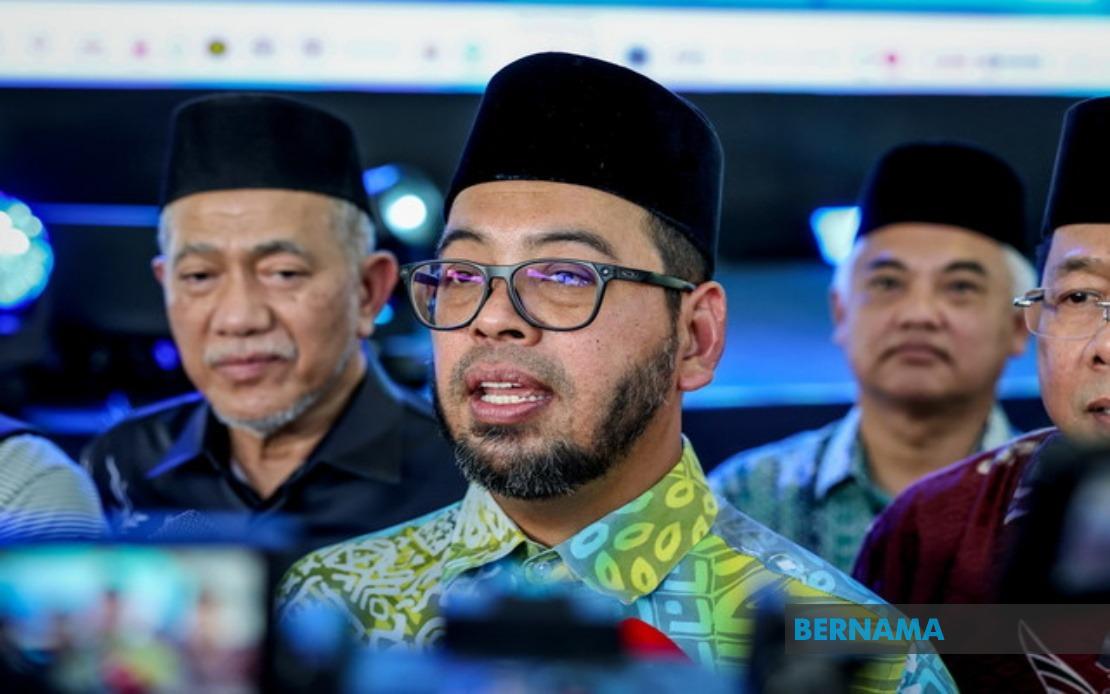
The Department of Islamic Development Malaysia (JAKIM) has announced plans to establish unified funeral management guidelines that will serve as a standardised reference across the country, following widespread public attention to a controversial burial incident. Minister in the Prime Minister's Department (Religious Affairs) Dr Zulkifli Hasan disclosed the initiative during an official engagement in Bukit Mertajam, emphasising that the refinement reflects both contemporary requirements and existing state regulatory frameworks.
Currently, Malaysia's funeral management landscape remains fragmented, with individual states operating under their own protocols and enactments. While several state authorities have already implemented their own guidelines, JAKIM has identified significant scope for enhancement and consolidation. The federal department's approach acknowledges this patchwork system and seeks to develop a more robust, cohesive framework that can guide religious authorities nationwide whilst remaining compatible with each state's particular legal environment.
Dr Zulkifli explained that the standardisation effort does not aim to displace existing state regulations but rather to strengthen and harmonise them into a single, comprehensive reference document. The minister noted that foundational guidelines are already available, suggesting that the remaining work involves refinement and integration rather than creating protocols from scratch. This measured approach indicates JAKIM's intention to balance federal coordination with respect for state autonomy in religious affairs.
Regarding implementation timelines, Dr Zulkifli projected completion in the near term, pending finalisation of technical details and ensuring full compliance with individual state laws. The minister's statement that the process "should not take long" signals governmental prioritisation of the initiative, likely reflecting recognition that delays in addressing public concerns could fuel further social media criticism and community anxiety over funeral procedures.
The announcement emerges directly from a contentious situation in Selangor involving allegations of burial delays. The incident centred on complications at the Ukay Perdana Muslim Cemetery in Hulu Kelang, where claims of postponed interment sparked significant online discussion and public concern. In response, state religious authorities including the Selangor Islamic Religious Council (MAIS) and the Selangor Islamic Religious Department (JAIS) convened an emergency meeting involving the deceased's family, mosque management at Masjid Nurul Hidayah in Kampung Pandan Dalam, and the welfare organisation Badan Kebajikan Salatulrahim.
MAIS chairman Datuk Salehuddin Saidin characterised the coordinated response as essential for identifying solutions acceptable to all stakeholders whilst preventing recurrence of similar complications. This proactive stance reflects increasing sensitivity within Malaysia's religious establishment to public perception, particularly regarding matters touching on Islamic burial practices—a domain where emotional attachment, religious conviction, and procedural clarity converge.
For Malaysian Muslims and families navigating funeral arrangements, the absence of standardised national protocols has potentially created uncertainty and vulnerability to inconsistent treatment across states. Funeral management encompasses numerous critical dimensions, from initial notification procedures through final burial protocols, and variations in requirements or timelines can compound grief and logistical stress. A unified framework offers promise of greater transparency and predictability, allowing families to understand their rights and obligations irrespective of location.
The broader context includes growing awareness among religious authorities that social media amplification of isolated incidents can rapidly escalate into systemic credibility challenges. The viral nature of the Selangor burial controversy demonstrates how contemporary information flows demand that religious institutions maintain not merely operational competence but also public confidence through clear communication and demonstrable fairness. JAKIM's initiative signals recognition that preventative standardisation represents a more effective long-term strategy than reactive damage control.
Dr Zulkifli's appeal for all parties to remain composed and collaborative underscores potential sensitivities around the issue. Funeral practices intersect with deeply held religious beliefs, family honour, and community identity, creating dynamics where misunderstandings or perceived disrespect can inflame tensions rapidly. The emphasis on unity and joint problem-solving appears designed to prevent polarisation between families, religious authorities, cemetery operators, and welfare organisations.
For Southeast Asian context, Malaysia's experience reflects broader challenges facing plural societies where religious autonomy coexists with federal coordination imperatives. Other regional nations with significant Muslim populations confront analogous tensions between state-level religious authority and national-level standardisation needs. Malaysia's approach—federal enhancement of existing state frameworks rather than centralised replacement—offers a potential model balancing subsidiarity with uniformity.
The standardised guidelines, once implemented, will likely address operational bottlenecks including documentation requirements, cemetery scheduling protocols, inter-agency communication procedures, and dispute resolution mechanisms. Clear written standards can reduce scope for interpretation variation and provide neutral reference points when conflicts emerge between families and institutional actors.
Beyond the immediate funeral management context, JAKIM's initiative reflects institutional recognition that public trust in religious administration depends increasingly on systematic transparency and consistency. The standardisation effort thus carries symbolic importance beyond procedural technicalities, signalling commitment to treating all Muslim Malaysians equitably during profoundly vulnerable moments. As the process advances, implementation quality will ultimately determine whether the framework addresses root causes of delays and complications or merely establishes formal protocols without meaningful improvement in lived experience.
The coming months will test whether JAKIM's timeline proves realistic and whether the standardised guidelines achieve genuine acceptance across state religious authorities. Success requires not only technical comprehensiveness but also buy-in from diverse stakeholders with varying institutional cultures and political considerations, making successful nationwide adoption non-trivial despite the conceptual merits of unified standards.

