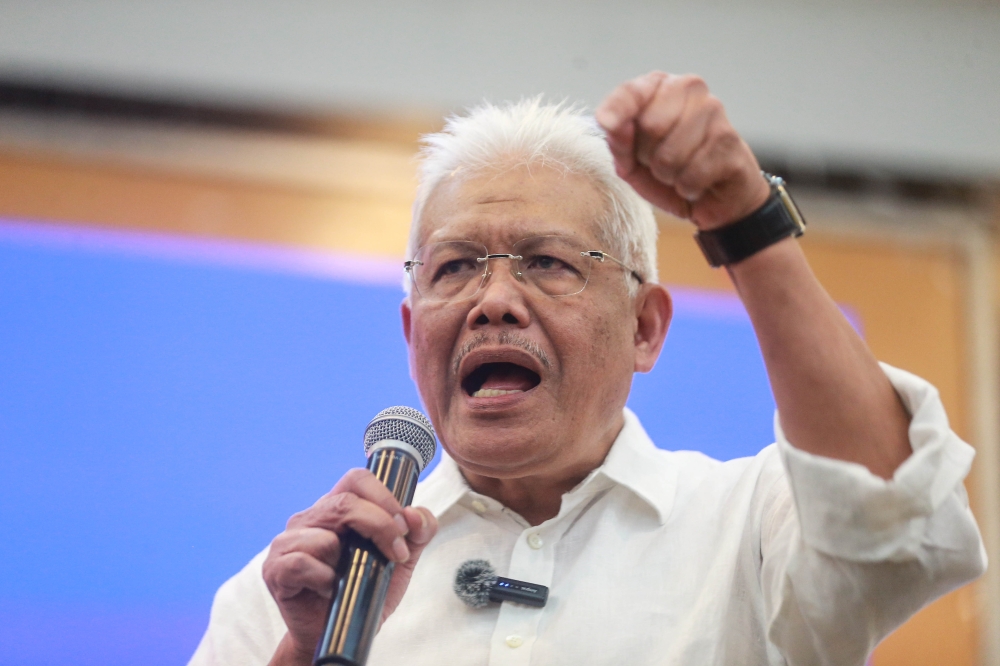
Negeri Sembilan Umno chairman Datuk Seri Jalaluddin Alias is positioned as a primary contender for the menteri besar position should the Barisan Nasional-Perikatan Nasional coalition win control of the state assembly in forthcoming elections. This assessment comes from Datuk Seri Hamzah Zainudin, who outlined the coalition's leadership succession framework during recent political discussions in Kuala Lumpur.
The identification of Jalaluddin Alias as a serious aspirant reflects the complex mathematics underpinning Malaysian state politics, where coalition configurations and seat distributions fundamentally shape executive appointments. His positioning underscores the continued importance of Umno's traditional strongholds in determining leadership outcomes across peninsular Malaysia, particularly in states where the party maintains significant grassroots organization and electoral influence.
As Negeri Sembilan's state party chairman, Jalaluddin Alias brings institutional credibility and established networks within the Umno machinery. His tenure has coincided with consolidation efforts within state party structures, positioning him as a figure capable of bridging intra-party factions—a critical skill in navigating the competing interests that emerge when coalitions assume power. The mention of multiple candidates in contention, rather than a single anointed successor, suggests ongoing deliberation within leadership circles regarding the optimal balance between party seniority, electoral performance, and political acceptability.
The BN-Perikatan alliance represents a significant shift in Malaysian coalition politics. This partnership brings together Umno and the Malaysian Chinese Association—traditional components of the original Barisan Nasional framework—with Perikatan Nasional's expanding membership, which includes Bersatu, PAS, and increasingly other parties seeking to consolidate anti-PKR positioning. For Negeri Sembilan specifically, such an alliance substantially alters the electoral calculus compared to previous contests where the state remained contested territory between competing blocs.
Negeri Sembilan has emerged as a critical battleground in Malaysian electoral politics, its relatively small assembly size notwithstanding. The state's position as a swing territory means that performance here carries disproportionate significance for national coalition narratives. A strong showing by the combined BN-Perikatan machinery would signal competitiveness in the broader central corridor stretching toward Selangor, providing psychological momentum for federal-level positioning and resource allocation.
Jalaluddin Alias's emergence as a leading candidate also reflects generational transitions within Umno's leadership cadre. Unlike some veteran figures whose political capital derives primarily from historical positioning, candidates of his cohort typically require contemporaneous electoral validation to sustain credibility. This dynamic incentivizes active engagement during campaign periods and visible connection to constituency-level organization—elements that the incoming menteri besar role would directly test.
The menteri besar position carries substantive administrative responsibility combined with ceremonial prestige. The chief minister oversees state development budgets, manages relationships with federal ministries, and serves as the principal political voice in media and ceremonial contexts. For Negeri Sembilan, with its relatively modest revenue base compared to wealthier states like Selangor or Johor, the chief minister's effectiveness in securing federal development allocations and infrastructure investment becomes particularly consequential for constituent satisfaction and electoral sustainability.
Hamzah Zainudin's articulation of the succession framework appears designed to balance multiple objectives simultaneously. By naming Jalaluddin Alias among candidates rather than as the exclusive choice, the coalition signals that merit and electoral performance remain operative criteria while telegraphing to various party factions that aspirational leadership positions remain potentially achievable. This approach manages expectations across different constituencies within the coalition partnership.
The mention of multiple contenders also reflects internal Umno dynamics in Negeri Sembilan, where various divisions and assemblyman-level figures may retain their own leadership ambitions. Rather than suppressing these competing claims through premature coronation of a single successor, allowing the pretense of ongoing deliberation preserves unity and permits performance-based differentiation during the campaign period itself. Campaign contributions, grassroots mobilization success, and electoral performance in particular constituencies can therefore legitimately influence final selection, providing objective criteria beyond pure political patronage.
For Malaysian voters in Negeri Sembilan and observers tracking coalition consolidation patterns, the identification of leadership candidates carries implications extending beyond state politics. The personnel selected to lead component states provide indicators regarding factional balance within the larger national coalition. Jalaluddin Alias's position as a leading contender signals Umno's continued centrality within BN structures and suggests that Perikatan-aligned parties will not monopolize executive positions even in states where they claim organizational strength.
The timing of such announcements, released strategically during the inter-election period, serves multiple communications purposes. For party supporters, naming candidates provides motivation and focal points for mobilization efforts. For uncommitted swing voters in marginal constituencies, the identification of likely leadership figures enables evaluation of personal competence and policy orientation. For rival coalitions, such statements establish transparent competitive parameters and permit detailed policy-based contrast messaging.
Looking forward, Jalaluddin Alias's candidacy will be substantiated through visible campaign engagement, policy articulation, and constituent outreach efforts across the state's varied demographic and geographic terrain. The menteri besar aspirant role demands more intensive public profile than routine party positions, exposing candidates to heightened scrutiny from media, opposition figures, and civil society observers. Performance during this prolonged audition phase will materially influence whether Jalaluddin Alias ultimately ascends to the chief minister's office should electoral outcomes align favorably.

