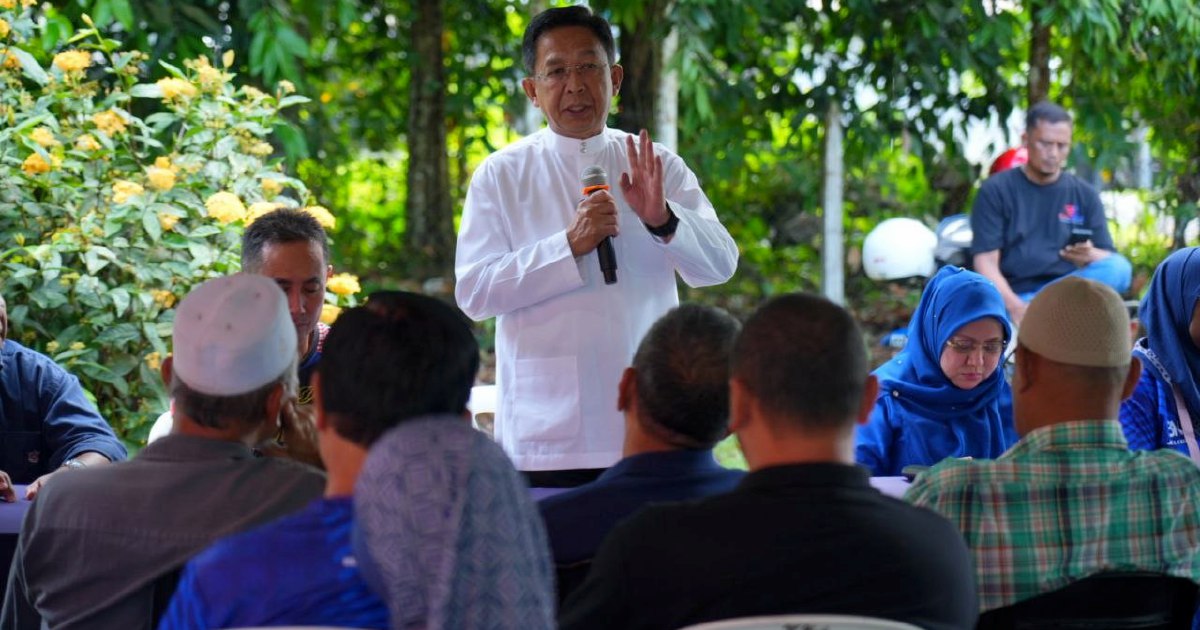
The Perikatan Nasional coalition has placed Negri Sembilan Umno chairman Datuk Seri Jalaluddin Alias firmly in contention for the menteri besar position, contingent upon a successful August 1 state election outcome for its alliance with Barisan Nasional. The development signals the coalition's confidence in Jalaluddin's political standing and organisational credentials within the state's dominant Umno machinery, positioning him as a frontrunner among multiple candidates being considered for the chief minister's office.
Jalaluddin's emergence as a potential MB candidate reflects the delicate power-sharing arrangements that underpin the PN-BN understanding in Negri Sembilan. The coalition framework requires careful negotiation between the two major blocs, with consideration given to factional interests, representation across parties, and regional political balance. His profile as the state Umno chairman carries substantial weight in these calculations, given Umno's traditional dominance in the state's political landscape and its voter base.
The designation of potential menteri besar candidates before an election remains a calculated political strategy. By publicly identifying leading contenders, the coalition signals internal consensus and project confidence to voters that leadership succession is predetermined and orderly. This approach differs markedly from allowing post-election negotiations to determine leadership, a pathway that historically created instability and power struggles within state governments across Malaysia. The PN-BN coalition's decision to name candidates beforehand suggests an attempt to pre-empt internal disputes and present a united front to Negri Sembilan voters.
For Jalaluddin specifically, his selection as a potential MB represents recognition of his command over Umno's state apparatus and his ability to manage the party's interests within a coalition framework. His tenure as Umno chairman in Negri Sembilan has evidently earned him sufficient political capital and support from party leadership to warrant consideration for the highest state executive position. However, the designation of "potential" candidates indicates that final confirmation remains subject to election results and possible post-election negotiations between coalition partners.
The August 1 election itself carries significant implications for Malaysia's broader political trajectory. Negri Sembilan serves as a bellwether state whose outcome often reflects national political sentiment, particularly regarding public confidence in Umno's governance and the viability of cross-coalition partnerships. A strong PN-BN performance would vindicate the partnership strategy and potentially strengthen similar arrangements in upcoming elections across other states, while a setback would raise questions about the durability of the coalition framework.
The timing of Jalaluddin's announcement as a potential candidate serves multiple purposes within the campaign cycle. It energises Umno supporters within Negri Sembilan by demonstrating their party's commitment to holding the menteri besar office, critical for maintaining grassroots motivation during the campaign period. Simultaneously, it reassures other PN-BN coalition components that power-sharing will remain equitable and structured, essential for maintaining coalition discipline across competing interests and party affiliations.
Negri Sembilan's political composition and voter demographics make the menteri besar selection particularly significant for Malaysia's larger political equilibrium. The state's relatively modest population compared to major states like Selangor and Johor belies its political importance as a historically Umno-controlled territory. Maintaining Umno control through a PN-BN victory would preserve what remains a critical bastion of the party's political influence, a consideration that undoubtedly weighs heavily in coalition calculations.
The identification of multiple potential candidates, rather than a single predetermined choice, preserves flexibility within the coalition framework. Should unforeseen circumstances emerge—internal party disputes, unexpected electoral dynamics, or shifts in coalition dynamics—alternative candidates remain available. This approach acknowledges the inherent uncertainties of electoral politics while maintaining the appearance of predetermined order. It represents sophisticated coalition management, balancing transparency with pragmatic flexibility.
For Negri Sembilan voters, the pre-election announcement of potential leadership shapes campaign discourse and voter decision-making processes. Rather than voting solely on party platforms and local issues, voters simultaneously evaluate their confidence in Jalaluddin specifically, his perceived competence for the MB role, and his ability to deliver development benefits to their constituencies. This personalisation of electoral choice reflects Malaysia's semi-presidential political system where individual personality and perceived leadership capability substantially influence voter behaviour.
The broader PN-BN coalition framework in Negri Sembilan represents an evolution in Malaysian coalition politics. The collaboration between these previously opposed blocs demonstrates the fluid nature of contemporary Malaysian electoral alliances, where pragmatic governance interests increasingly supersede ideological differences. Success in Negri Sembilan would validate this coalition model and potentially establish templates for similar arrangements elsewhere, fundamentally reshaping Malaysia's political competitive landscape.
Looking forward, Jalaluddin's potential appointment as menteri besar would carry implications extending beyond Negri Sembilan's borders. His performance in office would either strengthen or weaken the PN-BN coalition's prospects in subsequent elections, influencing calculations across state-level politics nationwide. The stakes attached to this single state election underscore Malaysia's complex multi-level political system, where local electoral outcomes cascade into broader regional and national political consequences.

