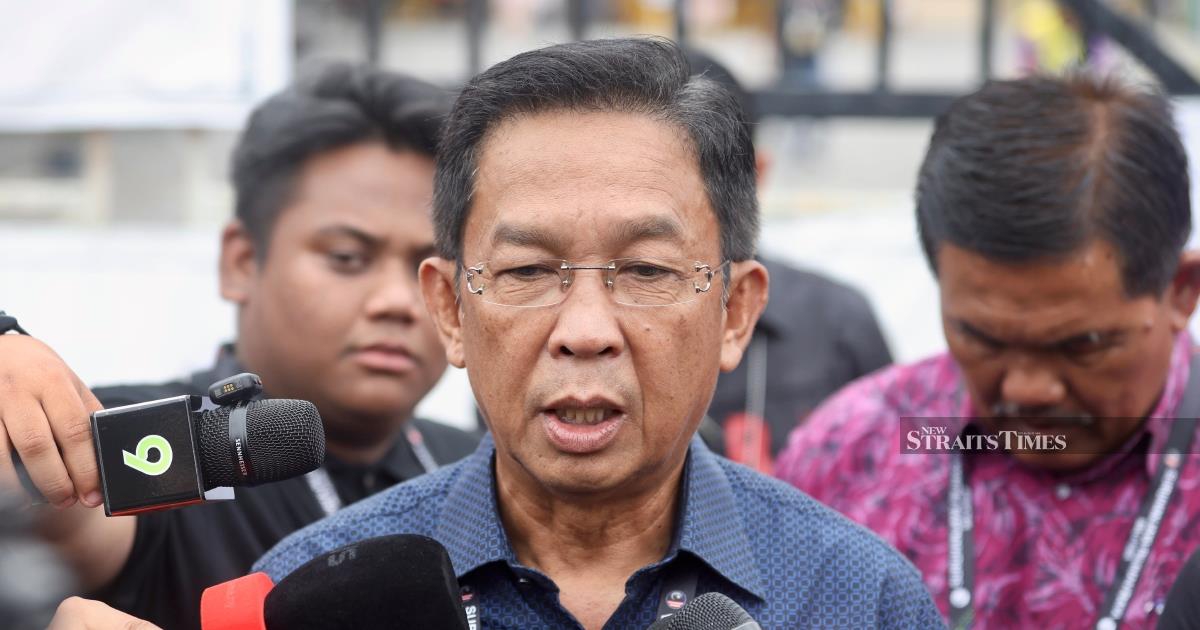
Datuk Seri Jalaluddin Alias, who heads the Negri Sembilan Umno Liaison Committee, has sought to address questions surrounding his non-appearance at the menteri besar swearing-in ceremony held at Istana Besar Seri Menanti, explaining that the event's scheduling did not provide him with sufficient advance warning. The high-profile absence had drawn attention from political observers tracking internal dynamics within Umno's representation in the state.
The clarification comes at a time when Negri Sembilan politics continues to navigate complex coalition arrangements and factional interests within the ruling party structure. State-level ceremonial events, particularly those involving the swearing-in of senior constitutional office holders, typically attract key party figures and senior government officials. The absence of a committee chairman representing the state's dominant political party would naturally invite scrutiny and speculation about either procedural oversights or underlying political tensions.
Jalaluddin's explanation centres on an administrative matter rather than any substantive political dispute. The compressed timeline between notification and the actual ceremony at the Sultan's official residence meant that his attendance could not be arranged with the necessary preparation. Such ceremonial occasions often demand prior coordination, particularly for senior officials whose schedules are typically arranged well in advance.
Negri Sembilan's political landscape has been characterised by ongoing negotiations between different political blocs and factions within Umno itself. The state has experienced several transitions in recent years, with leadership changes reflecting both electoral dynamics and intra-party realignments. The Umno Liaison Committee serves as a critical institutional mechanism for maintaining party cohesion at the state level and coordinating between federal and state-level party structures.
For Malaysian political observers, such episodes offer windows into how party administration functions during transition periods. The swearing-in ceremony, as a formal constitutional proceeding, would normally be scheduled with adequate notice to allow senior party figures to clear their calendars and participate. That the Umno Liaison Committee chairman was not informed with sufficient lead time suggests either a breakdown in internal communication channels or an unusually compressed decision-making process.
The incident also reflects broader questions about coordination mechanisms within Umno's organisational hierarchy. The party's federal leadership, state-level structures, and liaison committees must work in synchronisation to present a united front during important ceremonial occasions. When such coordination falters, even for apparently minor events, it can become fodder for speculation about party discipline and internal management.
In the Malaysian political context, where ceremonial participation carries symbolic weight, Jalaluddin's explanation seeks to distinguish between logistical failure and political intent. By attributing his absence to short notice rather than a deliberate boycott or protest, he attempts to deflect any suggestions of discord within Negri Sembilan Umno's leadership circle. This distinction matters because the former signals a procedural problem while the latter might indicate deeper factional disputes.
For residents of Negri Sembilan and political analysts tracking state governance, the episode underscores how even routine administrative matters can become subjects of political commentary. The swearing-in of a menteri besar is a significant occasion for the state, and the attendance patterns of senior party figures are routinely noted and interpreted. While Jalaluddin's clarification appears straightforward, it serves as a reminder that political visibility and presence carry multiple layers of meaning within Malaysia's competitive political environment.
Moving forward, such incidents typically prompt internal reviews of communication protocols within ruling coalition structures. Umno's state liaisons committees, which serve as intermediaries between federal and state party machinery, may strengthen their notification procedures for major ceremonial events involving state leadership. These committees play a crucial role in managing party representation and ensuring that important occasions reflect party unity and organisational effectiveness.
The broader significance lies in how Malaysian political parties manage their public presentation during transitions and leadership ceremonies. The incident involving Jalaluddin reflects the complexities of coordinating across multiple levels of party hierarchy, particularly when federal, state, and district-level interests intersect. Negri Sembilan, as a state where Umno maintains significant political influence, represents one of many domains where such coordination mechanisms must function seamlessly to maintain party credibility and public confidence in governance structures.
This episode also illustrates how Malaysian media and political observers scrutinise the patterns of attendance at high-level state functions. The presence or absence of key party figures at constitutional ceremonies carries implications for understanding internal party dynamics and the strength of cohesion within ruling coalitions. Jalaluddin's proactive clarification suggests an awareness that allowing such questions to linger could generate more damaging speculation about discord within Umno's state structure, making transparency about scheduling difficulties preferable to silence.

