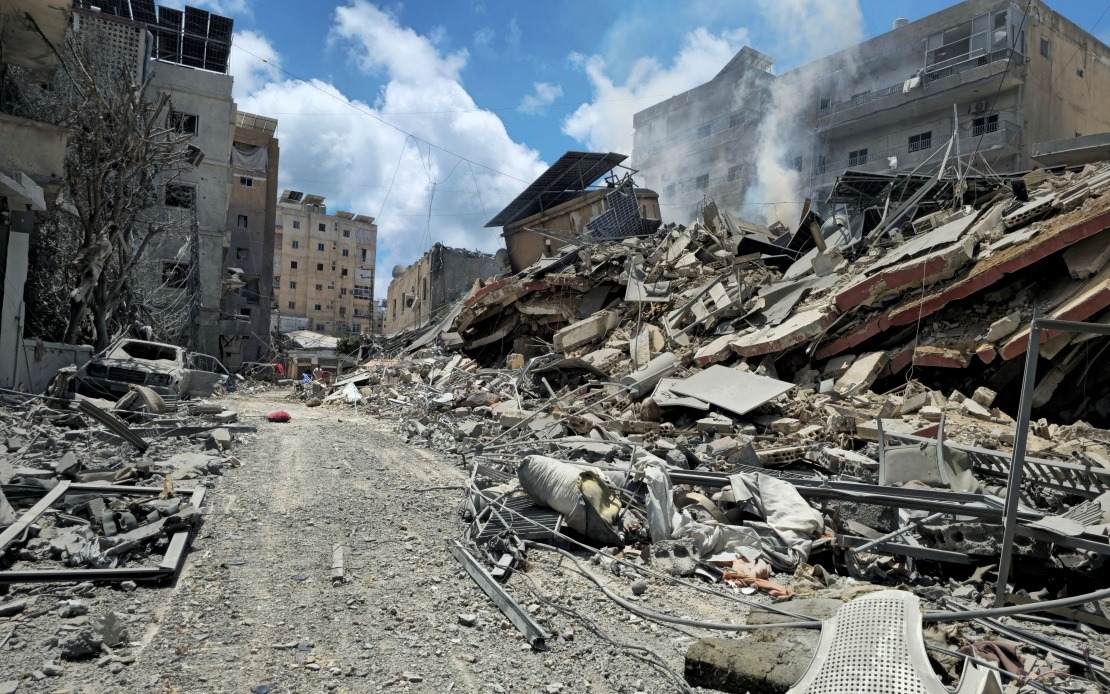
Japan has committed US$15 million in emergency humanitarian assistance targeting populations across West Asia, underscoring Tokyo's continued engagement with one of the world's most volatile regions. Foreign Minister Toshimitsu Motegi announced the allocation on Friday, revealing a strategic distribution designed to address immediate humanitarian crises while signalling Japan's diplomatic priorities in the Middle East and surrounding areas.
The aid package represents a measured but meaningful response to deteriorating conditions affecting millions of civilians. Of the total allocation, approximately US$10 million will flow to Iran, reflecting the scale of humanitarian needs in a country grappling with economic pressures and the consequences of prolonged geopolitical tensions. Lebanon, already struggling under the weight of political instability, currency collapse, and refugee pressures, will receive roughly US$4 million. The remaining US$1 million has been designated for Palestinians residing in the West Bank, a population enduring ongoing conflict-related hardships and restricted economic opportunities.
All funds will be channelled through established international organisations rather than direct bilateral transfers, a mechanism that ensures transparency and allows Japan to work within existing humanitarian frameworks already operating in these territories. This approach aligns with Tokyo's preference for multilateral solutions and reduces the risk of funds becoming entangled in regional political disputes or sanctions complications. The aid will specifically support food security, medical care, and other essential humanitarian services where civilian populations face acute shortages.
Motegi's statement framing the announcement reveals the calculus underpinning Japanese foreign policy in the region. By explicitly emphasising that "peace and stability in the Middle East are of vital importance to Japan," he articulated the economic and strategic rationale behind Tokyo's involvement. Japan depends heavily on Middle Eastern oil and gas supplies, making regional stability a direct national interest rather than merely a moral imperative. Disruptions to trade routes, energy supplies, or financial systems in West Asia carry immediate consequences for Japanese economic performance and energy security.
The timing of this announcement reflects mounting international pressure to address humanitarian deterioration across West Asia. Iran faces compounding economic difficulties stemming from international sanctions, currency devaluation, and reduced government capacity to deliver basic services. Lebanon's financial collapse has created one of the world's worst humanitarian emergencies outside active warfare, with the Lebanese pound losing approximately 90 percent of its value and poverty rates soaring above 80 percent. Palestinian communities in the West Bank continue experiencing restrictions on movement and economic activity that constrain development and employment opportunities.
Japan's humanitarian outreach also carries subtle diplomatic messaging. Tokyo has historically maintained pragmatic relationships across the region, avoiding the ideological alignments that characterise many Western powers. By providing aid to Iran despite US sanctions, Japan demonstrates independence from Washington's policy line while maintaining its core alliance commitments. Simultaneously, support for Lebanon and Palestinians signals sensitivity to humanitarian rather than purely geopolitical considerations, enhancing Japan's soft power credentials among developing nations and non-aligned states throughout Asia and Africa.
Motegi indicated that this allocation represents a starting point rather than Japan's final commitment to the region. His pledging to work closely with relevant governments and international organisations suggests ongoing consultations that may yield additional support packages as situations evolve. This incremental approach allows Japan to calibrate responses based on changing conditions while maintaining flexibility in its budget allocation and diplomatic engagement.
For Malaysian policymakers and regional observers, Japan's move carries significance beyond immediate humanitarian considerations. It demonstrates how middle-power nations navigate complex geopolitical terrain in West Asia, balancing alliance commitments with pragmatic interests and humanitarian values. Malaysia, similarly positioned as a bridge between the Islamic world and Western-aligned states, shares comparable concerns about regional stability and can reference Japan's multilateral approach when formulating its own Middle Eastern policies.
The announcement also illustrates the challenge facing developed economies in West Asia, where humanitarian needs perpetually exceed available international funding. Even substantial contributions like Japan's US$15 million represent modest allocations relative to the scale of suffering in each territory. Iran's 88-million population, Lebanon's 6-million residents, and West Bank's 3-million Palestinians collectively face needs measured in billions of dollars. Japan's contribution, while meaningful, highlights the gap between humanitarian requirements and international capacity to deliver assistance through conventional channels.
Japan's continued engagement in West Asian humanitarian efforts reflects broader strategic thinking about its regional role. As Tokyo positions itself as a stabilising power in an era of great power competition, demonstrating commitment to humanitarian principles and multilateral cooperation strengthens its diplomatic credentials and distinguishes it from rivals pursuing narrowly defined interests. This aid announcement contributes to that narrative while addressing genuine suffering affecting millions of vulnerable civilians across three distinct but interconnected humanitarian crises.

