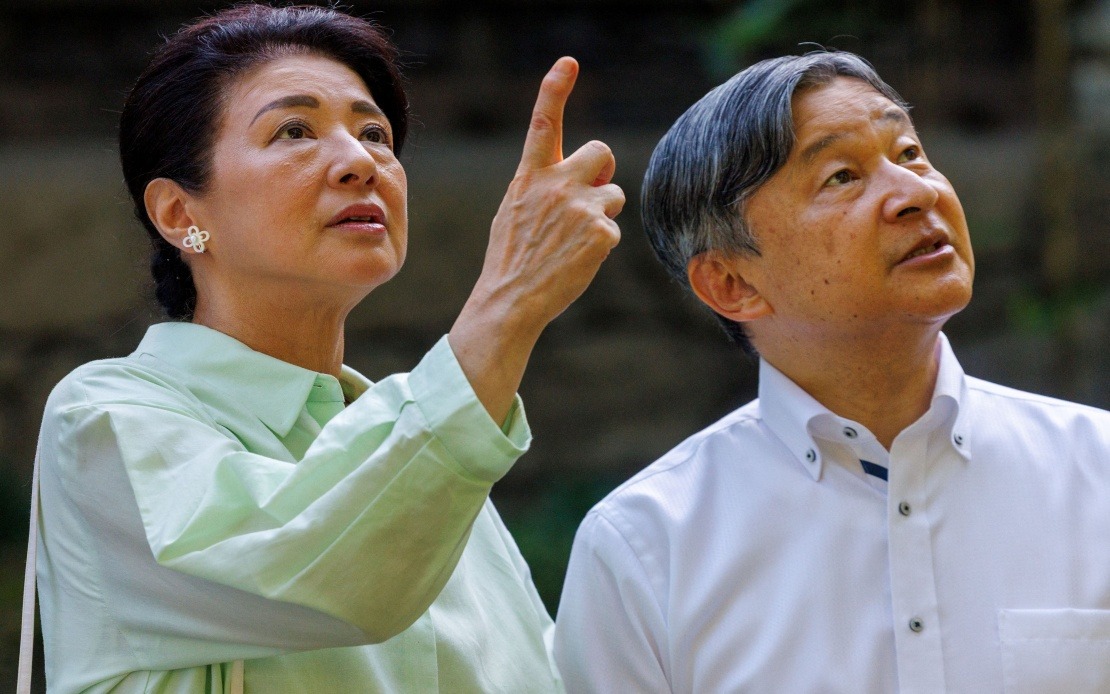
Japan's Cabinet gave formal approval on Tuesday to landmark legislation reshaping the imperial succession framework, a move intended to stabilise a royal lineage facing mounting demographic pressures. The bill, championed by Prime Minister Sanae Takaichi's Liberal Democratic Party in coalition with the Japan Innovation Party, seeks parliamentary enactment by July 17 as the current legislative session concludes. The proposals represent a measured attempt to address long-standing anxieties about the imperial family's viability without fundamentally dismantling the male patrilineal inheritance system that has defined Japanese imperial succession for centuries.
The legislative package rests on two principal mechanisms designed to augment the pool of potential successors. The first permits the imperial household to adopt eligible males aged 15 and above who trace their descent through paternal lines from emperors and belong to any of 11 designated former branch families. The second allows female imperial family members to maintain their royal status despite marrying commoners, a significant departure from existing law that automatically strips women of imperial rank upon marriage outside the dynasty. Together, these measures attempt to inject new blood into a shrinking institution whilst preserving the conservative constitutional foundations that the ruling party views as essential to Japan's cultural identity.
The adoption provision operates within carefully calibrated constraints. Although the legislation creates an explicit exemption allowing males from the branch families to be adopted into the imperial household—contrary to a blanket prohibition under current law—it simultaneously forbids those adopted individuals from themselves ascending the throne. However, their male descendants would enjoy full eligibility to become emperor, effectively creating a pathway for revitalising the succession without immediate constitutional rupture. This compromise architecture reveals the delicate balance between modernising the institution and honouring traditionalist sensibilities within the ruling coalition.
The demographic urgency underpinning this legislative effort cannot be overstated. Emperor Naruhito, aged 66, has only three confirmed successors within the immediate imperial line: his younger brother Crown Prince Fumihito at 60, his nephew Prince Hisahito at 19, and his 90-year-old uncle Prince Hitachi. This precarious succession structure stands in stark contrast to the sprawling imperial households of previous eras, when dozens of potential heirs ensured continuity. The 11 branch families targeted for adoption share a common imperial ancestor from approximately 600 years ago, making them genealogically credible candidates for restoring demographic depth to the institution.
The historical context informing this legislative moment extends back to post-war reforms. Following Japan's defeat in 1945, the United States-led occupation forces substantially reduced imperial family membership. In 1947, when the current Imperial House Law took effect, 51 members from 11 branch families were stripped of imperial status, a dramatic contraction designed to modernise the institution. Three families related to Emperor Showa—the posthumous name for Emperor Hirohito—retained their royal standing under occupation authorities' guidance. The present bill thus represents an acknowledgment that mid-twentieth-century reforms may have been too sweeping, leaving the institution vulnerable to succession failure.
The legislative proposal emerged from cross-party deliberations conducted at the highest parliamentary levels. The speakers and vice speakers of both the House of Representatives and House of Councillors convened all 13 parliamentary parties and groups to hear perspectives before drafting a consensus document that ultimately formed the bill's foundation. Yet this consultative process also revealed significant fault lines. Notably absent from the final legislation is any commitment to permitting female succession or recognising the imperial claims of individuals descended through maternal lines—despite such reforms commanding substantial public endorsement.
Public sentiment on this question diverges markedly from conservative political strategy. A Kyodo News poll conducted in May revealed that 83.0 percent of respondents favour permitting a female emperor, a decisive majority reflecting modernising attitudes within Japanese society. The decision to exclude this proposal from the bill signals that the ruling Liberal Democratic Party's constitutional conservatism takes precedence over popular preference. Opposition parties are expected to vigorously challenge this omission during parliamentary debate, potentially complicating the government's legislative timeline.
For regional observers, Japan's imperial succession debate carries symbolic weight beyond its institutional mechanics. The decision to preserve male-line succession whilst simultaneously permitting female family members to retain status represents a middle path between stasis and radical reform. This approach mirrors broader tensions within East Asia regarding tradition and modernity, as societies balance respect for ancestral institutions with contemporary egalitarian values. Malaysia, as a constitutional monarchy itself, may find instructive parallels in Japan's negotiation of these competing imperatives.
The political economy of the legislative push warrants scrutiny as well. Prime Minister Takaichi, the Liberal Democratic Party's first female leader, presides over efforts to maintain exclusively male succession, a paradox that international observers have noted. This contradiction underscores how institutional conservatism can coexist with individual advancement, a phenomenon not uncommon in hierarchical Asian societies where personal achievement and structural tradition operate according to different logics.
The July 17 deadline imposes real constraints on parliamentary deliberation. Rather than allowing extended debate on fundamental constitutional questions, the compressed timeline may force opposition parties to accept partial measures or risk legislative stalemate. Alternatively, the government might leverage the deadline to steamroll contentious provisions through parliament, a tactic that could generate lasting resentment among reform-minded legislators and the broader public.
Looking forward, this legislation should be understood as a provisional stabilisation measure rather than a permanent solution. By creating pathways for male adoptions and protecting female family members' status, the bill purchases time for the imperial institution to adapt to demographic realities. However, without revisiting the fundamental question of female succession—an issue the 2021 government panel explicitly deferred—Japan may simply postpone rather than resolve the succession crisis. Within a generation or two, absent further reforms, the same demographic pressures that prompted this bill may resurface with even greater urgency, forcing future governments to confront the female succession question they have now avoided.

