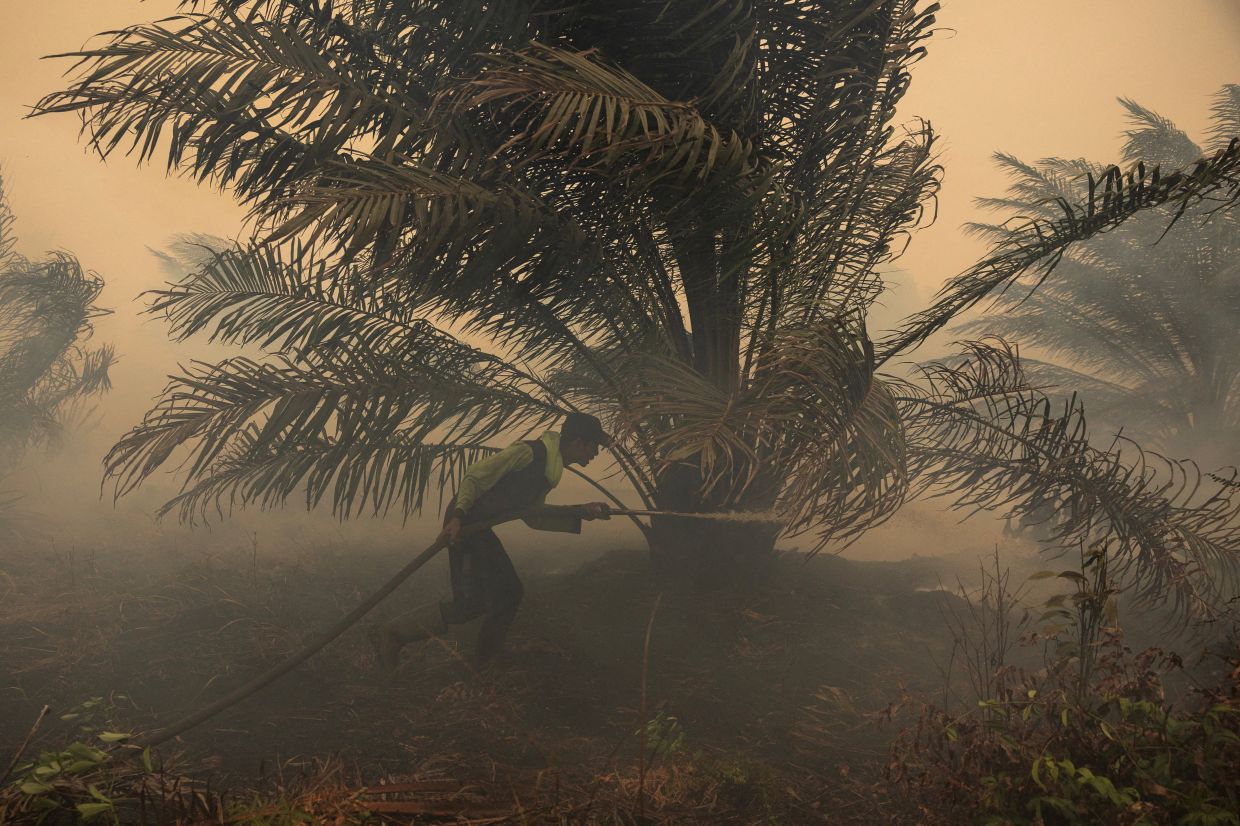
Japan has stepped in with concrete aerial support as Indonesia grapples with an intensifying forest fire crisis in Kalimantan, with pollution readings now reaching catastrophic proportions that threaten public health across the region. The Japanese government's commitment of three helicopters, including a heavy-lift Chinook, represents a significant boost to Indonesia's beleaguered firefighting efforts at a moment when the situation has deteriorated alarmingly. According to Berton Panjaitan, Acting Head of Data, Information and Disaster Communication Centre at the National Disaster Mitigation Agency (BNPB), these aircraft will commence water-bombing operations beginning September 10, following necessary site surveys and operational planning discussions currently underway.
The environmental emergency unfolding across Kalimantan has reached unprecedented severity by late August. Environmental Ministry data recorded an Air Pollutant Standard Index reading of 1,108 in Jekan Raya, Palangka Raya, Central Kalimantan, positioning the area in the hazardous category that poses immediate health risks to residents. Simultaneously, South-East Pontianak in West Kalimantan registered 1,075 ISPU, similarly classified as hazardous. These figures underscore the breathtaking speed with which conditions have deteriorated, transforming what was already a serious situation into a full-scale public health emergency requiring international assistance.
The scale of the fire outbreak across the three most affected provinces paints a troubling picture of regional instability. BNPB documented a staggering 9,242 hotspots distributed across West, Central, and South Kalimantan, with each province reporting month-on-month increases that suggest the fires are accelerating rather than being contained. Most alarming is West Kalimantan's trajectory, where hotspots surged by 1,629 to reach 3,371, indicating the crisis is spreading westward. Across all three provinces, a total of 171 actual fire spots have been confirmed on the ground, though the distinction between hotspots detected via satellite and confirmed fire locations suggests some satellite readings may represent residual heat or false positives—a nuance that nonetheless doesn't diminish the genuine scale of the emergency.
Indonesia's own firefighting apparatus, while substantial, remains strained by the geographical breadth and intensity of the crisis. The BNPB currently operates 52 aircraft devoted to suppression efforts, split between 38 water-bombing planes and 14 dedicated to aerial reconnaissance and weather modification operations. Despite this considerable fleet, the agency has managed to drop approximately 3.5 million litres of water across six priority provinces, suggesting the volume of suppression required vastly exceeds current capacity. This shortfall explains why international assistance, particularly from a technologically advanced nation like Japan, has become not merely welcome but strategically essential.
Weather modification—an increasingly important tool in Indonesia's firefighting arsenal—has delivered mixed results across the archipelago. In Sumatra, artificial rain-inducing operations have successfully brought precipitation to affected regions in Riau, South Sumatra, Jambi, and Lampung, providing temporary relief and creating conditions less conducive to fire spread. However, the same technique cannot be deployed in Central and South Kalimantan due to insufficient cloud cover, a meteorological constraint that leaves vast areas of Kalimantan dependent primarily on conventional water-bombing and natural weather patterns. This geographical variation in operational capability highlights the complexity of managing a crisis that spans multiple provinces with diverse atmospheric conditions.
The implications of this crisis extend well beyond Kalimantan's borders and carry particular significance for Southeast Asia and indeed Malaysia. When Kalimantan's fires rage, transboundary haze has historically affected neighboring countries including Malaysia, Singapore, and Brunei, creating public health emergencies in capitals and major cities hundreds of kilometres away. The current situation, with ISPU readings exceeding 1,000, suggests potential for severe regional air quality degradation if fires continue unchecked. Malaysian readers should understand that the current emergency represents not merely an Indonesian domestic issue but a potential threat to regional air quality and public health that could manifest within weeks should suppression efforts prove inadequate.
The Japanese intervention signals the international community's recognition that this crisis requires coordinated multilateral response. Japan's provision of sophisticated military helicopters, including the dual-rotor Chinook designed for heavy-lift operations in challenging terrain, demonstrates commitment to deploying advanced equipment where it will achieve maximum impact. The timing of the deployment in early September—roughly two weeks after the announcement—suggests Japanese authorities have expedited approval and logistical preparation, indicating the seriousness with which Tokyo views the situation. Such assistance, while valuable, also underscores the limitations of any single nation's response to a transnational environmental emergency.
The root causes driving this year's fire crisis warrant examination alongside the emergency response efforts. Kalimantan's vegetation and soil conditions, combined with seasonal drought patterns, create periods of extreme fire vulnerability. However, land use practices, agricultural expansion, and delayed rainy seasons exacerbate the natural hazard, transforming seasonal fire risk into uncontrollable conflagration. For Malaysia and other regional economies dependent on stable atmospheric conditions and environmental quality, the fires represent not just immediate air quality concerns but longer-term questions about land management practices and climate resilience across Southeast Asia.
Looking ahead, the effectiveness of the Japanese helicopters and expanded firefighting operations will largely determine whether August 2024 represents a temporary spike or the beginning of a sustained crisis extending through the dry season. The combination of international aerial assets, Indonesia's existing fleet, and weather modification techniques may yet reverse current negative trends. However, the scale of the current outbreak—particularly the dramatic increase in hotspots across West Kalimantan—suggests that even with these interventions, significant portions of the fire threat may persist beyond September. Regional governments, including Malaysia's, would be prudent to prepare air quality contingency plans and monitor the situation closely in coming weeks.

