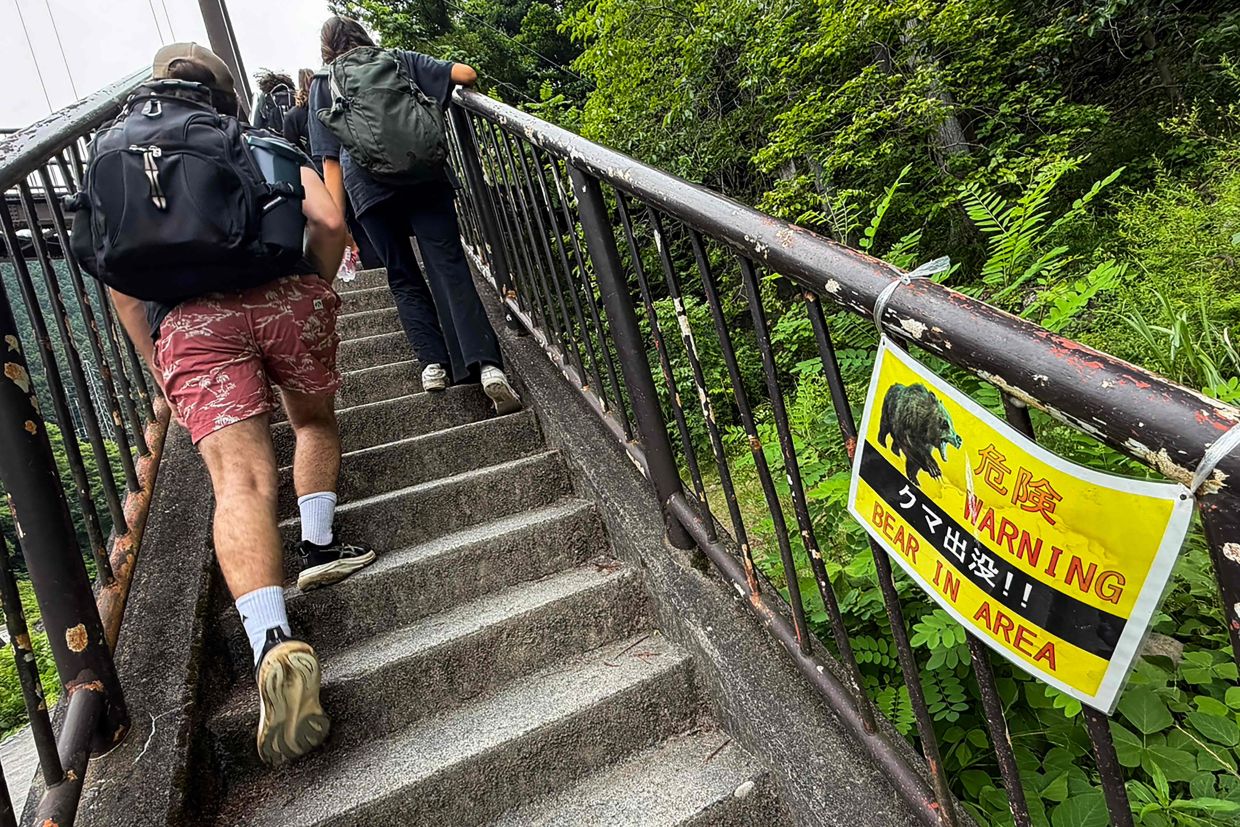
Japan's environment ministry has launched an ambitious wildlife monitoring initiative by installing hundreds of surveillance cameras throughout its mountainous regions, responding to an escalating crisis of bear encounters that have claimed multiple lives in recent months. The move represents the first coordinated national approach to understanding Japan's growing bear problem, which has intensified dramatically following the emergence of bears from hibernation and their increasing incursion into populated areas across the northern Tohoku region and beyond.
The scale of the current threat has become impossible to ignore. Since the start of April, at least five people have been killed by bears, all within the Tohoku prefecture, continuing a troubling trend that saw thirteen fatal attacks recorded during the previous fiscal year. These figures, released by the environment ministry, underscore a transformation in human-wildlife relations in Japan, where bears were once confined to the most remote mountain territories but increasingly now appear in shopping arcades, schools, and residential parks. The sudden escalation has created widespread anxiety among residents, with national broadcasters providing near-daily coverage of sightings that have become routine rather than exceptional.
The decision to deploy over eight hundred cameras across six initial bear population zones in Tohoku represents a departure from Japan's previous ad-hoc approach to bear management. Environment ministry official Yu Takahashi explained that until now, individual local governments conducted their own separate surveys using differing methodologies, producing fragmented data that prevented the development of coordinated responses. The new systematic approach aims to generate standardized, comparable information about bear movements and population dynamics, laying the groundwork for more effective long-term management strategies that can be rolled out nationwide over the following four years.
The technology deployed reflects both innovation and pragmatism. Researchers are attracting bears to the camera locations using jars of honey mixed with wine, positioned at roughly head height to encourage the animals to stand upright on their hind legs. As the bears rear up to sniff the enticing mixture, their distinctive white chest markings are clearly captured by the cameras, allowing researchers to identify individual animals and track their movements across different zones. This approach capitalizes on bear behavior patterns while providing high-quality visual data that previous manual survey methods could not generate with comparable precision or efficiency.
The urgency driving this initiative becomes evident when examining recent incidents. Earlier this week, authorities launched an investigation into what may be Japan's sixth fatal attack in the current cycle, after the body of a man bearing bear bite marks was discovered in a remote mountainous area of Tohoku. These deaths occur against the backdrop of a nation where mountains comprise approximately eighty percent of the landscape, making the challenge of preventing human-bear encounters genuinely formidable. The proximity of wilderness to population centers creates constant opportunities for conflict, a situation exacerbated by demographic shifts that have left many rural mountain communities progressively depopulated.
Scientists have linked the surge in bear encounters to fundamental changes in Japan's countryside demographics. As younger people migrate to urban centers, the rural population has contracted substantially, reducing the human presence that once effectively deterred bears from venturing toward settlements. With fewer people actively managing forests and mountainous areas, bears have expanded their range and begun testing the boundaries between their natural habitat and human zones with increasing frequency. This ecological shift represents a broader transformation affecting many developed nations but appears particularly acute in Japan given the density of human settlement adjacent to protected mountain regions.
Recent urban incidents demonstrate how thoroughly bears have adapted to proximity with human infrastructure. In June, authorities in Utsunomiya, located north of Tokyo, mobilized dozens of police officers, professional hunters, and municipal officials to capture a bear that had entered the city, necessitating school closures that lasted four days. Shortly before that incident, another bear in Fukushima prefecture exhibited remarkable problem-solving ability, somehow opening a window and activating a water tap before attacking four individuals at factory premises. That animal eluded capture for several days, illustrating how challenging bear management becomes once animals have breached urban perimeters and lost their natural wariness of human environments.
The broader implications of Japan's wildlife crisis extend beyond immediate public safety concerns to touch on fundamental questions about land use, conservation, and human settlement patterns. The government's camera deployment strategy represents an acknowledgment that previous reactive approaches—responding to individual incidents with hunting and trapping operations—have proven inadequate for addressing a systemic shift in bear-human relations. By developing detailed population data, authorities hope to identify patterns and hotspots that will enable preventive strategies, whether through habitat management, behavioral modification, or strategic deterrence measures deployed before encounters become lethal.
Public anxiety surrounding bears has prompted authorities to disseminate guidance for mountain users that reflects the seriousness of the threat. Officials now recommend that individuals avoid venturing into mountainous areas unaccompanied, attach bells to bags to alert bears of human presence, and carry bear spray as a last resort. These aerosol repellents contain capsaicin, the active compound in chili peppers, which creates an intense burning sensation that typically causes bears to retreat. The prevalence of such safety advice in ordinary outdoor activity planning reflects how substantially bear encounters have shifted from rare anomalies to expected risks requiring active mitigation.
A parallel incident underscores how widespread concern about bear encounters has become throughout Japanese society. A twenty-two-year-old Vietnamese national, identified as Huynh Nhat Duy, was arrested for obstructing business operations after accidentally discharging bear repellent spray inside a post office in Nagoya city. The incident, which occurred on Wednesday and resulted in five individuals requiring hospital treatment, demonstrates both the prevalence of bear spray carry among the public and the potential for accidents when safety measures designed for wilderness emergencies are transported into dense urban settings. Police spokesman Kenji Goto confirmed that the discharge was unintentional, with the man apologizing to officers after the incident.
The timing of Japan's camera initiative comes as the nation grapples with the practical reality that bears, having adapted to human presence, show little inclination to retreat to remote territories. The systematic monitoring framework now being deployed represents the first step in what may become a prolonged adjustment period for Japan, as managers learn to coexist with wildlife populations that refuse to maintain the clear geographic separation once taken for granted. For Malaysia and other Southeast Asian nations facing their own human-wildlife conflict challenges, Japan's experience offers cautionary lessons about the consequences of allowing demographic patterns to shift without corresponding adjustments to wildlife management frameworks, and the substantial investment required to regain control of situations that have been allowed to deteriorate.

