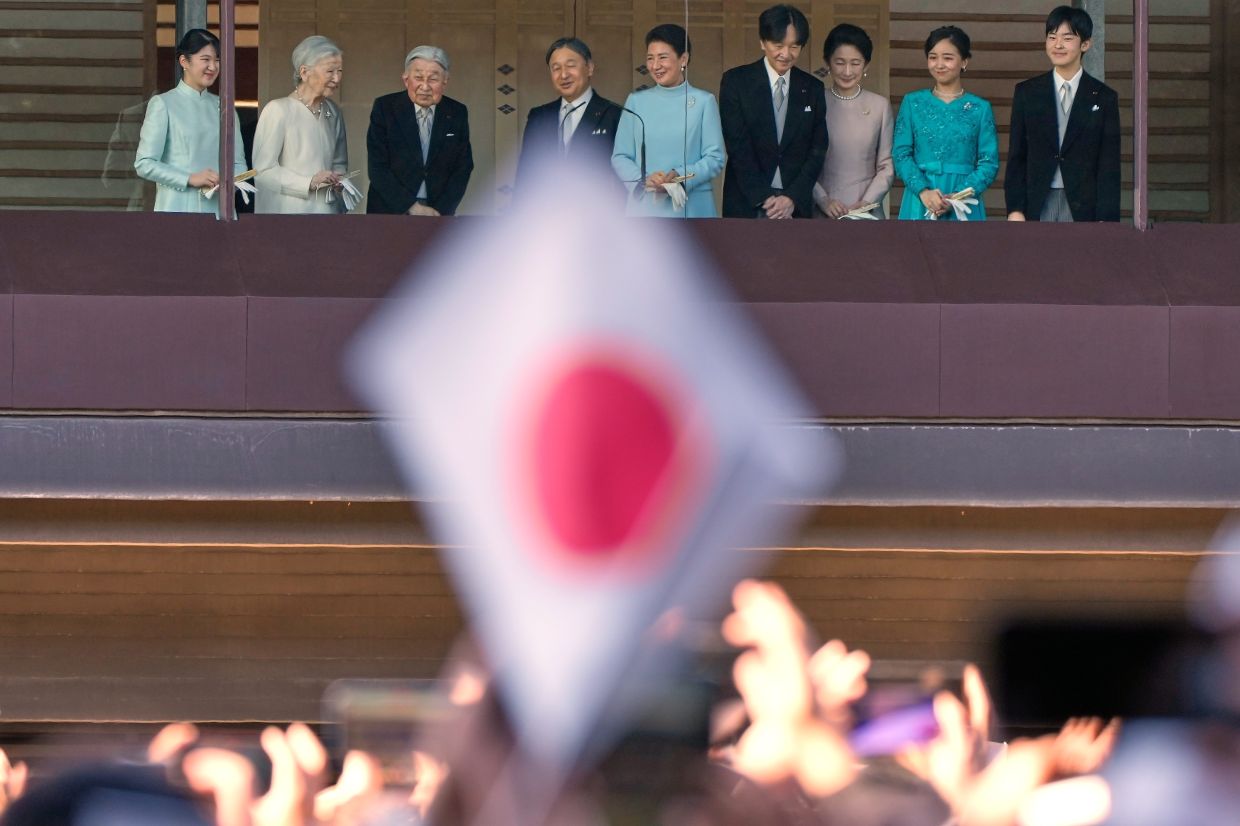
Japan's conservative government has enacted modest reforms to its imperial succession framework on Friday, July 17, yet the most consequential restriction remains firmly in place: women are constitutionally barred from ascending the Chrysanthemum Throne. The legislative compromise, passed by the upper house with overwhelming support, reveals deep tensions between public sentiment and traditional institutional gatekeeping at the heart of one of the world's oldest monarchies. The refusal to open the emperor's crown to women exposes the dominance of cultural conservatism within Japan's ruling establishment, even as demographic realities force the government to confront the fragility of the imperial bloodline.
At the centre of this succession crisis stands Prince Hisahito, who at 19 years old represents the imperial system's singular hope for continuity. The nephew of the reigning Emperor Naruhito, who is 66, Hisahito remains unmarried and is currently occupied with university studies in biology and entomology. The mathematics are unforgiving: should he fail to produce a male heir, the imperial line descended from the mythical sun goddess Amaterasu will terminate entirely under existing law. This prospect has alarmed policymakers sufficiently to trigger legislative action, yet the reforms enacted this week address only the periphery of the succession problem rather than its core tension.
The legislation now permits the adoption of male distant relatives aged 15 and above into the imperial family, provided they remain unmarried. This provision theoretically expands the pool of potential successors by drawing from the 11 imperial branch families that were removed from the imperial register following World War II. Additionally, the law now grants women the ability to retain their royal status and privileges after marrying non-royal Japanese citizens, a right previously reserved for male family members. These adjustments represent incremental modernisation, yet they deliberately sidestep the far more transformative option that would resolve succession concerns with finality: formally allowing women to occupy the throne.
Public opinion on this question has shifted decisively toward inclusivity. An Asahi Shimbun poll conducted in May demonstrated that 72 percent of Japanese respondents favoured amending the rules to permit female succession to the imperial throne. This substantial majority support reflects evolving social attitudes toward gender roles and institutional leadership, particularly among younger generations. The survey data presents a stark contrast to the preferences expressed within the ruling Liberal Democratic Party, where resistance to female succession remains entrenched. Prime Minister Sanae Takaichi, who became Japan's first female chief executive, has herself opposed any change to male-only succession rules—a paradox that underscores the complex relationship between contemporary political representation and traditional imperial structures.
The legislation triggered considerable friction within the LDP during its parliamentary passage, exposing fault lines between progressive and traditionalist factions. Seiichiro Murakami, a veteran party member, publicly denounced the restrictions on female succession after the bill cleared the lower house on July 10, calling the exclusion of Princess Aiko—the popular 24-year-old daughter of Emperor Naruhito—from the line of succession "utterly outrageous." This rare public dissent from within the governing party signals that consensus on imperial matters is fragmenting. Even the Yomiuri Shimbun, a newspaper historically aligned with the LDP, took the unusual step of criticising the government's stance in a recent editorial, indicating that institutional opposition to female succession is encountering resistance from erstwhile allies.
The practical viability of the adopted distant relatives strategy has drawn scepticism from those with intimate knowledge of imperial life. Asahiro Kuni, 81, a former imperial family member and grandson of one of the branch families, has questioned whether young men raised outside the imperial institution would genuinely wish to join it, let alone prove capable of adapting to its constraints. Speaking to the Asahi Shimbun, Kuni observed that adolescents who have spent their formative years in the freedom of ordinary Japanese society would face insurmountable psychological hurdles in transitioning to the rigidity and seclusion inherent to imperial existence. He suggested that few individuals, even those theoretically eligible, would accept such a sacrifice once confronted with the austere realities of royal membership. This insider testimony implies that the legislative solution may prove illusory in practice, leaving the succession problem fundamentally unresolved.
The imperial family's current composition underscores the demographic urgency driving these discussions. With only 16 members remaining, and merely five of those male—comprising retired Emperor Akihito (92), his brother (90), Emperor Naruhito (66), Naruhito's brother, and young Prince Hisahito—the institution faces a severe contraction in its human foundation. The deaths or retirements of the two elderly emperors would further concentrate the succession burden upon Hisahito alone. This precarious numerical situation, combined with Japan's broader demographic decline and shifting social norms, creates mounting pressure for more fundamental reform.
The imperial succession question carries particular resonance for Southeast Asian observers, as Japan's imperial institution remains symbolically significant in regional geopolitics and cultural diplomacy. Japan's reluctance to embrace female succession, despite overwhelming public backing, may signal to neighbouring societies the persistence of institutional conservatism within even ostensibly modern democracies. For Malaysia and other ASEAN nations navigating their own questions about institutional modernisation, succession stability, and the alignment of traditional governance structures with contemporary values, Japan's cautious approach offers instructive lessons about the difficulties of balancing historical continuity with social change.
The passage of this compromise legislation, while preserving the male-only succession principle, effectively postpones rather than resolves the underlying crisis. Unless Prince Hisahito produces sons, the imperial line will inevitably reach a succession juncture that cannot be managed through peripheral amendments. At that critical moment, whether the government will finally embrace female succession or attempt other mechanisms remains unclear. What is evident now is that the July 17 reforms represent a temporary holding pattern—a legislative gesture toward modernity that maintains structural exclusions fundamentally at odds with the democratic values and gender consciousness of contemporary Japanese society.

