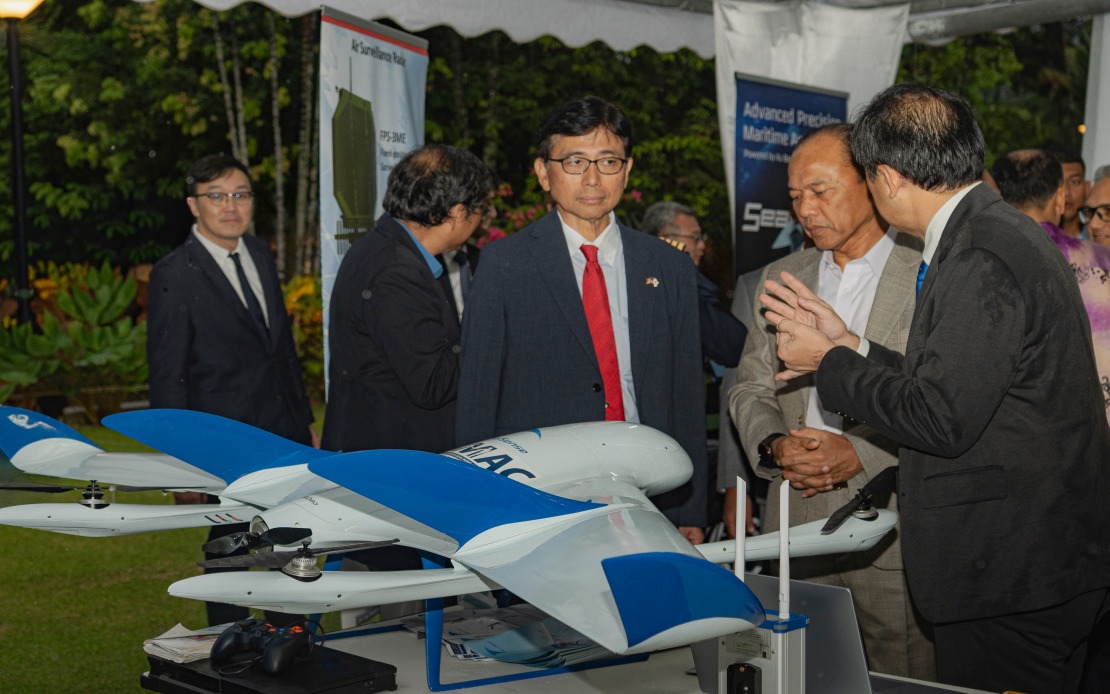
Japan is positioning itself for significantly expanded defence and security cooperation with Malaysia, according to remarks made by Ambassador Noriyuki Shikata at the 72nd Japan Self-Defence Forces Day Reception in Kuala Lumpur on Wednesday. The timing of this announcement reflects growing regional anxieties about maritime security and strategic competition in waters critical to global trade and regional stability. Japan's emphasis on deepening ties comes as both nations navigate an increasingly complex geopolitical landscape where traditional security frameworks are being tested by shifting power dynamics and evolving maritime challenges.
The foundation for this expanded cooperation was reaffirmed during Prime Minister Datuk Seri Anwar Ibrahim's recent visit to Japan, where he met with Prime Minister Sanae Takaichi. During those discussions, the two leaders committed themselves to fortifying strategic partnerships with defence and security forming the cornerstone of their bilateral agenda. This high-level engagement demonstrates that security matters have moved beyond routine military exchanges to become central elements of Japan-Malaysia relations. The convergence of strategic interests between Tokyo and Kuala Lumpur reflects both nations' concerns about maintaining freedom of navigation and preventing regional destabilisation.
A particularly significant development underpinning this security partnership is Japan and Malaysia's 2023 elevation of their relationship to a Comprehensive Strategic Partnership status. This formal upgrading of ties provides institutional mechanisms and policy frameworks that facilitate rapid implementation of security initiatives. Ambassador Shikata noted that this momentum will continue building momentum toward the seventieth anniversary of diplomatic relations next year, with defence and security among the priority areas for deepening engagement. The backdrop of this partnership upgrade is the broader context of Japan's Free and Open Indo-Pacific vision, which emphasises rules-based order, transparency, and peaceful resolution of disputes—principles that Malaysia's ASEAN Outlook on the Indo-Pacific substantially mirrors.
Operational defence cooperation between the two militaries has already taken tangible form through regular bilateral exercises. The MALPAN exercise series, conducted annually by the Japan Maritime Self-Defence Force and the Royal Malaysian Navy across the South China Sea and Strait of Malacca, has become a cornerstone of practical military engagement. Recent developments have expanded this cooperation significantly: in April, the Royal Malaysian Air Force joined MALPAN for the first time, incorporating air domain operations into what had previously been primarily a maritime-focused exercise. These joint drills serve multiple purposes beyond simple military training—they build mutual understanding between armed forces, demonstrate operational readiness, and send implicit signals about commitment to maintaining secure sea lanes vital for regional commerce.
Malaysia's critical geographic position within Southeast Asian waters makes it particularly valuable to Japan's security architecture. The Strait of Malacca, through which Malaysia maintains sovereignty over portions, ranks among the world's most strategically important maritime passages. Japan, as a major trading nation heavily dependent on seaborne commerce, maintains a vested interest in ensuring these waters remain open and secure. By investing in Malaysia's maritime capabilities and conducting regular exercises in these waters, Japan reinforces its commitment to regional stability while simultaneously strengthening its partnership with a key Southeast Asian nation. This approach aligns with Japan's broader Indo-Pacific strategy of building networks with like-minded partners rather than pursuing unilateral military expansion.
Japan's Official Security Assistance programme, launched in 2023, represents another concrete dimension of this partnership. Malaysia ranks among the initial recipients of this assistance framework, which has already delivered tangible benefits. In 2024, Japan provided unmanned aerial vehicles and rescue boats to Malaysian security forces. Looking forward to 2025, the assistance programme will deliver equipment specifically designed for ceasefire monitoring operations to the ASEAN Observer Team, demonstrating Japan's commitment to broader regional peace and stability mechanisms. Additionally, Japan will provide a diving support vessel to the Royal Malaysian Navy, directly enhancing Malaysia's capacity to conduct undersea operations and maritime rescue missions. These equipment transfers, while perhaps less headline-grabbing than military alliances, represent meaningful capability enhancements that improve Malaysia's operational effectiveness.
Beyond military exercises and equipment provision, Japan is cultivating deeper defence industry cooperation with Malaysia. During Defence Services Asia 2026 in Kuala Lumpur, ten Japanese companies showcased advanced defence technologies and equipment, signalling serious commercial interest in the Malaysian defence market. More significantly, Japan and Malaysia signed a Terms of Reference document establishing a bilateral defence industry dialogue mechanism. This institutional framework will facilitate ongoing discussions about technology transfer, joint development possibilities, and commercial defence partnerships. Such industry-level engagement often proves more durable than government-to-government military agreements, as private sector relationships can survive political transitions and shifting diplomatic circumstances.
The Malaysian Armed Forces, represented at the reception by Armed Forces chief General Tan Sri Malek Razak Sulaiman, have actively participated in deepening these security relationships. The Malaysian military's engagement with Japanese counterparts reflects institutional recognition that regional security challenges require coordinated responses and burden-sharing among partners. Malaysian defence planners view Japan as a technologically advanced nation with complementary security interests and proven commitment to maintaining a rules-based regional order. This convergence of military perspectives has created fertile ground for expanded cooperation across multiple domains—air, maritime, cyber, and humanitarian assistance and disaster relief operations.
For Malaysia, these expanded security ties offer practical benefits beyond ceremonial military exchanges. Japanese technology and expertise can enhance Malaysian defence capabilities in areas where capability gaps exist. Moreover, deepening security partnerships with Japan provides Malaysia strategic flexibility and diversifies its international security relationships. Within the ASEAN context, where consensus-based decision-making sometimes constrains unified security responses, bilateral partnerships with major powers like Japan allow individual nations to advance shared interests more directly. Malaysia's position as both an ASEAN member and partner to Japan creates opportunities to bridge perspectives and facilitate understanding between the regional organisation and Tokyo.
The emphasis on de-escalation, international law compliance, and open seas security in Ambassador Shikata's remarks reflects Japan's measured approach to regional competition. Rather than explicitly addressing China's assertive maritime activities or provocative behaviour in the South China Sea, Japan frames its security partnerships in positive terms emphasising shared prosperity and stability. This rhetorical approach, while diplomatically palatable, implicitly acknowledges tensions that require coordinated responses. Malaysia, navigating complex relationships with multiple great powers, finds this framing particularly useful as it permits deepening security ties with Japan without appearing to adopt explicitly anti-China stances that could provoke diplomatic consequences.
The trajectory of Japan-Malaysia security cooperation over recent years demonstrates how bilateral defence partnerships can evolve from ceremonial exchanges into substantive operational engagement. The progression from initial strategic partnership declarations through formalised exercises and equipment transfers to institutional mechanisms like defence industry dialogues represents deepening commitment. As regional security challenges persist and potentially intensify, such partnerships provide both nations with frameworks for coordinated responses that respect sovereignty, maintain regional balance, and preserve the open, rules-based order upon which both economies depend. Japan's commitment to working more closely with Malaysia on security issues suggests that this upward trajectory will continue.

