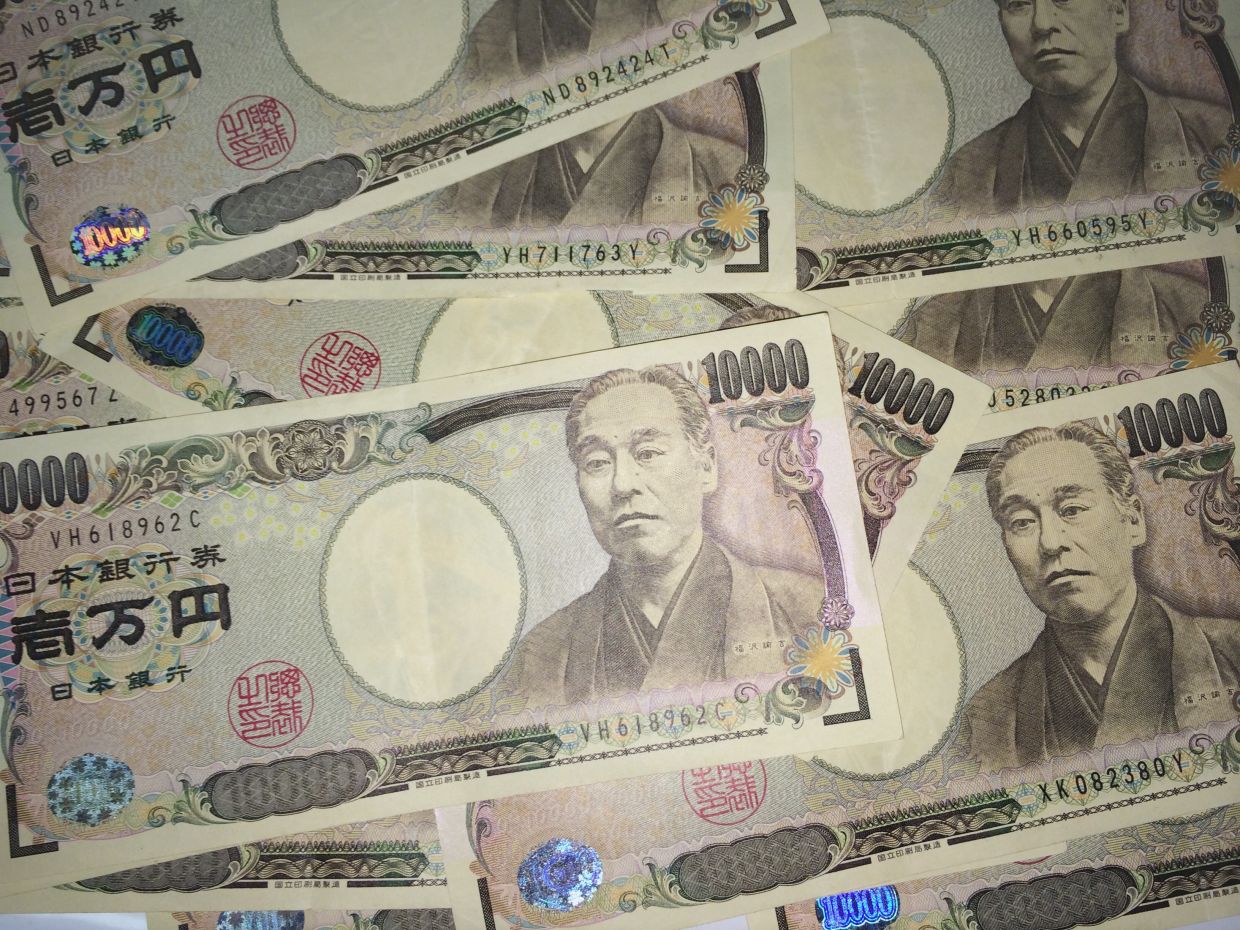
Japan's government kept the prospect of direct currency market intervention alive on Friday as Finance Minister Satsuki Katayama declared that Tokyo remains ready to act swiftly to shore up the yen whenever necessary. The reassurance came as the Japanese currency showed signs of stabilisation following a sharp sell-off that had pushed it to its weakest level in four decades just days earlier. Katayama emphasised that Japan's approach to defending the yen has not wavered, signalling authorities stand prepared to use tools at their disposal to prevent further deterioration of the exchange rate.
The immediate backdrop for Tokyo's renewed vigilance involves a currency that had weakened dramatically, reaching 162.84 per dollar on Tuesday before recovering somewhat to trade around 161.2 per dollar by Friday. Though the yen found some support from softer-than-expected employment figures released by the United States on Thursday, which sparked expectations that the Federal Reserve might delay further interest rate increases, the underlying vulnerability of Japan's currency remained a concern for policymakers. The sudden recovery prompted speculation among traders that Japanese authorities might be preparing new intervention measures, though analysts suggested the move was too modest to constitute official buying.
What makes Japan's currency predicament particularly pressing is the tangible economic damage unfolding across the corporate sector. A study released this week by Tokyo Shoko Research, a prominent business intelligence firm, documented a troubling trend: firms collapsing due to yen weakness rose to 45 cases in the first half of the calendar year, marking a 32.3% jump compared with the equivalent period twelve months earlier. This uptick reflects a broader economic squeeze where importers facing higher costs for raw materials and goods struggle to pass these expenses along to customers, a burden felt most acutely by wholesale businesses lacking negotiating power with retailers and consumers. The research institute's assessment suggested that bankruptcy numbers tied to currency weakness would likely remain elevated for some time, signalling persistent structural challenges for Japan's economy.
The expanding toll of a weak yen extends well beyond corporate failure statistics. Households and businesses already contending with elevated energy prices—themselves partly linked to regional geopolitical tensions involving Iran—find themselves facing additional burdens as imported essentials become progressively more expensive. This dual squeeze represents a genuine policy challenge for Prime Minister Sanae Takaichi's administration, one that extends beyond simple monetary management into the realm of broader economic competitiveness and social welfare. The government's response has included commitments to revitalise private-sector activity, yet implementing such measures requires careful calibration of fiscal resources.
Central to Tokyo's current policy dilemma is the tension between deploying stimulus to counteract economic weakness and the need to maintain credibility in financial markets regarding Japan's long-term fiscal sustainability. Though the Ministry of Finance reported that tax collections reached a record 84.2 trillion yen for the 2025 fiscal year—surpassing initial projections by 3.5 trillion yen and extending a streak of record revenues to six consecutive years—this fiscal strength has not reassured bond investors. Instead, market participants have grown increasingly anxious about Takaichi's economic blueprint, which appears to signal appetite for substantial additional government spending while potentially resisting further interest rate increases by the Bank of Japan.
The anxiety in fixed-income markets became unmistakable on Friday when the benchmark 10-year Japanese government bond yield climbed to its highest point in three decades. Investors interpreted recent government announcements as indicating resistance to monetary tightening by the central bank, a troubling signal given that higher interest rates typically support currency values by making yen-denominated assets more attractive to international investors. The government's economic blueprint itself emphasised that close coordination between the cabinet and the Bank of Japan remains crucial, language that some market participants read as pressure on the central bank to subordinate monetary discipline to growth objectives.
Catayama attempted to dispel concerns about a fundamental policy shift, arguing that the government's recent statements merely reiterate longstanding positions rather than signal any dramatic departure. She stressed that the administration remains committed to preserving investor confidence in Japan's broader fiscal position, a critical consideration given the nation's substantial public debt burden. However, subtle fractures within the government's messaging have begun to surface, suggesting less unanimity than official statements imply regarding the optimal balance between stimulus and monetary restraint.
These tensions became apparent when Toshihiro Nagahama, an economist serving as an adviser to the premier and previously known for advocating loose fiscal and monetary policies, called for moderate interest rate increases by the Bank of Japan. His statement represented a notable shift from his historical dovish positioning, underscoring recognition within the administration that unchecked yen weakness creates its own economic perils. Nagahama argued that measured rate hikes represent an important tool for addressing excessive currency depreciation while simultaneously preventing the kind of dramatic bond yield spikes that rattle financial markets and burden government finances.
The coordination between Japanese and American authorities on currency matters adds another layer of complexity to Tokyo's situation. Katayama noted that Japan and the United States maintain regular contact on foreign exchange issues, maintaining such engagement even during American holidays. This trans-Pacific dialogue reflects the reality that currency movements affect both economies and that coordinated messaging, or in extreme cases coordinated intervention, requires mutual understanding and agreement. The United States, however, has shown reluctance to endorse formal yen defence operations, leaving Tokyo somewhat constrained in its ability to deploy the most dramatic intervention tools.
For regional observers and businesses across Southeast Asia, Japan's currency struggles carry practical significance. Many regional supply chains depend on Japanese inputs and financing, meaning a persistently weak yen affects investment patterns and trade dynamics throughout East Asia. Moreover, the policy tensions evident within Tokyo's government—between growth stimulus and financial stability, between central bank independence and political pressure—offer cautionary lessons for other regional economies navigating similar dilemmas in an era of volatile capital flows and shifting global interest rate expectations.
The unfolding situation underscores how currency weakness, often viewed as primarily a technical financial matter, can catalyse genuine economic distress when sustained over extended periods. Japan's experience demonstrates that even wealthy, advanced economies cannot simply tolerate extreme currency depreciation without consequences for employment, business viability, and household welfare. As Tokyo continues to juggle its competing policy objectives while monitoring currency movements with evident concern, the coming weeks will reveal whether the government's renewed warnings prove sufficient to steady the yen or whether more aggressive action becomes necessary.

