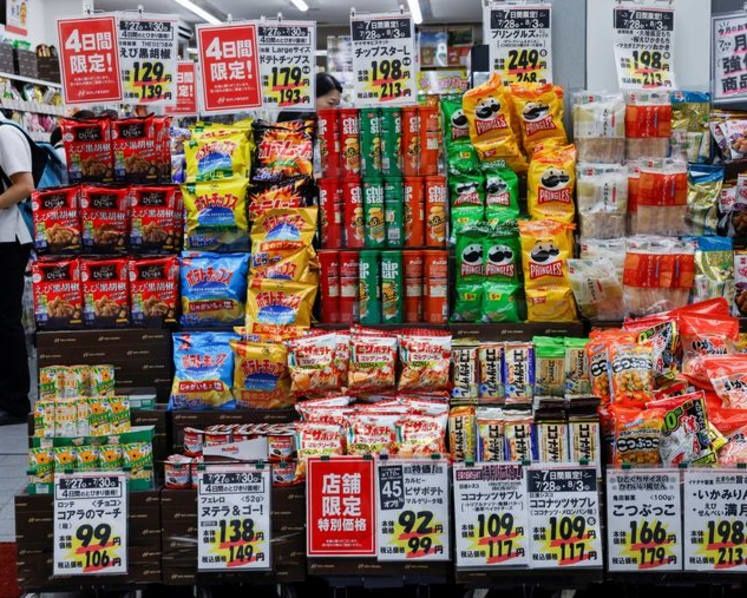
Japan's prime minister Sanae Takaichi unveiled an ambitious plan on Thursday to temporarily reduce the consumption tax on food to a mere 1 percent beginning next April, marking the first such reduction in the levy's 35-year history. The extraordinary measure represents a significant policy shift for Tokyo's fourth-largest economy as it grapples with persistent inflationary pressures that have eroded household purchasing power and squeezed family budgets across the nation.
The temporary two-year tax cut on food and beverages constitutes a direct response to mounting cost-of-living challenges that have gained prominence in public discourse. Japan's inflation has been driven by multiple external factors, including global energy disruptions stemming from Middle Eastern tensions and the continued depreciation of the yen, which has made imported goods considerably more expensive for Japanese consumers. By slashing the tax from its current 8 percent rate to just 1 percent, the government aims to provide tangible relief at the grocery store and restaurant, where households make daily spending decisions.
This aggressive fiscal intervention carries substantial financial implications for Japan's already stretched budgetary position. Media estimates suggest the two-year tax reduction will cost approximately 10 trillion yen, equivalent to roughly 61 billion US dollars, in foregone government revenues. For context, this represents a significant expenditure commitment at a time when Japan carries public debt exceeding twice its gross domestic product—a burden that remains the heaviest among developed nations and has long concerned international economists and credit rating agencies.
Takaichi's tax proposal fulfils a central campaign promise she made during her recent successful bid for the prime ministership. In her manifesto released earlier this year, she had pledged to eliminate sales tax entirely on food and beverages, positioning the measure as essential to relieving ordinary Japanese citizens from mounting economic pressures. Her emphatic victory in lower house elections provided her administration with a mandate to pursue this agenda, despite fiscal headwinds and existing debt concerns that many observers believed would constrain such ambitious spending.
The government's implementation strategy incorporates a structured timeline designed to balance immediate relief with longer-term fiscal discipline. After the two-year reprieve expires in April 2029, the consumption tax on food will return to its current 8 percent rate. Notably, this reinstatement is scheduled to coincide with the government's introduction of more precisely targeted subsidy programmes aimed specifically at lower-income households facing increased social insurance premium burdens. This sequencing suggests the administration intends to transition from broad-based tax relief toward more efficiently targeted assistance measures.
To manage the revenue implications and maintain investor confidence in Japan's fiscal position, Takaichi's administration is exploring compensatory measures that extend beyond traditional borrowing mechanisms. Officials have indicated they will reassess existing tax relief measures and subsidy programmes to identify potential savings and redirected funds. Importantly, Takaichi explicitly stated that the government aims to secure the necessary funding without resorting to additional special government bonds, a deliberate choice intended to preserve market confidence in Japanese sovereign debt at a time when international observers scrutinise Tokyo's fiscal trajectory closely.
This policy initiative carries particular significance for Southeast Asian economies and regional trading partners. Japan remains a crucial anchor of regional economic stability, and sustained inflationary pressures in Tokyo can ripple across supply chains and trading relationships throughout Asia. Additionally, the yen's weakness—which prompted some of Japan's inflation—creates currency headwinds for other Asian exporters competing in similar markets, making Japan's domestic inflation-fighting efforts relevant to broader regional economic dynamics.
The tax reduction strategy also reflects broader debates about fiscal policy priorities in developed economies facing simultaneous challenges of inflation and demographic decline. Japan's ageing population and shrinking workforce argue for sustained public investment in infrastructure and social support, yet these needs must be balanced against debt sustainability concerns. By targeting food specifically, the government prioritises basic consumption goods essential to all citizens regardless of income level, though economists debate whether broad-based tax cuts represent the most efficient approach compared to means-tested assistance.
The success of this measure in actually reducing consumer prices remains uncertain and will depend partly on retailer behaviour and competitive dynamics in the food sector. Tax reductions do not automatically translate into lower shelf prices if suppliers and retailers capture some of the savings through maintained or higher margins. The Japanese government will likely monitor price transmission carefully during the implementation period to assess whether the policy achieves its intended consumer benefit or whether market structure issues limit its effectiveness.
Looking ahead, Takaichi's administration faces the challenge of sustaining public confidence in its fiscal management while delivering the promised relief. The government must navigate the technical complexities of implementing a dramatically reduced tax rate on a specific product category while preventing tax avoidance schemes or definitional disputes about what constitutes eligible food versus non-food items. These implementation details, while less visible than the headline rate cut, will significantly determine the policy's real-world impact on Japanese households.

