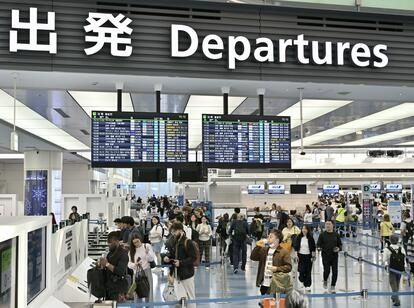
Japan has embarked on a dual-pronged fiscal strategy to manage the fallout from unprecedented visitor arrivals, tripling its international departure tax to 3,000 yen per person and simultaneously raising the cost of entry visas for foreign nationals. The changes took effect on Wednesday as the government seeks to generate substantially more revenue for infrastructure and congestion-relief projects while recalibrating its appeal to international travellers. For Malaysian visitors and others from Southeast Asia, the moves signal Japan's determination to distribute tourism more equitably across the archipelago, moving beyond the overcrowded circuits that have defined the post-pandemic visitor experience.
The revised departure tax, formally known as the international tourist tax, represents a threefold jump from the previous 1,000 yen threshold that had been in place. Levied upon ticket purchase through airlines, cruise operators, and travel agencies, the tax applies universally regardless of whether a passenger holds a Japanese or foreign passport. Those who bought their travel tickets before the July 1 implementation date remain subject to the original rate, though any departures from that point forward trigger the higher charge. This timing distinction underscores the government's effort to signal change while affording a transition window for bookings already in progress.
Foreign visa fees have undergone their most significant overhaul in nearly five decades. Single-entry visas now cost 15,000 yen—up from 3,000 yen previously—while multiple-entry permits have climbed to 30,000 yen from 6,000 yen. Foreign Minister Toshimitsu Motegi framed the increase as a necessary adjustment for inflation and the weakening of the yen relative to major currencies, characterising it as a technical calibration rather than a deterrent to tourism. Despite acknowledging the hikes, Motegi projected that the moves would not immediately suppress inbound visitor numbers, suggesting confidence that Japan remains an attractive destination even at higher entry costs. The timing of this increase—the first since 1978—reflects how gradually the government had adjusted these fees despite decades of economic change.
Recognising that revenue extraction must be balanced against domestic political considerations, Tokyo reduced passport application fees for Japanese citizens, effectively softening the blow of the departure tax on its own population. Standard 10-year passport applications dropped to 9,300 yen from 16,300 yen, while five-year passports were standardised at 4,800 yen. Online applicants receive further discounts, bringing the rates to 8,900 yen and 4,400 yen respectively. This restructuring serves a dual purpose: mitigating the financial impact on Japanese travellers while simultaneously addressing a longstanding policy concern about the nation's relatively low passport ownership rate compared with other developed economies. By making domestic travel documentation more affordable, the government aims to encourage greater participation in international mobility among its own citizens.
The escalating tax revenue is earmarked for a sophisticated decentralisation strategy designed to alleviate pressure on Japan's most iconic and crowded destinations. Urban congestion has become acute at major photo sites and cultural landmarks where foreign visitors congregate in overwhelming numbers. The government plans to designate specific zones at these popular locations to manage foot traffic and improve the visitor experience. Simultaneously, capital will flow toward regional tourism development initiatives intended to shift traveller attention toward less-congested prefectures and municipalities. Investment in local railway renovations and station building improvements aims to enhance accessibility and appeal of secondary destinations, spreading economic benefits and visitor distribution more evenly across the country.
Certain categories of travellers remain exempt from the departure tax, reflecting policy judgements about administrative efficiency and fairness. Transit passengers who spend fewer than 24 hours in Japan are excused, as are children under two years of age. This exemption structure acknowledges that not all border crossings represent meaningful tourism consumption and that very young children incur minimal infrastructure impact. The carve-outs also simplify collection mechanics for airlines and travel agencies, reducing administrative complexity at the point of sale.
The financial projections reveal the scale of Japan's tourism transformation. The international tourist tax generated approximately 49 billion yen during the fiscal year ending March 2025—a substantial sum already. Government estimates project fiscal 2026 revenues of around 130 billion yen, representing a near-tripling of collections. This dramatic revenue increase reflects not only the tax rate hike but also the anticipated continued growth in visitor numbers to Japan, even accounting for any marginal deterrent effect from higher entry and departure costs. The magnitude of projected revenue underscores how thoroughly Japan has repositioned itself as a mass tourism destination, a shift particularly pronounced since pandemic-related restrictions were lifted.
For Malaysian travellers and Southeast Asian visitors more broadly, these policy changes warrant careful consideration in travel budgeting. The cumulative cost of obtaining a visa and departing Japan has risen substantially, making trips less economical for price-sensitive tourists. Budget carriers and regional holidays may feel the impact more acutely as marginal costs accumulate. However, Motegi's assessment that demand will remain robust suggests that Japan's cultural appeal, geographic proximity to Southeast Asia, and diverse attractions retain powerful drawing power. The policy essentially represents a shift toward higher-value tourism rather than volume-maximisation, potentially improving the experience quality for remaining visitors by reducing overcrowding.
The Japanese government's rationale for these increases reflects a broader philosophical shift in how mature tourism destinations manage popularity. Rather than capitulating to overtourism through unrestricted visitor growth, Tokyo is deliberately calibrating demand while investing in infrastructure to distribute benefits more widely. This approach acknowledges that unlimited tourism growth creates negative externalities—congestion, environmental degradation, cultural disruption, and resident frustration—that ultimately undermine the destination's long-term competitiveness. By raising revenue through taxes and fees, the government creates a mechanism by which tourism partially funds its own management, a principle gaining traction across popular destinations facing similar pressures. The strategy reflects confidence that Japan's appeal transcends price sensitivity for most prospective visitors, even as it aims to discourage the most marginal and cost-driven tourism segments.
Comparatively speaking, Japan's visa fees had long remained unusually low relative to those charged by other Group of Seven nations, creating an asymmetry in global visa pricing regimes. The hike brings Japan closer to parity with peer economies, though specific fee comparisons reveal that Japan's revised rates still position it competitively within the developed world. This realignment serves the dual purpose of modernising revenue structures while signalling to foreign visitors that entry to Japan carries recognised diplomatic and administrative costs equivalent to other leading economies. The move subtly reinforces Japan's repositioning as a premium destination rather than a bargain alternative.

