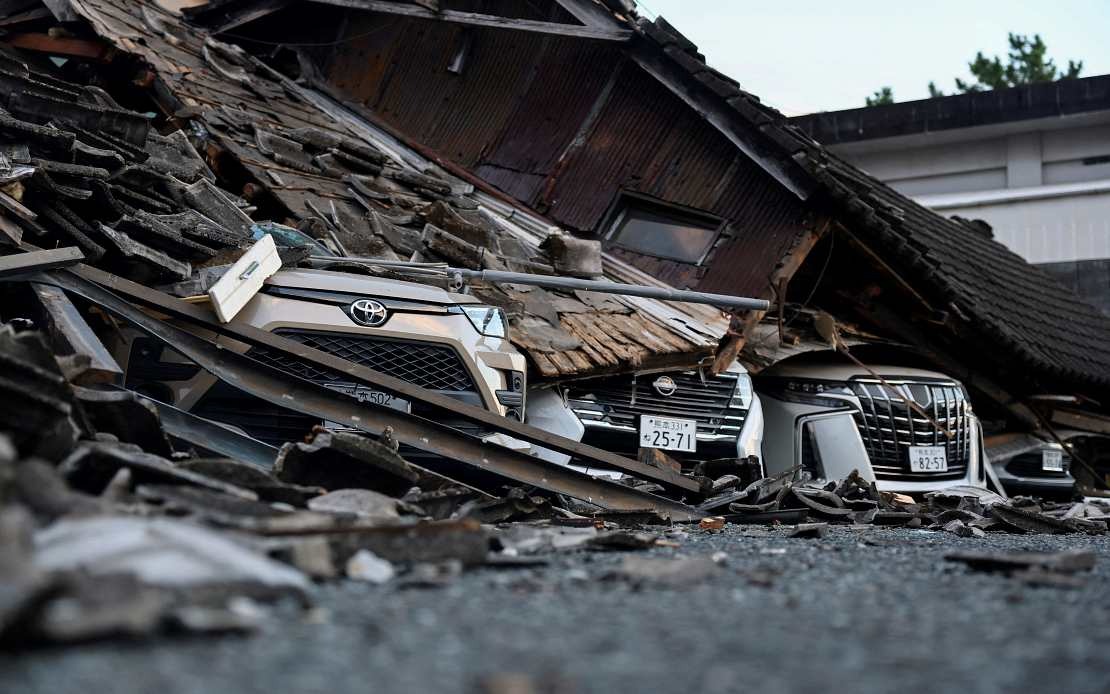
A Japanese retailer has admitted to a controversial decision that cost the lives of two employees during a catastrophic natural disaster sequence in southwestern Japan. Habita, the operator of a variety store chain located within an Aeon Mall complex in Kumamoto Prefecture, revealed on Monday that management had explicitly ordered two women who had evacuated the building following a powerful earthquake to return inside and retrieve cash from the store. The acknowledgment marks a significant moment in the aftermath of the disaster, as it raises troubling questions about workplace decision-making during emergencies and the prioritisation of financial assets over human safety.
The sequence of events unfolded on Tuesday when a magnitude 7.1 earthquake struck the region, registering at the highest level on Japan's seismic intensity scale. The initial tremor triggered evacuations across the Aeon Mall Kumamoto in Kashima Town, with employees including a 22-year-old woman making their way to safety as standard emergency protocols dictated. However, the evacuation proved temporary for two of these workers. Following the earthquake, an enormous explosion erupted through the shopping complex, fundamentally altering the tragedy's scope and claiming seven lives, including the two employees who had been instructed to return.
Koji Yuse, a 64-year-old sales manager at Habita's Kumamoto headquarters, formally acknowledged on Monday afternoon that he had personally given the directive to the store manager. His instruction was explicit: the two employees should re-enter the building and transfer the day's accumulated sales proceeds from the retail outlet on the second floor to a secured safe positioned on the first floor. Yuse's statement to reporters reflected an apparent understanding that his decision-making had proven catastrophic. He described the order as inappropriate and expressed deep regret for having issued it, though such acknowledgment provided little comfort to the bereaved families confronting profound loss.
The company's response extended beyond Yuse's admission. Habita formally apologised to the family members of the deceased employees and provided written documentation detailing the sequence of events and the decision-making process that led to the fatal instruction. This transparency, while acknowledging responsibility, underscores a fundamental tension in crisis management: the competing imperatives of asset protection and personnel safety. The decision to prioritise securing cash over the welfare of employees who had already taken appropriate action to remove themselves from danger reveals troubling assumptions about workplace hierarchy and financial obligation during emergencies.
The broader context of the disaster demonstrates the scale of the calamity affecting the region. The Kumamoto prefectural government confirmed that as of Tuesday morning, thirty-six deaths had been directly attributed to the earthquake itself, with an additional two deaths still under investigation. This toll represents one of Japan's most devastating seismic events in recent years, yet the specific tragedy of the two Aeon Mall employees stands out for its preventability. Unlike many earthquake fatalities that result from the unpredictable nature of geological forces, these deaths occurred as a direct consequence of a deliberate management decision made during a moment when danger had not yet fully manifested.
For Malaysian and regional readers, this incident carries particular significance in highlighting workplace safety standards and emergency protocols across major international retail chains operating throughout Southeast Asia. Aeon, a major Japanese retailer with extensive operations across Malaysia and the wider region, maintains a significant presence in shopping centres throughout the country. The incident raises questions about whether similar protocols exist in Aeon facilities operating under different subsidiaries in different countries, and whether emergency procedures adequately protect employees from instructions that could place them in heightened danger.
The incident also reflects broader concerns about the hierarchy of decision-making in corporate environments during crisis situations. The instruction to retrieve cash suggests that financial accountability and asset protection remained priorities even as natural disaster unfolded. This hierarchy of concerns—wherein securing money superseded the safety of personnel who had already successfully evacuated—represents a fundamental misalignment of values that cost lives. Many organisations worldwide have since moved toward protocols that explicitly prohibit personnel from re-entering compromised structures for any reason once evacuation has occurred, yet this case demonstrates that such logic had not taken root at Habita.
The role of the store manager, who received the instruction and presumably conveyed it to the two employees, remains an important element of this tragedy. The manager occupied a position in the chain of command that placed them between senior management directives and the frontline workers tasked with executing orders. The question of how much discretion the manager possessed to refuse or challenge the instruction—and what consequences might have followed—represents an unresolved aspect of workplace accountability in hierarchical Japanese corporate structures.
Looking forward, this incident will likely prompt broader discussions about emergency management standards across retail operations throughout Asia. Companies operating large shopping complexes in seismically active regions face particular responsibility to establish and enforce protocols that prioritise human life without exception during natural disasters. The admission by Habita and the documented human cost of this specific decision serve as a cautionary case study for other major retailers and shopping centre operators throughout the region regarding the appropriate balance between financial and safety considerations during emergency situations.

