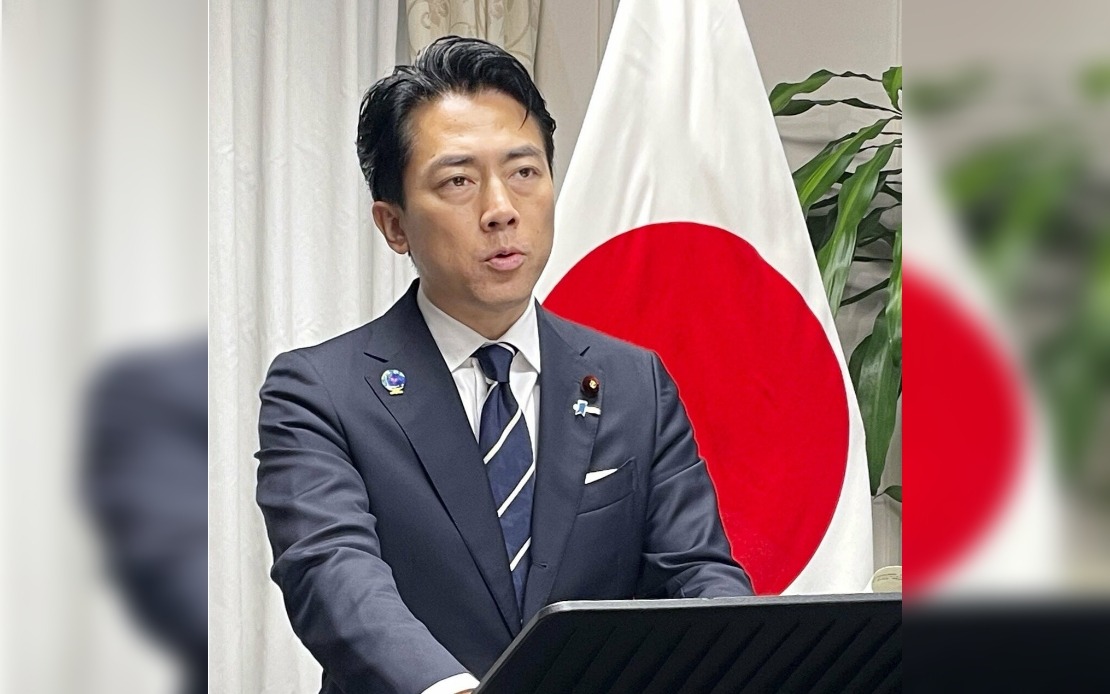
Defence Minister Shinjiro Koizumi has sparked renewed discussion about Japan's nuclear policy by declaring that the country cannot continue avoiding a serious debate on nuclear weapons, according to remarks made in an online programme released Friday. The statement marks an escalation in Japan's willingness to openly examine one of its most sensitive security questions, coming as the government prepares to overhaul three foundational national security documents before year-end.
Koizumi's comments reflect Japan's evolving assessment of its strategic environment, particularly as traditional allies in Europe take more assertive stances on nuclear deterrence. He specifically highlighted France and Finland as countries pursuing policies that strengthen their nuclear security posture, suggesting that Japan should learn from their strategic calculus rather than remain bound by taboos surrounding public discussion of such matters.
Finland's decision in June to pass legislation permitting the introduction of nuclear weapons into its territory represents a remarkable shift for a country that shares a border with Russia and has long maintained strict non-nuclear principles. Simultaneously, French President Emmanuel Macron announced in March that Paris would increase its nuclear warhead stockpile, underscoring European concerns about the continent's security architecture amid geopolitical turbulence. These developments have clearly influenced Tokyo's strategic thinking, with Koizumi essentially arguing that Japan cannot afford to remain outside conversations that major democracies are now openly conducting.
Japan's position is historically unique and legally constrained. As the sole nation to experience atomic bombardment during wartime—with the devastating attacks on Hiroshima and Nagasaki in 1945—Japan has enshrined what are commonly known as the three non-nuclear principles: the country will not manufacture nuclear weapons, will not possess them, and will not permit their introduction to its territory. These principles have remained cornerstone commitments across successive governments and enjoy deep support among the Japanese public, who have maintained strong pacifist sentiment since the Second World War.
However, Japan operates under what observers call an "extended nuclear umbrella" provided by the United States, which implicitly commits American nuclear forces to defending Japanese territory. This arrangement has allowed Japan to benefit from nuclear deterrence without formally possessing weapons, creating a strategic paradox that has become increasingly difficult to sustain as China expands its military capabilities and North Korea accelerates its weapons programme. Koizumi's intervention suggests that this balancing act may be reaching its limits in Tokyo's strategic calculations.
The Defence Minister argued forcefully that Japan's security environment has deteriorated substantially, making it imperative to eliminate what he characterized as artificial restrictions on policy discussion. He specifically criticized the tendency to declare certain topics off-limits for public debate, implying that Japan's non-nuclear consensus has calcified into a form of intellectual orthodoxy that prevents rational strategic analysis. His framing rejects the notion that security policy should be constrained by historical principle when circumstances have fundamentally changed.
This perspective echoes positions advanced by other senior figures within Japan's security establishment. In December of last year, an official involved in formulating defence policy under Prime Minister Sanae Takaichi's administration stated publicly that Japan should acquire nuclear weapons, generating swift backlash from opposition parties and international criticism from several countries. Former Defence Minister Itsunori Onodera similarly called late last year for Japan to reconsider its non-nuclear commitments, suggesting that such sentiments are gaining traction among defence-minded policymakers in Tokyo.
For Malaysian policymakers and Southeast Asian observers, Japan's potential reassessment of nuclear strategy carries significant implications. A nuclear-armed Japan would fundamentally alter the region's security architecture and could trigger cascading strategic responses across Asia. Countries like South Korea might reconsider their own nuclear posture, while regional powers could accelerate weapons development programmes. Malaysia and other ASEAN nations would face pressure to respond to a significantly altered strategic environment in which their closest developed-world security partner possesses nuclear weapons.
Moreover, Japan's debate occurs within the broader context of American strategic reorientation toward competitive great-power dynamics with China. Washington's willingness to support Japanese rearmament and potentially acquiesce to Japanese nuclear development would depend on whether such measures advance American interests in maintaining regional stability and containing Chinese power. The calculus is not straightforward, as nuclear proliferation in Asia could create unpredictable security dilemmas that complicate American strategic objectives.
The government's planned revision of Japan's National Security Strategy, National Defence Strategy, and Defence Build-up Plan by year-end will provide the formal framework within which these questions will be resolved. Rather than simply updating technical military capabilities, these documents now appear poised to address fundamental questions about Japan's security philosophy and its willingness to maintain commitments made in the aftermath of global conflict.
International observers should note that Koizumi's call for debate does not necessarily presage Japanese nuclear weapons acquisition. Rather, it reflects a determination to ensure that such decisions, if they are made, flow from deliberate national choice rather than inherited constraint. The distinction matters: it positions Japan as an actor consciously choosing its strategic path rather than passively accepting historical restrictions. Whether Japan ultimately pursues nuclear weapons will depend on multiple factors including public opinion, domestic political dynamics, alliance relationships, and perceptions of China's intentions. But the willingness to entertain the question marks a genuine inflection point in Japanese security policy.

