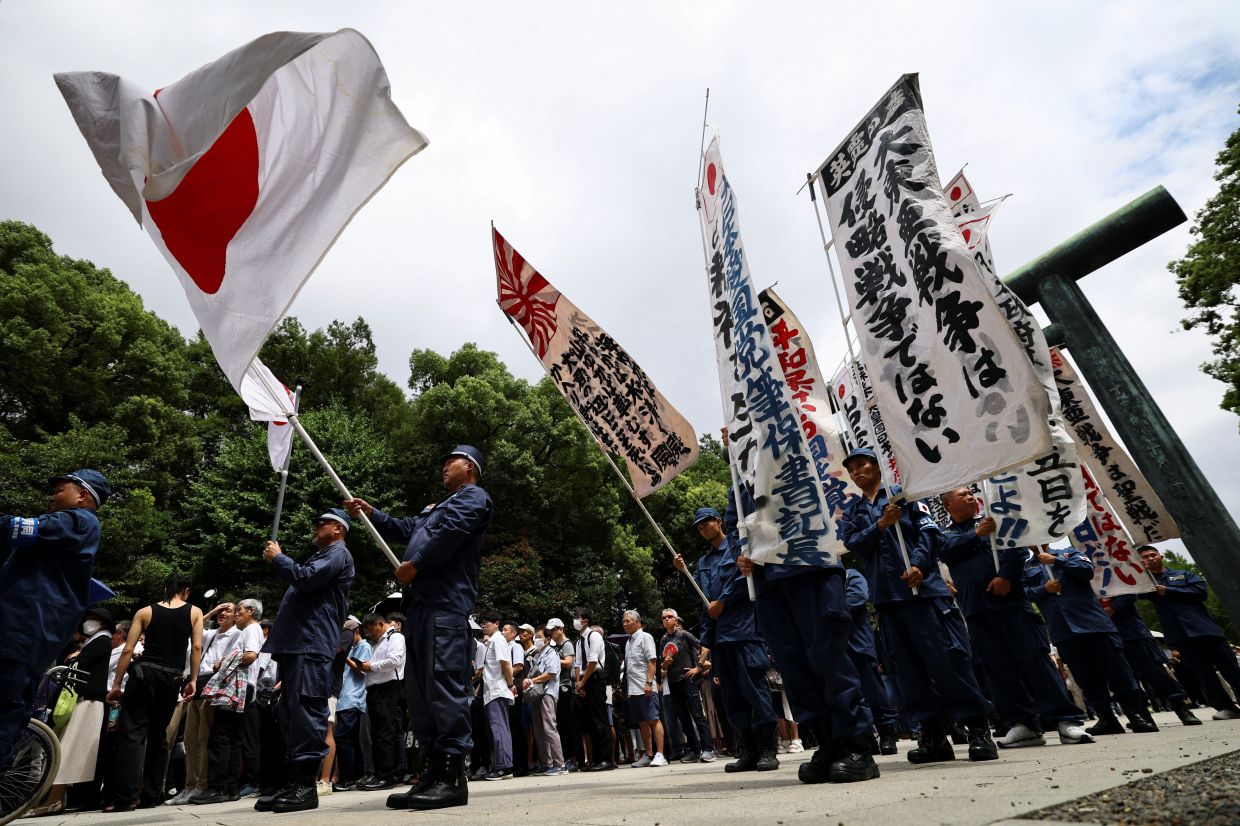
Japan's defence minister Shinjiro Koizumi paid respects at the Yasukuni shrine on Saturday, marking the 81st anniversary of the nation's surrender in World War II. The visit underscores deepening tensions within Japan's political establishment over how to commemorate wartime history whilst maintaining regional stability. Prime Minister Sanae Takaichi notably remained absent from the ceremony, departing from initial speculation that she might follow the precedent set by her mentor, former Prime Minister Shinzo Abe.
The Yasukuni shrine, which honours approximately 2.5 million war dead, has become a persistent flashpoint in Japan's diplomatic relations across Asia. Beyond ordinary soldiers, the shrine's rolls include convicted war criminals who orchestrated Imperial Japan's military campaigns across the continent during the 1930s and 1940s. For China, South Korea, and other regional powers, official visits to the site symbolise Japan's reluctance to fully reckon with historical atrocities and occupy territories that caused immense suffering to millions of Asian civilians.
Koizumi's appearance as defence minister represents the latest in a string of controversial pilgrimages by senior government officials. His predecessor, Minoru Kihara, visited in 2024, establishing a pattern of defence ministry participation that continues to provoke diplomatic friction. The distinction between prime ministerial visits and those by defence ministers carries real weight in regional calculations. When Abe visited in December 2013 to commemorate his first anniversary in office, the response from Washington, Beijing, and Seoul was swift and severe. The United States, Japan's closest security ally, issued a rare rebuke, whilst both China and South Korea lodged formal protests.
Takaichi's decision to remain away signals a calibrated attempt to balance nationalist constituencies within Japan against the practical necessity of maintaining functional relationships with neighbouring powers. However, her absence should not be mistaken for diplomatic restraint across the board. Before assuming office in October, she was known as a China hawk, and her administration has already stirred controversy by suggesting Japan would intervene militarily if armed conflict erupted over Taiwan. Such rhetoric directly challenges Beijing's core strategic interests, as China views the self-governing island of over 23 million people as an integral part of its territory.
China has responded to Japan's perceived provocations with deliberate economic and diplomatic pressure. Beijing warned its citizens against travel to Japan and implemented trade restrictions, whilst simultaneously conducting regular military patrols around disputed island territories. On Friday, just hours before the Yasukuni anniversary, Senior Colonel Chen Xi, a spokesperson for China's defence ministry, issued a pointed warning about Japanese "neo-militarism" and called on Tokyo to "earnestly reflect" on its wartime conduct and cease its "dangerous acts of remilitarisation." This language reflects genuine Chinese alarm at Japan's acceleration of military spending and capability development under Takaichi's leadership.
Takaichi's government has pursued an ambitious agenda to shed Japan's post-war pacifist constraints, pursuing defence budget increases and strategic rearmament that marks the most significant military expansion in decades. This trajectory dismays Beijing, which views Japan's growing military assertiveness alongside its tightening alliance with Washington as a potential containment strategy. Russia has added to regional complications by having its president Vladimir Putin visit the disputed Kuril Islands on Thursday, prompting Japan to lodge formal protests. These territorial disagreements underscore how military posturing and historical grievances continue to intersect across East Asia.
Meanwhile, Japan's relationship with South Korea has experienced modest improvement in recent months, suggesting that diplomatic engagement remains possible despite historical wounds. In January, Takaichi and South Korean President Lee Jae Myung engaged in informal cultural exchanges, with the prime minister and defence minister participating in drum playing and table tennis respectively. These gestures hint at recognition that generational change might eventually soften entrenched positions, though official shrine visits by high-ranking figures continue to complicate the reconciliation narrative.
The Yasukuni shrine itself acknowledged the sensitivities surrounding Saturday's commemoration by making an unusual appeal to visitors to refrain from wearing military-style uniforms that might disturb other worshippers. The shrine announced that staff would provide "guidance" to those deemed unaware of the dress code guidelines, though the institution stopped short of enforcing an outright ban. According to an AFP correspondent on site, approximately 20 to 30 people arrived in military attire despite the request, though the numbers remained modest compared to previous years.
China and Russia, recognising the geopolitical implications of the anniversary, jointly issued a statement through their ambassadors emphasising their countries' sacrifices during World War II. This coordinated messaging reflects growing alignment between Moscow and Beijing in contesting what they perceive as Japan's historical revisionism and strategic ambitions. For Malaysia and broader Southeast Asia, these developments carry significant implications. As a region that experienced Japanese occupation and colonialism, Southeast Asian nations maintain careful diplomatic balance regarding Japan's military expansion and the question of historical accountability.
Takaichi's avoidance of Yasukuni, despite her hawkish reputation, demonstrates the persistence of diplomatic constraints even within nationalist-leaning administrations. Tokyo cannot simultaneously pursue regional security partnerships, maintain its crucial American alliance, and antagonise major regional powers through ostentatious gestures at the shrine. The fact that Koizumi visited as defence minister rather than Takaichi as prime minister represents a calculated compromise: allowing nationalist constituencies within Japan to feel represented whilst limiting the diplomatic fallout that a prime ministerial visit would inevitably trigger.
Moving forward, the question of how successive Japanese administrations navigate the Yasukuni question will continue shaping regional dynamics. For Southeast Asian observers, the shrine visits function as barometers of Japan's historical positioning and military trajectory. As Tokyo accelerates defence spending and deepens security partnerships with Western powers, the symbolism of wartime commemoration takes on renewed significance. The fact that this year's anniversary passed without a prime ministerial visit suggests some recognition in Tokyo that balancing historical memory with contemporary diplomatic necessity requires restraint, even among leaders inclined toward nationalist symbolism.

