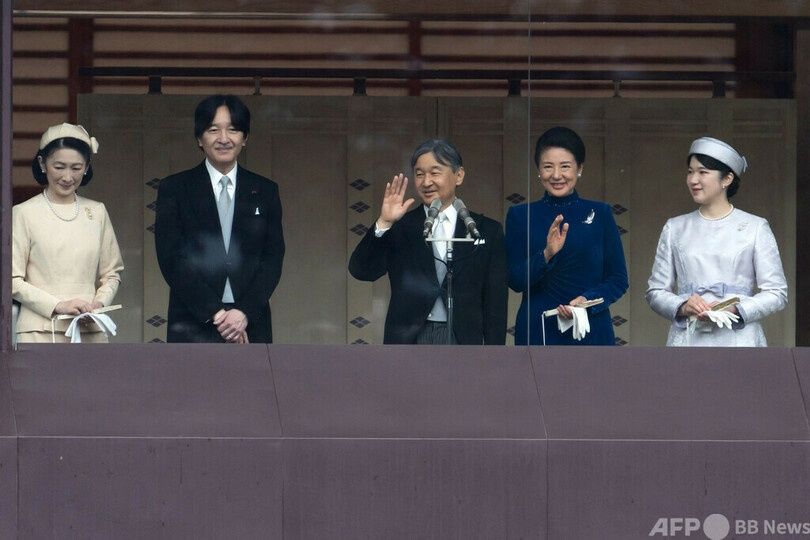
Japan's government moved forward with cabinet approval of an Imperial House Law amendment on Tuesday, immediately drawing fierce condemnation from opposition lawmakers who view the legislation as an end-run around democratic deliberation. The bill, which addresses the stabilisation of Japan's Imperial family, has become the focal point of a larger dispute over parliamentary procedure and the proper scope of cross-party consensus on matters touching the imperial succession—a historically delicate constitutional question in the nation.
At the heart of the controversy lies a specific provision that has infuriated opposition negotiators: the bill explicitly grants the right to ascend the Chrysanthemum Throne to male descendants born to adopted family members. This framework underpins a proposed system that would allow male descendants of former Imperial branches to be readopted into the Imperial family, potentially stabilising the succession line as the reigning family confronts demographic pressures. Yet this provision was nowhere to be found in the initial legislative proposals compiled by the heads and vice heads of both houses of Japan's Diet, sparking allegations that the ruling coalition smuggled controversial material into the final version.
Constitutional Democratic Party of Japan Secretary General Masayo Tanabu articulated the opposition's core grievance during Tuesday's press conference, emphasizing that lawmakers had deliberately sidelined the succession question during preliminary cross-party discussions in order to maintain focus on the immediate practical concern: keeping the number of active Imperial family members stable. The insertion of adoption-related succession provisions represented, in her view, a fundamental betrayal of that implicit understanding. She characterised the move as the emergence of content "that has not been discussed between the ruling and opposition camps," suggesting a unilateral rewriting of the legislative compact.
The government's justification, articulated by Chief Cabinet Secretary Minoru Kihara, rested on a narrower interpretation of procedural necessity. Kihara argued that since the cross-party proposals contained no specific guidance on the status of children born to adopted Imperial members, existing provisions of the Imperial House Law must logically apply. A government official involved in drafting the legislation went further, contending that "the system would be incomplete unless we determine how to handle this within the framework of the current system," suggesting that ambiguity would create a legal vacuum requiring clarification. This position revealed a genuine technical dilemma, yet it did little to mollify opposition lawmakers who perceived a strategic manoeuvre to entrench male-line succession principles favoured by the ruling Liberal Democratic Party.
The political landscape has been further complicated by the current parliamentary dysfunction. Opposition parties are actively boycotting Diet proceedings due to ongoing conflicts with the ruling coalition, a factor that significantly undermines prospects for the bill's passage. The boycotts mean that even sympathetic lawmakers lack a venue for substantive deliberation, rendering the legislative process more opaque and more vulnerable to accusations of railroading.
The adoption system itself receives mixed support from various political actors. While the junior coalition partner Komeito endorses the adoption framework in principle, its parliamentary caucus leader Masaaki Taniai has sounded a cautionary note, insisting that "we cannot move forward with deliberations unless the will of legislature is established." Similarly, Hirofumi Ryu, head of the Centrist Reform Alliance's panel on stable Imperial succession, criticised the government for revisiting succession issues that had been explicitly deferred during earlier plenary meetings between ruling and opposition figures. This cautious stance from potential allies suggests that even within the pro-government camp, concerns exist about procedural legitimacy.
A second unresolved question has also created friction: the legal status of husbands and children of female Imperial family members after their marriage. Prior cross-party discussions left this contentious issue deliberately unresolved, with the Constitutional Democratic Party advocating that Imperial status be extended to both spouses and offspring to preserve family unity, while the Centrist Reform Alliance called for a "timely and appropriate response"—effectively postponing any decision. The approved bill clarified that such husbands and children would remain commoners, a choice that reflects neither the opposition's family-unity emphasis nor the explicit deferral agreed upon. This aspect demonstrates how the bill attempts to resolve multiple contested questions simultaneously rather than allowing legislative bodies and the public to deliberate each matter on its merits.
The character of the bill-drafting process itself invites scrutiny. Shigetaka Yamazaki, a special advisor to the Cabinet Secretariat and former Internal Affairs and Communications Ministry official, spearheaded the drafting. Yamazaki's expertise on the Imperial system is unquestioned—he participated in crafting the 2017 special law that permitted Emperor Akihito's abdication—yet his institutional location within the executive rather than in a transparent legislative committee has drawn criticism. A senior Liberal Democratic Party official acknowledged that "the detailed institutional design was ultimately left to the government," a candid admission that executive actors rather than elected legislators shaped the bill's technical substance. This division of labour, while perhaps unavoidable in specialised matters, inevitably tilts outcomes toward the preferences of the ruling party.
Historical comparison illustrates the political stakes. When the 2017 abdication law passed, it commanded support from all parties and parliamentary groups in the House of Councillors except the then-Liberal Party, a near-universal endorsement reflecting broad consensus on a constitutionally pivotal matter. By contrast, only seven of the Diet's thirteen political parties and parliamentary groups endorsed the current bill's foundation proposals, a fragmented outcome that underscores legitimate disagreement about substance and process alike.
Yuji Otabe, a professor emeritus at Shizuoka University of Welfare and recognised scholar of the Imperial system, offered a broader critique that resonates beyond partisan divides. He argued that the government and ruling parties pursued "one-sided" deliberation by limiting discussion to male-line males rather than entertaining "all possibilities." Otabe's point carries constitutional weight: since the Emperor functions as "the symbol of the state," matters of succession touch upon fundamental questions about national identity and legitimacy. Such questions, in his judgement, warrant more careful, inclusive deliberation than the current process has afforded.
The bill's uncertain path forward reflects deeper anxieties about parliamentary democracy in Japan. Opposition parties face a genuine dilemma: they can continue boycotting, ceding legislative initiative to the ruling coalition, or they can re-engage, potentially legitimising a process they view as procedurally compromised. The ruling coalition, meanwhile, must weigh its immediate legislative agenda against longer-term institutional credibility. How Japan's lawmakers navigate these tensions will establish precedents for how sensitive constitutional matters are handled in an era of weakened consensus and heightened partisan division.

