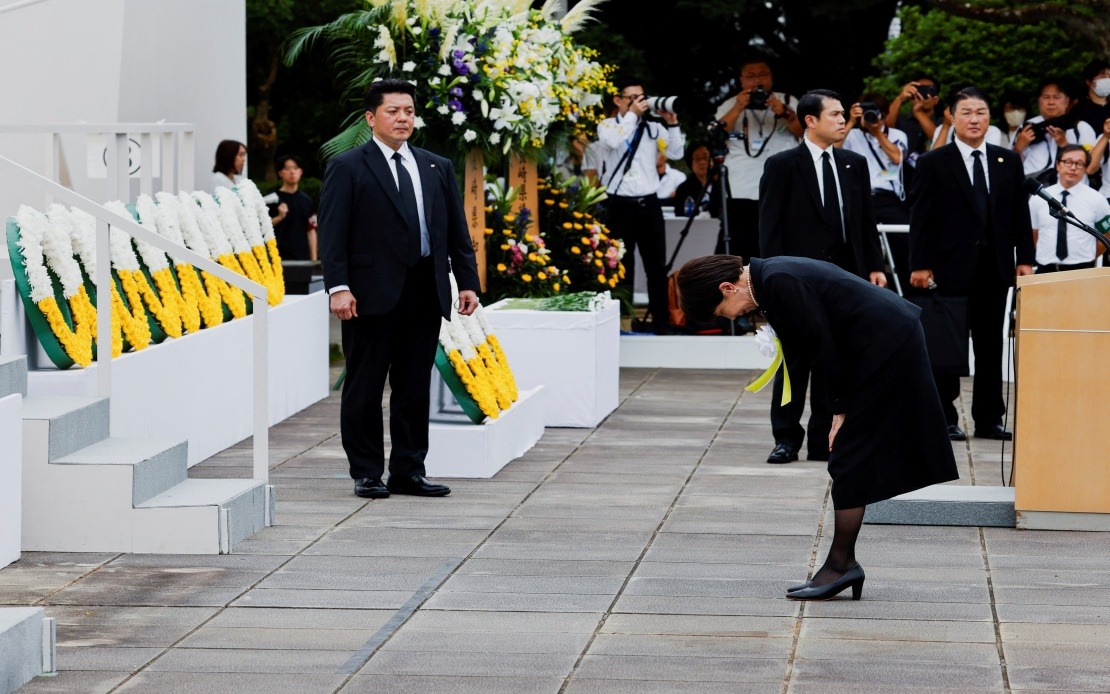
Japan's southwestern city of Nagasaki observed the 81st anniversary of the atomic bombing on Sunday, an occasion that has taken on heightened significance as geopolitical tensions worldwide have reignited contentious discussions surrounding nuclear weapons policy and the possibility of nuclear proliferation. The ceremony, which commemorates the devastating attack of August 9, 1945, underscored the enduring moral and political weight that this historical tragedy continues to exert on contemporary debates about global security and disarmament.
The bombing of Nagasaki, which occurred just three days after the destruction of Hiroshima, represented the only two instances in which nuclear weapons have been used in warfare. The city's commemoration events included a moment of silence at 11:02 a.m., the precise time when the "Fat Man" plutonium device was detonated after being dropped from a US bomber. The attack obliterated vast swathes of the city and killed approximately 74,000 residents by the conclusion of 1945, with countless others suffering long-term radiological injuries that would persist throughout their lifetimes.
During the anniversary ceremony, Mayor Shiro Suzuki articulated a message calling upon international leaders to prioritize the pursuit of genuine nuclear disarmament. Suzuki's remarks centered on the fundamental incompatibility between nuclear weapons and human survival, a philosophical position rooted in the lived experience of Nagasaki's population. Prime Minister Sanae Takaichi also delivered remarks at the event, while a statement from UN Secretary-General Antonio Guterres was read to those assembled, reflecting the global significance attached to this anniversary.
Japan's own nuclear weapons policy has become a matter of increasing scrutiny and debate. The nation has historically adhered to three non-nuclear principles established during the post-war period: Japan will not produce nuclear weapons, will not possess them, and will not allow them to be introduced into Japanese territory. However, escalating regional security concerns and evolving geopolitical dynamics have prompted some domestic actors to question whether these longstanding principles remain viable in the current strategic environment. Following Thursday's Hiroshima ceremony, Prime Minister Takaichi emphasized that the government remains committed to upholding this fundamental policy framework, signaling continuity amid the broader international discussion.
The timing of this year's commemoration coincides with broader stagnation in global nuclear non-proliferation efforts. In May, the five-yearly review conference of the Nuclear Non-Proliferation Treaty convened in New York for what amounted to a month-long diplomatic negotiation. The conference ended without achieving consensus among participating nations, marking the third consecutive review meeting that concluded without a binding agreement. This failure to reach accord underscores the deepening divisions among nuclear-armed states, non-nuclear states seeking security guarantees, and developing nations frustrated by the slow pace of disarmament commitments from established nuclear powers.
For Southeast Asia and the broader Indo-Pacific region, these developments carry particular resonance. The region has witnessed intensifying strategic competition, with multiple powers expanding their military capabilities and presence. Japan's position as a US-allied nation with substantial technological and economic capacity has made it a focal point for discussions about whether traditional non-nuclear postures should be reconsidered. Any shift in Japan's approach could have cascading implications throughout the region, potentially influencing security calculations in South Korea, Taiwan, and other neighboring territories.
The hibakusha, or atomic bomb survivors, represent living repositories of nuclear weapons' true human cost. These individuals, whose average age now exceeds 86 years, have become custodians of historical memory with an urgent mission to transmit their experiences to successive generations before this firsthand testimony vanishes. Their advocacy efforts focus on ensuring that younger populations understand the comprehensive devastation and prolonged suffering inflicted by nuclear weapons, arguments that carry moral weight in disarmament discussions.
The broader context surrounding Japan's nuclear policy involves balancing several competing pressures. The nation maintains a "nuclear umbrella" security arrangement with the United States, which provides extended deterrence guarantees. Simultaneously, as a country that experienced nuclear devastation and has developed a powerful pacifist cultural movement, Japan faces domestic opposition to any explicit abandonment of its non-nuclear principles. The government's careful statements reaffirming commitment to these principles reflect an attempt to navigate this complex terrain.
The international nuclear landscape has become increasingly contentious in recent years. Concerns about emerging nuclear powers, the deterioration of arms control agreements, and the modernization of existing arsenals have complicated efforts to advance disarmament. Russia's invasion of Ukraine and the accompanying rhetoric regarding nuclear weapons have heightened anxieties about nuclear weapons use. These developments have energized nuclear abolition advocates while simultaneously providing arguments to those who contend that nuclear weapons remain necessary deterrents in an unstable world.
The failure of the May NPT review conference reflects these deep fault lines. Nuclear-armed states have resisted aggressive timelines for disarmament, citing security concerns and verification challenges. Non-aligned nations have expressed frustration that disarmament commitments made decades ago remain unfulfilled, while new nuclear powers have complicated the diplomatic equation. The absence of consensus outcomes undermines the credibility of international non-proliferation governance mechanisms precisely when their relevance appears most critical.
For Malaysia and other ASEAN member states, these developments warrant careful attention. The Association of Southeast Asian Nations maintains a longstanding commitment to a Southeast Asian Nuclear-Weapon-Free Zone, a diplomatic achievement that has contributed to regional stability. However, the broader erosion of multilateral arms control norms and the rising salience of nuclear deterrence in strategic thinking could eventually undermine the conditions that have allowed ASEAN's nuclear-free status to persist. Any major shift in Japan's nuclear posture would reverberate through regional security calculations and potentially affect the strategic environment within which ASEAN operates.
The anniversary ceremony in Nagasaki ultimately serves as a reminder that the nuclear question remains unresolved more than eight decades after the bombing. The city's commemoration events function both as historical remembrance and as an implicit plea for a different future. As technological advancement continues and new powers develop nuclear capabilities, the voices of those who experienced nuclear weapons' effects directly grow ever more precious and urgent.

