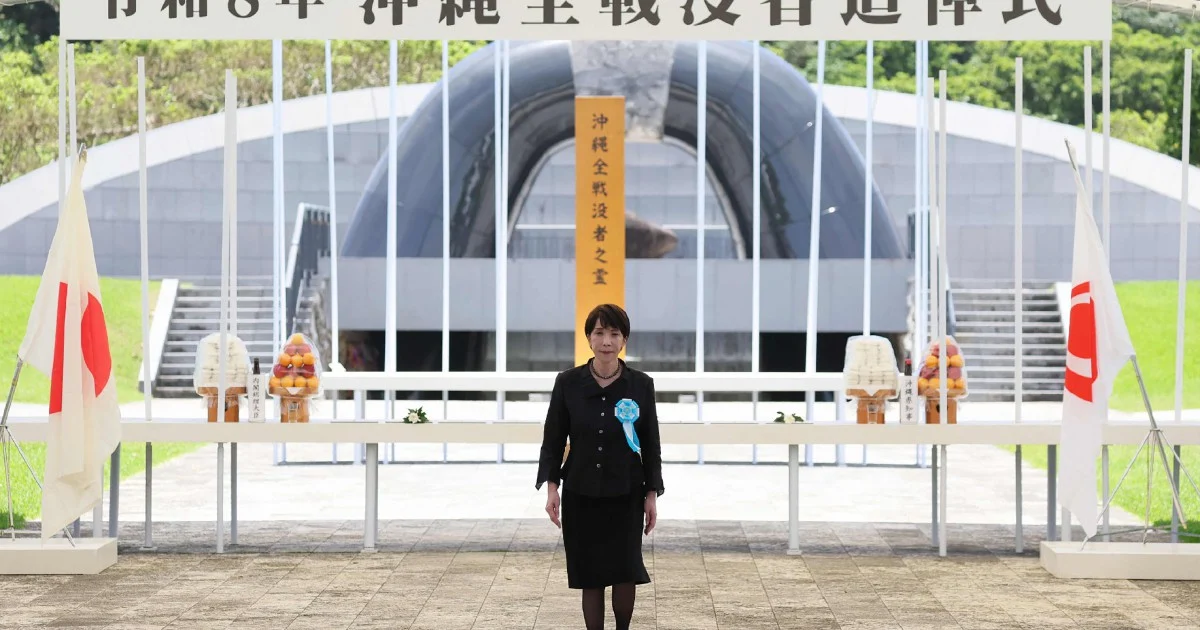
Japanese Prime Minister Sanae Takaichi encountered significant public resistance during an appearance at a World War II memorial ceremony, with television coverage capturing demonstrators voicing their opposition to the nation's shifting defence posture. The incident underscores deepening tensions within Japanese society over the government's military trajectory and represents a notable rebuke during what should have been a solemn commemorative occasion.
The heckling reflects widespread anxiety among Japan's pacifist movement and citizens who view the current trajectory as a fundamental departure from the constitutional framework established during the post-war era. Since the end of World War II, Japan's identity has been anchored in Article 9 of its constitution, which renounced war and the maintenance of armed forces, making the nation's transformation toward a more militarily assertive posture deeply contentious for many Japanese citizens who see it as eroding core national values.
Takaichi's administration has pursued increasingly aggressive defence policies, including record military spending increases and revised interpretations of constitutional constraints on military operations. These moves represent the most substantial shift in Japan's security doctrine in decades, reflecting geopolitical pressures from rising tensions with China and North Korea, as well as concerns about evolving U.S. security commitments in the Indo-Pacific region.
For Malaysian observers, Japan's military reorientation carries significant implications. As one of Southeast Asia's key security partners and a crucial economic stakeholder in the region, Japan's military capabilities and strategic choices directly influence the regional balance of power. An increasingly militarized Japan could reshape competition dynamics in the South China Sea and broader Indo-Pacific geopolitics, affecting how smaller nations like Malaysia navigate between major powers.
The timing of these protests at a WWII memorial carries particular symbolic weight in Japan's national consciousness. These commemorative events traditionally serve as moments for collective reflection on the consequences of militarism and war. When government officials promoting military expansion face public opposition at such sites, it highlights how contemporary policy debates remain intertwined with historical memory and generational differences in interpreting Japan's past.
Opposition to military rearmament in Japan extends beyond historical sentiments to practical concerns about resource allocation. Critics argue that increased defence expenditures divert funds from social welfare, healthcare, and addressing Japan's demographic challenges, including an aging population and declining birth rates. The economic opportunity costs of military buildup resonate particularly with younger Japanese voters and progressive constituencies who question whether security spending truly enhances national wellbeing.
Takaichi's position as prime minister represents a decisive rightward shift in Japanese politics. Her tenure signals the continued ascendancy of more nationalist-oriented policymakers within the ruling Liberal Democratic Party, who view robust military capabilities as essential to Japan's long-term security and international standing. However, her government clearly faces organised public resistance that cannot be easily dismissed or ignored.
The protesters at the memorial event exemplify a persistent strand of Japanese public opinion that remains sceptical of militarization. Polling data consistently shows that significant portions of the Japanese electorate harbour reservations about expanded defence roles, constitutional reinterpretation, and military spending increases. This gap between government ambition and public sentiment suggests that future military policy developments will likely generate continued friction.
Regionally, Japan's military expansion interacts complexly with other security developments across Southeast Asia and East Asia. Countries like Malaysia monitor these shifts carefully, as they affect alliance structures, weapons acquisitions, and strategic partnerships. Japan's security choices also influence how Australia, South Korea, and other regional actors calibrate their own defence policies in response to shifting threat perceptions.
The constitutional constraints that have historically defined Japan's military posture remain subject to ongoing reinterpretation by successive governments. Takaichi's administration has already approved legal changes enabling expanded military operations abroad, moving beyond strictly defensive capabilities. Each incremental shift generates public debate, with memorial events becoming natural flashpoints where historical consciousness meets contemporary policy disputes.
Looking forward, the political sustainability of Japan's military expansion will depend partly on government success in persuading public opinion or alternatively, managing dissent effectively. International security environment factors—particularly regarding China's military modernization and North Korea's capabilities—may shift domestic consensus over time, though organised opposition suggests a significant constituency will continue challenging the militarization trajectory.
For Malaysia and other Southeast Asian nations, Japan's domestic military debate matters because it affects the strategic environment and potential security partnerships. A Japan that successfully pursues major military expansion while maintaining democratic legitimacy would become a more capable and predictable partner. Conversely, unresolved domestic tensions over military policy could create unpredictability in Japanese decision-making on regional security matters affecting the broader Indo-Pacific.