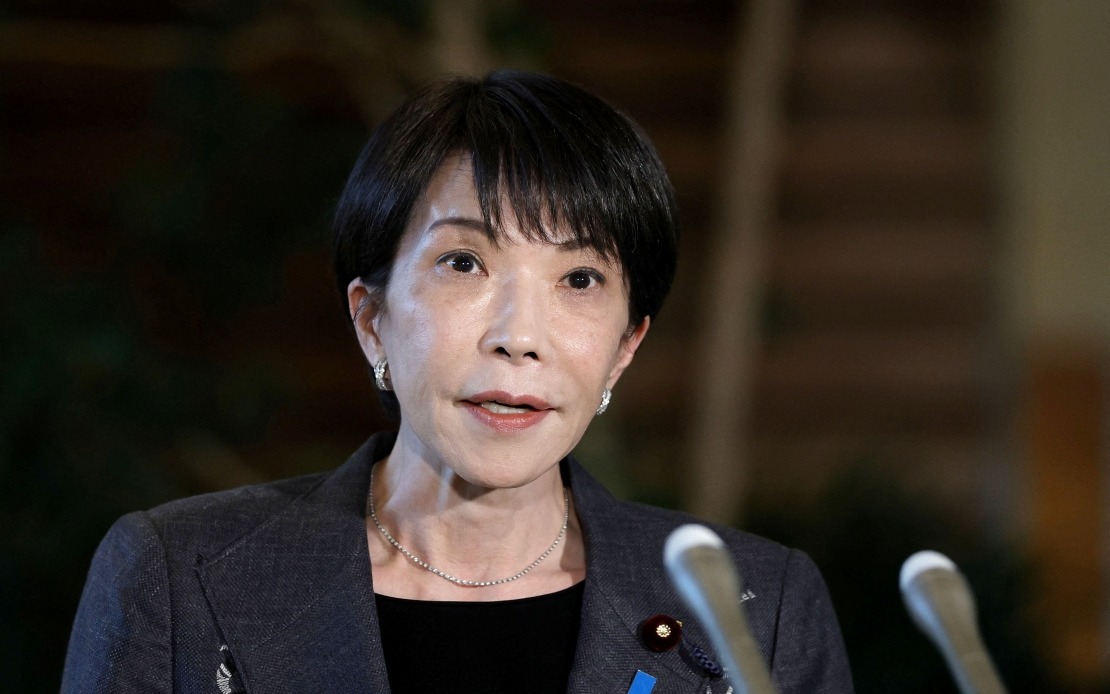
Japan's newly appointed Prime Minister Sanae Takaichi has made a significant fiscal commitment by pledging to restore the consumption tax to its standard 8 per cent rate after a planned two-year reduction on food and beverages, signalling a pragmatic approach to balancing campaign promises with the nation's deteriorating budgetary position. Speaking at a House of Representatives committee session on Monday, Takaichi explicitly stated that the government would reverse the tax cut once the trial period concludes, attempting to reassure markets and fiscal watchdogs concerned about Japan's mounting debt burden.
The clarification marks a notable shift from the ruling Liberal Democratic Party's original election pledge in February, when it campaigned on eliminating the consumption tax on food entirely. The party's subsequent proposal, unveiled at a cross-party national council on taxation and social security, instead calls for reducing the rate to just 1 per cent rather than zero, reflecting a more modest approach to household support. This pragmatic adjustment reflects mounting concerns within the government about implementation challenges and the nation's already precarious fiscal situation, which remains the worst among wealthy Group of Seven economies.
Takaichi's explicit commitment to reversing the tax reduction addresses a key concern raised by opposition lawmakers, particularly Ken Tanaka of the Democratic Party for the People, who argued that restoring a consumption tax once reduced would be politically fraught and difficult to execute without triggering public backlash. By making an unambiguous statement about the temporary nature of the measure, the Prime Minister attempted to head off criticism that the government lacked the political will to make tough budget decisions. This approach signals an attempt to differentiate the Takaichi administration from predecessor governments that struggled to implement unpopular fiscal measures.
The government's proposed timeline calls for implementation beginning in April 2027, with Takaichi indicating her desire to move forward with the reduction as swiftly as possible following the national council's completion of an interim report expected later this month. The compressed timeline suggests urgency within the administration to deliver on electoral commitments while fiscal circumstances remain manageable, particularly given recent turbulence in Japanese financial markets where government bond yields have surged to levels unseen in decades.
The technical decision to reduce the rate to 1 per cent rather than zero reflects practical realities facing Japanese retailers, many of whom require substantial time and investment to reprogram point-of-sale systems and cash registers to accommodate a zero-rate scenario. Rather than attempting a complete elimination, the modified approach facilitates faster implementation while still providing meaningful relief to consumers facing persistent inflationary pressures that have eroded household purchasing power since commodity prices began climbing in 2021.
To maintain the substantive impact of the zero-rate promise to voters, the LDP has devised a parallel scheme involving annual cash handouts totalling 600 billion yen, equivalent to approximately 3.7 billion US dollars. This sum represents the estimated revenue forgone from implementing a 1 per cent tax on food products, meaning consumers would receive compensation equivalent to a complete tax elimination while technically maintaining the 1 per cent rate on the books. This creative arrangement attempts to bridge the gap between electoral commitments and fiscal reality, though it adds administrative complexity.
Japan's fiscal circumstances have grown increasingly strained, with government bond yields reaching their highest levels in decades as the yen weakens against major currencies. This combination signals deteriorating confidence among international investors regarding Japan's long-term budgetary sustainability and monetary stability. The consumption tax reduction, even in its modified form, arrives at a particularly sensitive moment when policymakers face intense pressure to demonstrate fiscal discipline rather than implement additional revenue-reducing measures.
For Malaysian and Southeast Asian observers, Japan's fiscal predicament and policy response offer instructive lessons about the long-term consequences of sustained budget deficits and the political difficulties of implementing necessary tax increases. Japan's experience demonstrates that even advanced economies with reserve currency status and deep capital markets face mounting constraints on deficit spending, particularly when facing demographic headwinds and sluggish productivity growth. The government's commitment to eventually restoring the consumption tax suggests a recognition that temporary measures, however politically attractive, cannot substitute for fundamental fiscal adjustment.
The consumption tax cuts across the region reflect a broader pattern of governments attempting to support household incomes amid persistent inflation, a policy challenge confronting many Asian economies. Japan's approach of coupling a reduced tax rate with supplementary cash transfers provides a model that other governments might consider, offering targeted relief while maintaining long-term fiscal frameworks. However, the political difficulty of reversing such measures once implemented remains a cautionary tale for policymakers considering similar commitments.
Takaichi's emphasis on the temporary nature of the tax reduction and her explicit pledge to restore the original rate within two years represent an attempt to establish credibility with fiscal conservatives and international markets worried about Japan's debt trajectory. This approach differs markedly from previous government rhetoric that often suggested tax cuts might become permanent, a prospect that alarmed credit rating agencies and international observers. The new Prime Minister's willingness to state unpopular truths about future tax policy suggests a shift toward more candid fiscal communication.
The junior coalition partner, the Japan Innovation Party, along with numerous opposition parties, had similarly pledged consumption tax reductions during the February campaign, indicating broad political agreement on the need for household support despite fiscal constraints. The emerging consensus around temporary rather than permanent tax cuts suggests a dawning recognition across the political spectrum that Japan's fiscal position demands restraint, even as electoral politics rewards short-term generosity. This consensus, if sustained, could facilitate implementation of the broader tax and social security reforms the national council is developing.
Looking ahead, the success of Japan's temporary consumption tax reduction will depend significantly on sustained political commitment to reversing the measure as promised, given the demonstrated vulnerability of such policies to indefinite extension once constituencies become accustomed to lower rates. International observers will closely monitor whether Takaichi's administration successfully navigates this politically treacherous terrain when 2029 approaches, as failure to follow through would undermine fiscal credibility and raise questions about Japan's commitment to sustainable public finances. For regional economies watching Japan's policy responses to shared challenges like inflation and demographic ageing, the coming years will provide valuable evidence about the viability of combining temporary fiscal support with long-term budgetary discipline.