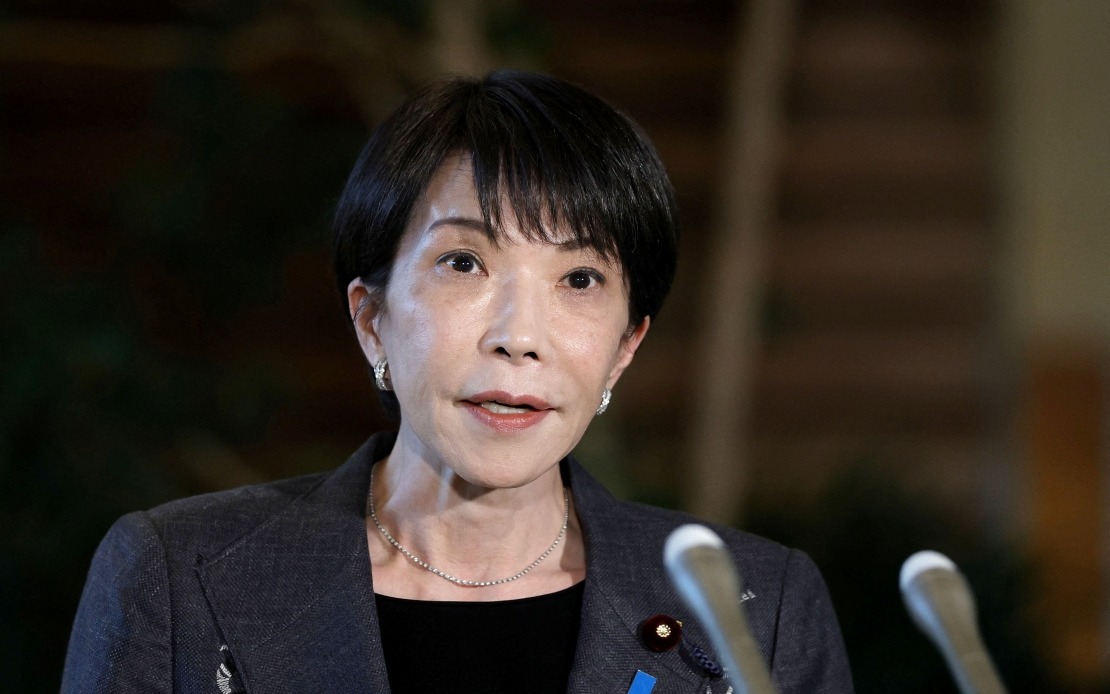
Japanese Prime Minister Sanae Takaichi made a symbolic gesture on Saturday by sending a ritual offering to Tokyo's Yasukuni shrine, the controversial religious site that honours Japanese wartime leaders convicted of crimes against humanity. The offering was dispatched as Japan observed the 81st anniversary of the war's conclusion, with Defence Minister Shinjiro Koizumi also visiting the shrine in person on the same day. The move underscores ongoing tensions surrounding how Japan acknowledges and commemorates its wartime past, a question that continues to reverberate across East Asia and carries deep implications for regional stability and historical reconciliation.
Takaichi, a prominent conservative politician who ascended to the prime minister's office last October, personally funded the offering through the ruling Liberal Democratic Party, according to senior party officials. What distinguishes her approach is a tactical restraint: having visited the shrine regularly before assuming the nation's highest office, including on previous war anniversaries and during seasonal festivals, she has deliberately avoided making a personal pilgrimage since taking office. This calculated distance suggests an awareness of the diplomatic sensitivities inherent in such visits, particularly given Japan's position as a crucial ally in a region increasingly concerned about geopolitical tensions and regional stability.
Koizumi's visit represents a significant precedent in contemporary Japanese politics. He became the first defence minister confirmed to have made the pilgrimage on the August 15 anniversary since Minoru Kihara undertook the same journey in 2024. Kihara now serves as chief Cabinet secretary in Takaichi's administration, placing him at the heart of government decision-making. His prior visit and continued government service suggest an administration comfortable with officials paying respects at the shrine, even as the prime minister herself maintains a public distance. This bifurcated approach reflects the internal dynamics within Japan's conservative establishment regarding how to balance domestic political constituencies with international diplomatic concerns.
Several other cabinet-level officials participated in shrine visits on the anniversary, amplifying the government's visible engagement with the site. Hitoshi Kikawada, serving as state minister for Northern Territories affairs, joined the procession. The Northern Territories represent a longstanding territorial dispute with Russia, centring on islands off Hokkaido that Tokyo maintains were illegally seized by the former Soviet Union following the war's conclusion. Kikawada's presence carries particular symbolism, linking Japan's commemoration of wartime sacrifice to contemporary territorial claims and unresolved Cold War legacies that continue shaping Japanese strategic thinking.
Higher-ranking party executives also made the pilgrimage, including Liberal Democratic Party Secretary General Shunichi Suzuki, General Council head Haruko Arimura, and Election Strategy Committee chair Yasutoshi Nishimura. Their collective participation demonstrates institutional support for engaging with the shrine, even as the prime minister herself maintains a more cautious public profile. This distinction between senior party figures and the head of government reflects calculated risk management within Japan's political establishment, attempting to satisfy traditionalist constituencies while minimizing international backlash.
The Yasukuni shrine occupies a uniquely fraught position in East Asian geopolitics. In 1978, the facility enshrined fourteen wartime leaders as deities, a designation that transformed the site into something far more than a conventional memorial. Most significantly, among these honoured figures are individuals convicted as Class-A war criminals. The shrine houses the spiritual essence, according to Shinto belief, of General Hideki Tojo, Japan's wartime prime minister who was executed in 1948 following trials for crimes against peace. Each subsequent visit by high-ranking officials rekindles historical grievances among nations that suffered devastation under Japanese imperial expansion.
For China and South Korea, these shrine visits carry profound historical weight rooted in lived national trauma. Japan's military occupation of extensive Chinese territories by the war's end left millions dead and caused incalculable suffering across occupied regions. The Korean Peninsula endured thirty-five years of colonial subjugation from 1910 to 1945, a period marked by systematic exploitation, cultural suppression, and forced labour. When Japanese political leaders venerate those responsible for these atrocities, the gesture resonates as disrespect for the sacrifices of Asian peoples and raises questions about Japan's genuine commitment to historical accountability and regional reconciliation.
Japan's post-war trajectory has been defined by constitutional pacifism and an explicit renunciation of military aggression. The 1947 Constitution embedded this commitment into the nation's foundational legal framework, establishing a historical rupture with imperial militarism. However, contemporary geopolitical circumstances have prompted a significant recalibration. Japan increasingly perceives its security environment as deteriorating, with rising regional tensions and perceived threats demanding enhanced defence capabilities. This security realignment has seen defence spending rise substantially and military doctrine expand, creating a paradox where the nation simultaneously honours pacifist principles while substantially militarizing.
The timing of these shrine visits reflects the intersection of domestic political pressure and international scrutiny. Conservative constituencies within Japan maintain deep emotional connections to wartime remembrance and view visits to Yasukuni as expressions of patriotic duty and respect for military sacrifice. For these political forces, distinguishing between soldiers and political leaders convicted of war crimes represents an artificial separation; the shrine honours all Japanese who died serving the nation. This perspective dominates substantial portions of the Liberal Democratic Party's base, particularly among older voters and nationalist organizations that form a crucial electoral foundation.
For Malaysian observers and Southeast Asian policymakers more broadly, these developments warrant careful monitoring. Malaysia, as a nation with historical experience of Japanese occupation during World War II and as a key player in regional stability architecture, maintains particular interest in how Japan reconciles its wartime past with contemporary regional roles. The broader question of whether Japan can acknowledge historical responsibilities while maintaining regional leadership capacity remains unresolved. Southeast Asian nations navigate complex relationships with both Japan, a significant economic and security partner, and China, an increasingly dominant regional power, making Japan's approach to historical memory a matter of strategic importance.
The distinction between Takaichi's deliberate non-visit and her government officials' participation represents a nuanced political calculus rather than fundamental opposition to shrine commemorations. By maintaining personal distance while permitting subordinates to visit, she attempts to navigate domestic political requirements without provoking maximum international outrage. Whether this middle path succeeds in satisfying either constituency remains uncertain. Regional capitals continue monitoring how Japan addresses historical grievances, recognizing that unresolved historical tensions can undermine the regional stability upon which economic prosperity and security cooperation depend.
As Japan continues navigating its evolving strategic role in an increasingly multipolar Asia, questions of historical acknowledgment and regional reconciliation remain unresolved. The Yasukuni shrine visits represent just one manifestation of deeper tensions between competing interpretations of Japan's wartime legacy and its contemporary responsibilities. For policymakers throughout Southeast Asia, observing Japan's approach to these deeply symbolic gestures provides insights into whether the region's major economies can genuinely transcend historical divisions or whether past grievances will continue constraining cooperation and trust in addressing contemporary challenges.

