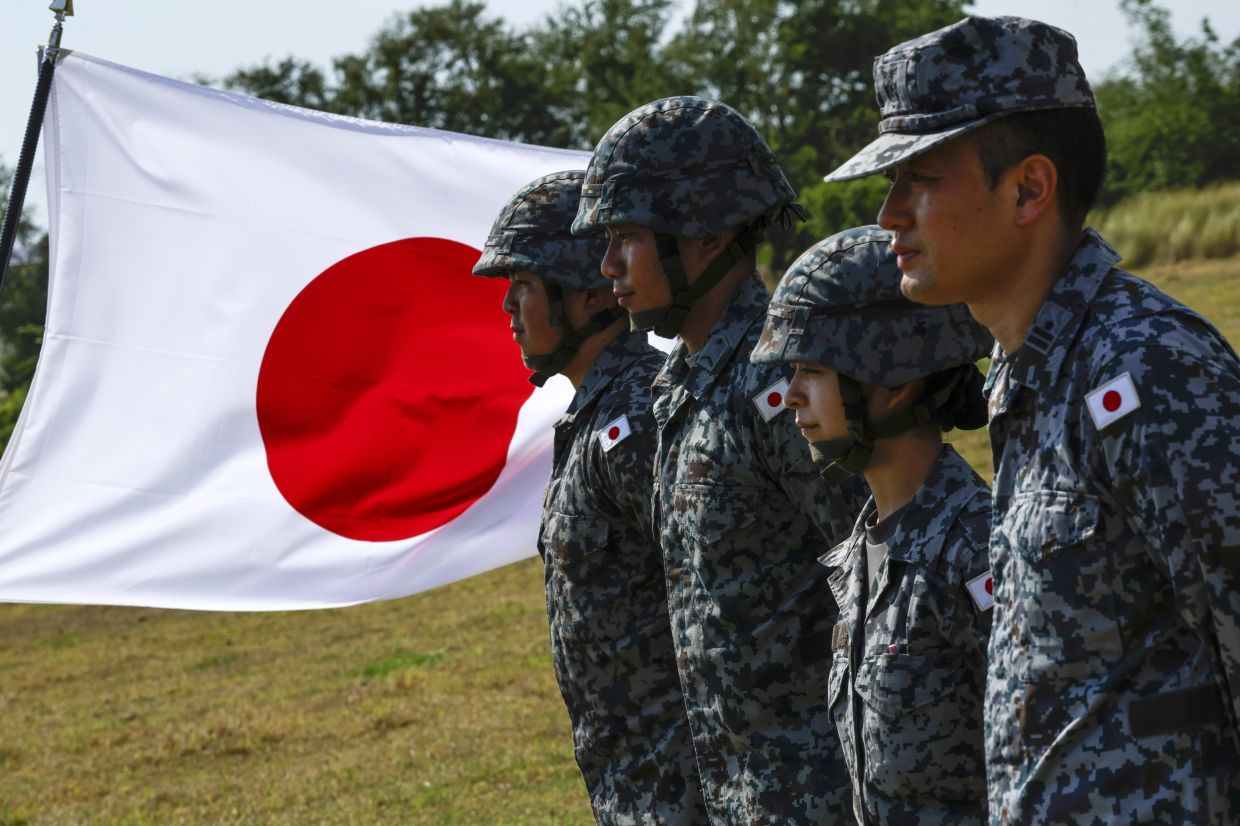
Japan's defence establishment is undertaking a fundamental recalibration of its regional military posture, moving beyond traditional security rhetoric to construct a complex network of partnerships designed to contain Chinese influence while managing doubts about America's long-term commitment to Asia. Speaking at the Shangri-La Dialogue security forum in Singapore on May 31, Defence Minister Koizumi articulated Tokyo's vision for regional stability, while a notable absence underscored the competitive dimension of this strategy: a scheduled session where China would have presented its cooperative vision for Asia-Pacific security was cancelled, removing Beijing's platform entirely.
The cancellation symbolised a more assertive Japanese approach than the nation has traditionally undertaken. Seeking tangible reassurance of Washington's resolve, Koizumi arranged a high-profile bilateral meeting with US Defence Secretary Pete Hegseth during the forum, projecting unity between Tokyo and Washington whilst simultaneously revealing Japan's underlying nervousness about regional security and its reliance on American guarantees. This calculated public performance masked deeper anxieties about whether Washington would maintain its Indo-Pacific focus amid competing strategic priorities and domestic political shifts.
Japan's military ambitions have begun stretching beyond historical constraints. Last year, senior officials explored constructing nuclear-powered attack submarines, a proposition that would overturn decades-old cultural and political resistance to nuclear weapons development. Such moves signal Tokyo's determination to develop indigenous capabilities commensurate with a modern great power rather than remaining dependent on external security guarantees. Simultaneously, Japan has accelerated construction of a multilayered regional security architecture, welcoming New Zealand's upgrading of Japanese Mogami-class frigates and expanding military partnerships across the Indo-Pacific.
These developments reflect a strategic realisation that emerging great power competition requires building alternatives to binary alignment with either Washington or Beijing. Regional analysts characterise this architecture as a response to perceived American retrenchment and Beijing's eagerness to capitalise on resulting vacuums. Rather than forcing Asian partners to choose allegiances, Tokyo has designed a framework combining security assistance, economic incentives, and flexible diplomatic mechanisms that offer genuine alternatives whilst avoiding provocative anti-China rhetoric that might alienate potential partners.
Japan's challenge, however, remains substantial. Lacking China's economic firepower, Tokyo must pursue competitive advantage through qualitative partnerships and collaborative arrangements with allied democracies. Washington's reliability as a guarantor has been questioned by Trump administration demands that Japan and South Korea substantially increase defence spending whilst simultaneously imposing tariffs on strategic partners like India. This apparent contradiction—expecting greater military contributions whilst applying economic pressure—has forced Tokyo to develop independent strategic capabilities rather than assuming eternal US protection.
Understanding this shifting landscape, Stephen Nagy of Tokyo's International Christian University identifies Tokyo's motivation as straightforward: hedging against regional instability, countering potential US unreliability, and maintaining open sea lanes whilst preventing smaller states' coercion by Beijing. Japan's strategy incorporates a more holistic engagement model than traditional security frameworks. Observers like Pratnashree Basu of New Delhi's Observer Research Foundation note that Tokyo increasingly recognises Southeast Asian and Pacific island nations prioritise development and economic resilience alongside security concerns. Rather than offering purely military balancing, Japan integrates security assistance with infrastructure financing and energy transition support, avoiding perceptions of naked military competition.
This comprehensive toolkit materialised concretely when Prime Minister Sanae Takaichi announced an updated Free and Open Indo-Pacific framework in May, shifting from Shinzo Abe's 2016 emphasis on principles like rule of law toward practical economic and security instruments. The recalibrated approach prioritises undersea cable infrastructure, secures energy supply chains, and enhances maritime security capabilities for partner nations. Tokyo's innovation involves linking traditional development assistance with defence capabilities through its Official Security Assistance programme, enabling military-to-military support that transcends conventional non-military development aid constraints.
Japan introduced the OSA programme specifically to overcome restrictions embedded in its basic official development assistance policy, allowing direct support to partner militaries whilst maintaining diplomatic flexibility. Before this framework's establishment, development aid had become stretched attempting to address maritime domain awareness deficits across the region. The dedicated defence assistance programme filled critical gaps for partner nations lacking capital for standard weapons purchases. Analysts like Ryosuke Hanada of Sydney's Macquarie University emphasise this approach prevents power vacuums that China would inevitably fill more effectively than the United States.
Funding ports and airports has proven more politically acceptable to recipient governments than direct military transfers, particularly when infrastructure simultaneously supports coastguard operations and defence logistics. Japan increasingly views connectivity infrastructure as functioning dual-purpose: genuine development enabler and strategic accelerator of regional resilience. The security assistance programme has expanded dramatically in merely three years, scaling from four countries receiving 2 billion yen to twelve countries receiving 18.1 billion yen, now providing advanced radar systems and unmanned aerial vehicles across multiple partners.
Beyond strategic competition, Japan's approach serves domestic defence industrial interests. Kei Koga of Nanyang Technological University notes that security partnerships provide vital proving grounds for Japanese military hardware, creating opportunities to showcase equipment internationally and expand Japan's defence industry position. This industrial calculus aligns with Tokyo's broader export reorientation. Following April's decision to lift its ban on lethal weapons exports, Japan can now supply defence equipment to seventeen countries, including six Asean nations: the Philippines, Malaysia, Indonesia, Vietnam, Thailand, and Singapore.
This export capability produced concrete results when Tokyo and Jakarta agreed on June 5 to discuss potential Indonesian acquisition of Japanese Asagiri-class destroyers. Complementing military exports, Tokyo launched the ten-billion-dollar Power Asia initiative in April, targeting energy supply security and long-term resilience for regional partners confronting Strait of Hormuz uncertainties. These coordinated instruments—defence assistance, infrastructure investment, and military exports—constitute an integrated strategy transcending traditional security frameworks, offering regional partners genuine alternatives to exclusive alignment with either superpower whilst advancing Japanese strategic interests.

