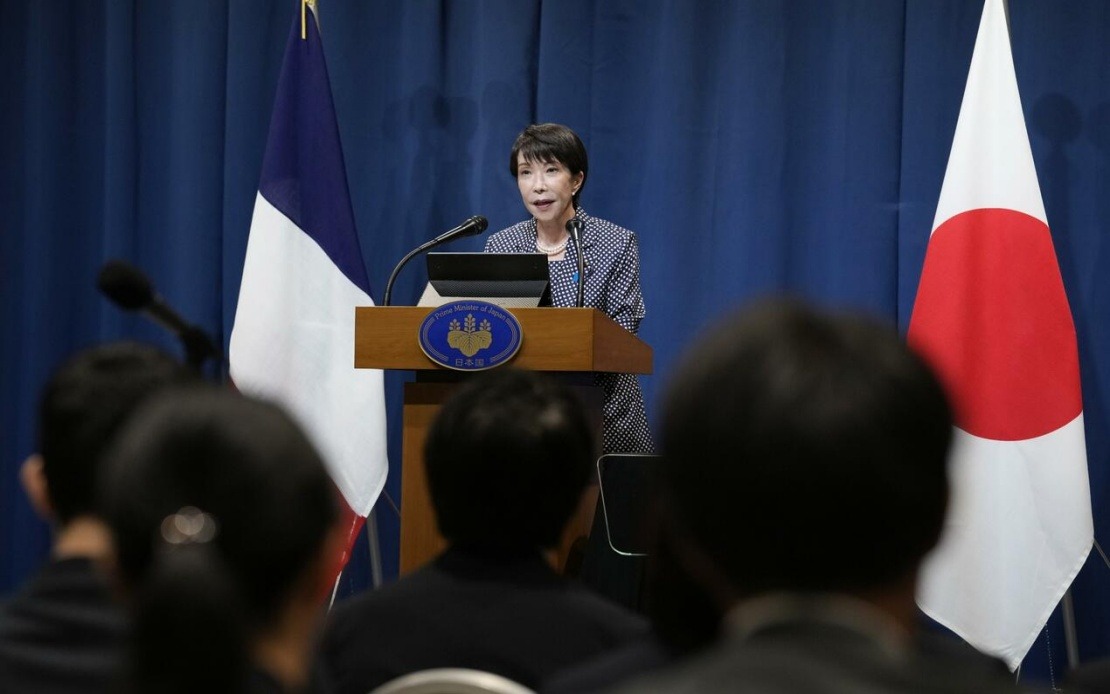
Prime Minister Sanae Takaichi's administration faces mounting political headwinds as public confidence dips below 56 percent for the first time since she assumed office last October. A Kyodo News telephone survey released Sunday revealed that Cabinet approval has slipped to 55.8 percent, signalling eroding support for Japan's leadership at a critical moment of economic and geopolitical uncertainty. The erosion of backing reflects deepening anxieties among the Japanese electorate over multiple fronts, from household finances strained by stubborn inflation to concerns about the nation's regional security posture amid volatile Middle East developments.
Japan's resource-dependent economy remains particularly vulnerable to disruptions in global energy markets and international trade flows. The lingering economic consequences of the West Asia conflict have kept Japanese policymakers and citizens on edge, with uncertainty about future oil supplies and shipping routes weighing on business confidence and consumer sentiment. This backdrop of economic fragility has made the government's handling of domestic price pressures a central issue in public perception, directly contributing to the decline in Cabinet support reflected in the latest polling data.
The question of Japan's military engagement in critical international waterways emerged as another point of public disagreement in the survey. When asked about the potential deployment of the Japan Self-Defence Forces to secure commercial shipping through key maritime passages, 54.7 percent of respondents expressed opposition to such a move. This suggests that a majority of Japanese voters remain wary of expanded military operations abroad, even in waters crucial for their nation's energy security and trade. By contrast, 36.6 percent of those surveyed indicated support for such a deployment, revealing a substantial but minority position favouring a more assertive security stance. The timing of the survey, which followed a preliminary peace agreement between the United States and Iran that includes Tehran reopening the Strait of Hormuz, may have influenced these responses.
The food consumption tax has emerged as perhaps the most pressing domestic concern animating public debate. With Japanese households continuing to struggle under the weight of elevated prices across essentials, food and beverages have become particularly acute pressure points on family budgets. In response to this hardship, the Kyodo News poll found that 43.9 percent of respondents would find acceptable a reduction in the consumption tax on food and beverages from its current 8.0 percent level to 1.0 percent, provided such a change could be implemented promptly. This represents a substantial plurality of opinion and reflects public anxiety about purchasing power and living standards.
Even more revealing is the finding that 22.6 percent of survey participants advocated for a complete elimination of consumption tax on food and beverages, reducing it to zero. This position aligns with pledges made by Japan's ruling coalition parties and demonstrates that a meaningful segment of the electorate holds the government accountable to campaign commitments on cost-of-living relief. Together, these two positions account for roughly two-thirds of respondents, indicating widespread public appetite for tax reduction as a strategy to ease consumer pressure. The political salience of tax policy in driving Cabinet approval suggests that Prime Minister Takaichi's government faces mounting pressure to translate electoral promises into concrete policy action, or risk further erosion of public support.
For Malaysian and Southeast Asian observers, Japan's predicament offers instructive lessons about the interplay between regional security concerns and domestic economic discontent. Like several regional economies, Japan faces the challenge of maintaining public confidence while navigating complex international pressures and managing inflation that directly affects household purchasing power. The Indonesian and Malaysian experience with consumption taxes and cost-of-living pressures shares common ground with Japan's current struggles, suggesting that regional governments may benefit from understanding how Japanese policymakers attempt to balance these competing imperatives.
The timing of the Cabinet's declining approval is particularly noteworthy given that Takaichi has held the office for less than a year. A slide from what must have been substantially higher initial approval figures to just below 56 percent in roughly eight months suggests accelerating erosion rather than gradual decline. This raises questions about whether Takaichi's administration can effectively communicate its policy agenda and demonstrate tangible results before support erodes further. In Japanese politics, where coalition dynamics and factional considerations often complicate governance, maintaining parliamentary momentum becomes increasingly difficult once public backing slips below 60 percent.
The Kyodo News poll findings underscore the challenge facing contemporary policymakers in affluent democracies: managing heightened public expectations on multiple fronts while constrained by structural economic realities and geopolitical circumstances beyond easy control. Prime Minister Takaichi inherited an economy already burdened by demographic headwinds and deflationary legacies, even as new inflationary pressures emerged through global supply disruptions and Middle East tensions. The public's response—as measured in this latest survey—suggests that voters expect their government to shield them from these external shocks, a standard that may prove difficult to meet.
%22%2F%3E%3C%2Fpattern%3E%3C%2Fdefs%3E%3Crect%20width%3D%22100%25%22%20height%3D%22100%25%22%20fill%3D%22url(%23ph1u4ogg)%22%2F%3E%3Crect%20width%3D%22100%25%22%20height%3D%22100%25%22%20fill%3D%22url(%23ph1u4ogp)%22%2F%3E%3Ctext%20x%3D%2250%25%22%20y%3D%2250%25%22%20text-anchor%3D%22middle%22%20dominant-baseline%3D%22central%22%20fill%3D%22rgba(255%2C255%2C255%2C0.95)%22%20font-family%3D%22Georgia%2C%20'Times%20New%20Roman'%2C%20serif%22%20font-weight%3D%22700%22%20font-size%3D%22320%22%20letter-spacing%3D%22-0.02em%22%3EData%3C%2Ftext%3E%3C%2Fsvg%3E)
%22%2F%3E%3C%2Fpattern%3E%3C%2Fdefs%3E%3Crect%20width%3D%22100%25%22%20height%3D%22100%25%22%20fill%3D%22url(%23ph4pno3g)%22%2F%3E%3Crect%20width%3D%22100%25%22%20height%3D%22100%25%22%20fill%3D%22url(%23ph4pno3p)%22%2F%3E%3Ctext%20x%3D%2250%25%22%20y%3D%2250%25%22%20text-anchor%3D%22middle%22%20dominant-baseline%3D%22central%22%20fill%3D%22rgba(255%2C255%2C255%2C0.95)%22%20font-family%3D%22Georgia%2C%20'Times%20New%20Roman'%2C%20serif%22%20font-weight%3D%22700%22%20font-size%3D%22170%22%20letter-spacing%3D%22-0.02em%22%3EMalaysia%3C%2Ftext%3E%3C%2Fsvg%3E)