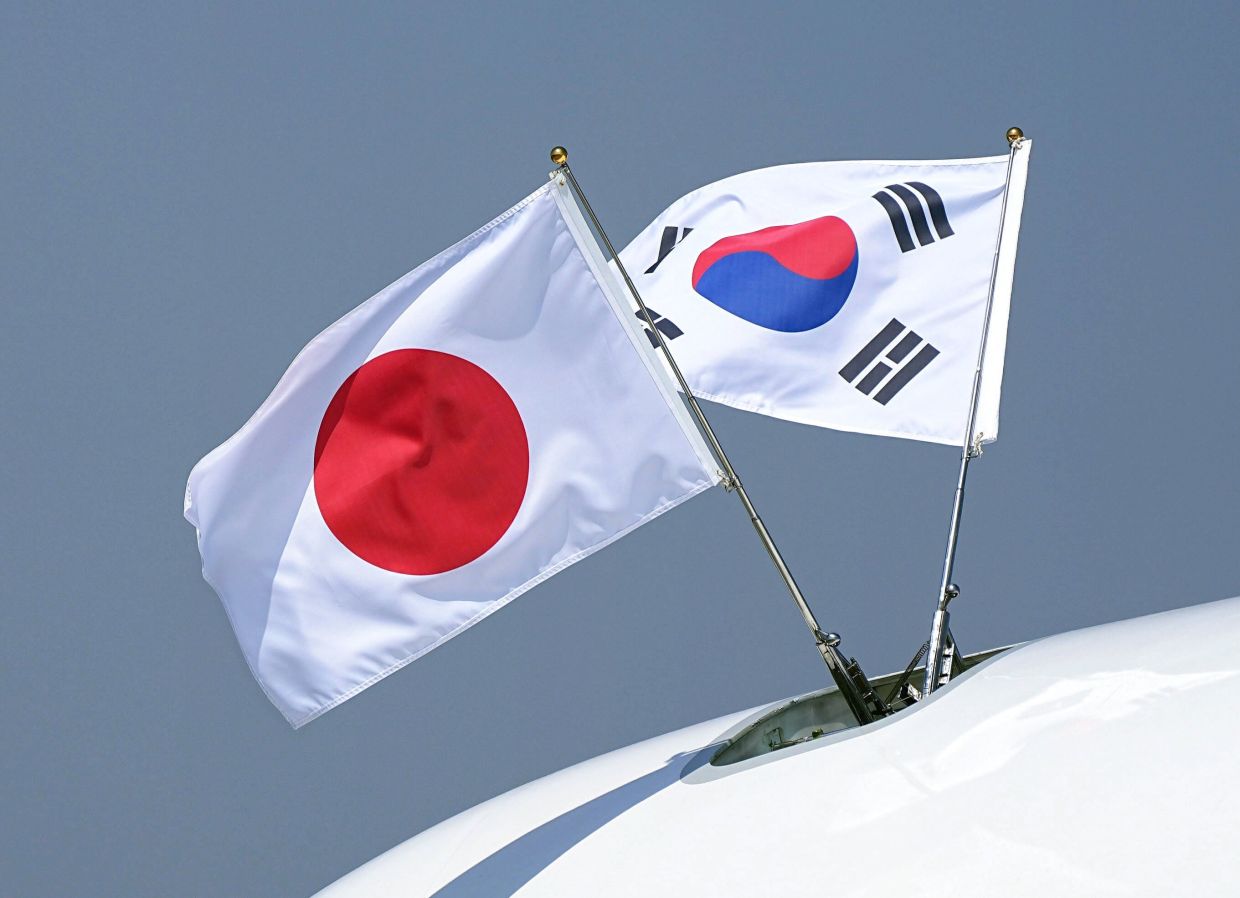
The nuclear landscape across northeast Asia rests on a precarious equilibrium, according to fresh research from Washington's Centre for Strategic and International Studies. Although overwhelming majorities of strategic decision-makers in Japan and South Korea currently reject nuclear weapons development, the entire architecture of restraint could unravel quickly should either nation reverse course. The findings underscore a troubling reality for regional stability: each country's nuclear calculus remains hostage to the other's choices, creating a dangerous interdependence that transcends the influence of American military commitments that have long anchored the region's security.
The CSIS survey, led by Victor Cha and Kristi Govella and completed in late October, interviewed Japan and South Korea's policy elite including serving and retired officials, legislators, academics, strategists and business leaders. Three-quarters of South Korean respondents and nearly four-fifths of their Japanese counterparts expressed opposition or significant reservations about their respective nations pursuing nuclear arsenals. These figures might suggest confidence in the status quo, yet they mask a volatile situation lurking beneath the surface.
The real concern emerges from what the research termed the "domino effect." Were one nation to cross the nuclear threshold, support for weapons development in the other country could spike dramatically. CSIS experts concluded that such a shift could prove even more destabilising than the much-discussed possibility of reduced United States troop numbers in the region, a scenario that has long preoccupied security planners across northeast Asia.
Yet an uncomfortable contradiction runs through South Korean opinion. While three-quarters of elites reject nuclear weapons, public sentiment tells a markedly different story. A 2024 Gallup poll commissioned by the Chey Institute for Advanced Studies found that over 72 per cent of ordinary South Koreans support their country acquiring nuclear weapons. This chasm between elite restraint and popular enthusiasm reflects deep public anxieties about North Korea's accelerating weapons programmes and uncertainties about long-term American protection. The divergence matters because sustained public pressure can eventually shift elite consensus, particularly amid security crises.
Japan presents a contrasting picture. According to Govella, Japanese public opinion aligns more closely with elite views, with roughly 80 per cent of the general population opposing nuclear weapons acquisition. Contrary to some international commentary suggesting momentum building within Japanese policy circles toward nuclear rearmament, media reporting has exaggerated internal debate on this question. The mainstream of Japanese strategic thinking still rejects the nuclear path, even as China relentlessly accuses Tokyo of pursuing "remilitarisation" and covert nuclear ambitions.
The motivations driving pro-nuclear sentiment in each country reveal distinct threat perceptions. South Korean advocates for nuclear weapons focus overwhelmingly on countering North Korea's growing arsenal. Japanese supporters, by contrast, worry primarily about whether the United States will maintain its extended deterrence commitment indefinitely. This difference matters strategically: South Korea's concerns are immediate and peninsular, while Japan's reflect longer-term doubts about American staying power in the Pacific. Understanding these divergent drivers is essential for anyone considering how to prevent either nation from crossing the nuclear threshold.
The survey's findings carry particular relevance given recent diplomatic activity. The United States has intensified bilateral consultations with both nations on nuclear cooperation. Earlier this month, Washington held talks in Seoul advancing nuclear initiatives with South Korea, followed by an extended deterrence dialogue in Tokyo with Japan. These consultations aim partly to reassure allies that American nuclear guarantees remain credible, thereby reducing domestic pressure for independent weapons programmes.
Parallel developments underline how nuclear politics have shifted. Brandon Williams, the Department of Energy's under secretary for nuclear security, announced on Thursday that the United States intends to dramatically accelerate its nuclear weapons production to counter unspecified threats. The National Nuclear Security Administration plans to invest US$600 million in artificial intelligence this year to modernise nuclear weapons design and manufacturing, with the goal of compressing the current 10 to 15-year timeline from identifying a requirement to deploying new systems. Such expansion raises questions about whether Washington can credibly position itself as a responsible nuclear custodian while simultaneously expanding its own arsenal.
Another wrinkle in American nuclear strategy concerns hypersonic delivery systems. CSIS analysts argued Thursday that Washington should abandon its self-imposed restriction of equipping these weapons exclusively with conventional warheads. Heather Williams, who directs the project on nuclear issues at CSIS, contended that nuclear hypersonic weapons should be in the American arsenal to complicate adversary calculations and expand strike options. She further suggested that a credible and diversified American nuclear posture would actually reassure allies and reduce proliferation pressures, since secure allies prove less likely to pursue independent weapons programmes. This logic directly connects to the CSIS survey findings: allied confidence in American nuclear protection remains crucial for preventing Tokyo and Seoul from taking the nuclear leap.
Beijing's role in this emerging architecture cannot be overlooked. China has consistently rejected Washington's invitations to join multilateral arms control negotiations, including those involving Russia and the United States. Beijing has repeatedly cited its smaller arsenal as justification for non-participation, a position that leaves northeast Asian security arrangements asymmetrical and unstable. Should China continue accelerating its modernisation programme while refusing transparency or constraints, both Japan and South Korea may face intensifying domestic pressure to abandon their current non-nuclear postures.
The stakes for Malaysia and Southeast Asia extend beyond northeast Asia. A nuclear-armed Japan or South Korea would fundamentally reorder regional power relationships, potentially triggering nuclear aspirations elsewhere and complicating security arrangements across the Indo-Pacific. For nations within ASEAN's embrace, the advent of nuclear weapons in northeast Asia could reshape great power competition in ways that draw Southeast Asian states into new strategic dependencies or conflicts. The current moment, while marked by elite restraint in Tokyo and Seoul, represents a narrow window for reinforcing non-proliferation norms and demonstrating that extended deterrence remains a credible alternative to independent nuclear forces.