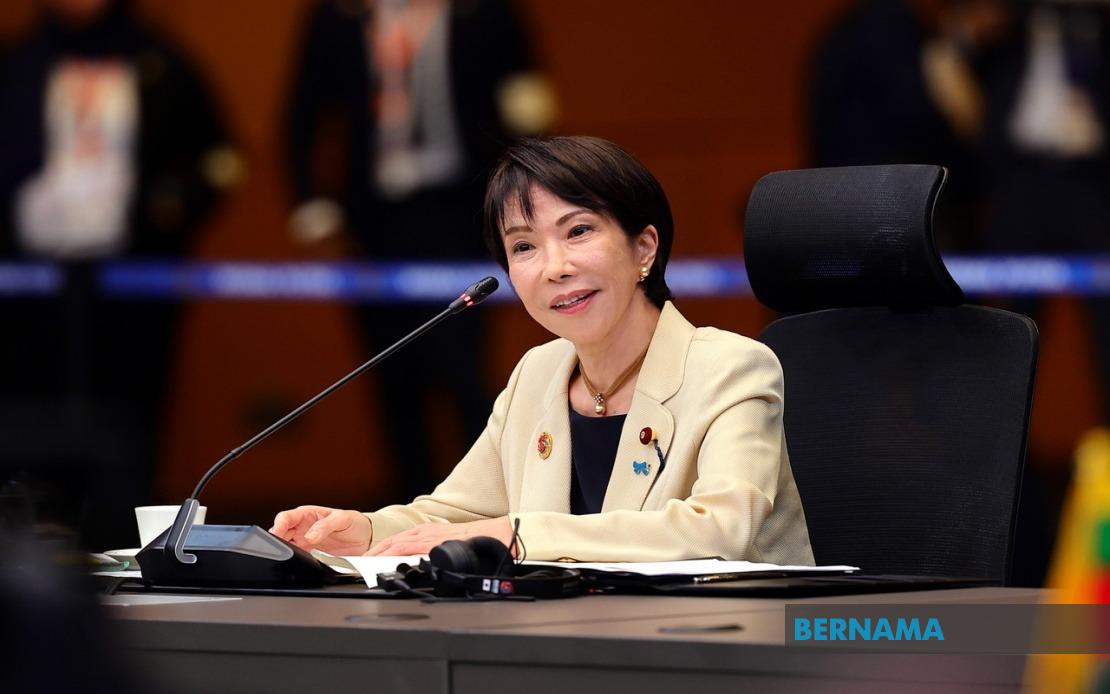
Japanese Prime Minister Sanae Takaichi has made a direct appeal to Oman's Sultan Haitham bin Tariq al-Said for the restoration of free and unimpeded passage through the Strait of Hormuz, one of the world's most strategically vital shipping corridors. The two leaders discussed the matter during a telephone conversation on Monday, with Takaichi subsequently briefing journalists at her Tokyo office about the substance of their exchange.
The timing of this diplomatic overture reflects growing anxieties among Tokyo's policymakers regarding the implications of heightened tensions between the United States and Iran for Japan's energy security and broader economic interests. The Strait of Hormuz, a narrow waterway separating Oman and Iran, serves as the conduit through which roughly one-third of seaborne oil traded globally passes, making it indispensable to Japan's petroleum imports and industrial operations. Any sustained disruption to traffic through this passage poses direct risks to Japanese manufacturing and power generation, underscoring why Japan maintains an active interest in regional stability.
According to reporting by Kyodo News, Oman has positioned itself as an intermediary in ongoing discussions with Iran, specifically regarding maritime commerce and shipping protocols through this critical sea lane. This mediation role reflects Oman's geographical position and its traditionally pragmatic approach to regional affairs, which has enabled Muscat to maintain constructive relationships with both Iran and Western nations. The sultanate's willingness to engage with multiple parties has made it a valuable interlocutor in efforts to prevent escalation and maintain dialogue during periods of acute tension.
Takaichi's call underscores Japan's preference for diplomatic solutions to preserve the commercial predictability upon which its export-dependent economy relies. Rather than taking overtly political stances in the US-Iran dispute, Tokyo has historically sought to protect its practical interests by encouraging all parties to respect international maritime conventions and maintain stable shipping conditions. This approach reflects Japan's balancing act as a US security ally with significant energy vulnerabilities that make peaceful relations with Iran strategically prudent.
The Sultan's response, as relayed by Takaichi to reporters, indicated Oman's commitment to consulting with and accommodating the perspectives of all countries utilising the waterway. This measured response suggests Oman recognises its responsibility as a custodian of regional stability and understands that any durable arrangement must command broad international acceptance. By pledging to solicit views from major maritime users, Sultan Haitham signalled that Oman would seek consensus-based solutions rather than imposing arrangements favoured by any single party.
For Malaysian readers, this diplomatic engagement carries particular significance. Malaysia, as a major trading nation with substantial maritime commerce transiting through global chokepoints, shares Japan's vulnerability to disruptions in the Strait of Hormuz. Southeast Asian economies, including Malaysia's, depend heavily on predictable shipping conditions and unobstructed access to international sea lanes. Any escalation affecting the Hormuz passage would reverberate through regional supply chains, affecting manufacturing competitiveness and energy costs across Southeast Asia.
The broader context involves the stalled negotiations between Washington and Tehran over nuclear and sanctions issues. Efforts to revive the Iran nuclear deal, formally known as the Joint Comprehensive Plan of Action (JCPOA), have faced considerable setbacks in recent months. This diplomatic impasse creates uncertainty regarding whether tensions might escalate further, potentially triggering more aggressive posturing by either side that could threaten maritime freedom. Japan's intervention seeks to prevent such escalation by encouraging dialogue and reaffirming the international community's commitment to maintaining basic principles of maritime commerce.
Oman's role as mediator reflects its established track record in regional diplomacy. The sultanate has historically avoided alignment with any regional power bloc, instead cultivating relationships based on mutual respect and practical cooperation. This independent stance, combined with its geographic position bordering both Iran and the Arabian Peninsula, has made Oman an effective neutral ground for dialogue. Previous successful Omani mediation efforts, including facilitation of preliminary negotiations leading to the JCPOA's original agreement, demonstrate the country's capacity to broker understandings among parties with sharply divergent interests.
Japan's diplomatic initiative also reflects Tokyo's broader strategy of maintaining hedged relationships across the Middle East. Beyond securing energy supplies, Japan seeks to preserve its reputation as a neutral actor committed to international law and stability. By engaging with Oman rather than merely condemning Iran or supporting US maximalist positions, Takaichi's government reinforces this image while simultaneously advocating for practical outcomes—namely, safe shipping—that benefit all parties.
The maritime dimension deserves particular emphasis. Freedom of navigation represents a core principle of international law and Japan's strategic doctrine, reflecting its island nation status and dependence on sea trade. Any precedent permitting restrictions on shipping in international waters threatens Japan's long-term interests. Consequently, Tokyo views maintaining Hormuz passage rights as essential to its security posture, explaining why the Japanese government regularly engages in quiet diplomacy to prevent escalation in this region.
For Southeast Asian nations watching these developments, Japan's approach offers a template for how smaller trading powers can protect their interests during great power tensions. Rather than taking rigid positions, Malaysia and neighbouring countries can cultivate relationships with key regional actors and encourage diplomacy, particularly through respected mediators like Oman. This pragmatic orientation aligns with ASEAN's traditional non-aligned posture and its emphasis on dialogue and peaceful resolution of disputes.
Looking ahead, sustained international engagement with Oman and encouragement for its mediation efforts will likely remain central to Japanese policy. As energy markets tighten and regional tensions persist, maintaining open shipping lanes through the Hormuz Strait will only grow more crucial. Japan's proactive diplomacy, working through partners like Oman, represents a calculated effort to protect these interests before circumstances potentially deteriorate further.

