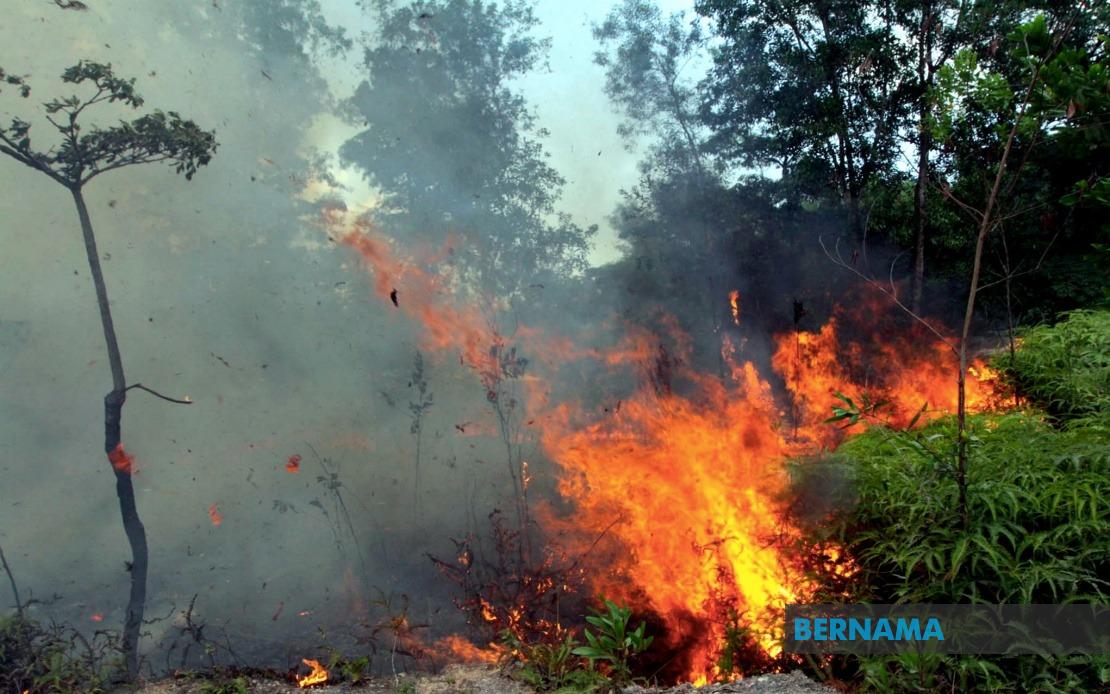
The Malaysian Fire and Rescue Department (JBPM) is moving decisively to strengthen its operational readiness for the intensified forest fire season anticipated when the Super El Niño phenomenon arrives in early 2027. Director-General Datuk Seri Nor Hisham Mohammad outlined an ambitious equipment acquisition programme designed to position the department to respond swiftly to fire emergencies during the extended dry period that typically accompanies such climatic events. The initiative reflects growing recognition within government circles that Malaysia's fire management infrastructure must be substantially upgraded to handle the elevated risk profile that Super El Niño will create across the region.
The department's procurement strategy centres on two key asset categories. On the heavy equipment front, JBPM has already received 80 fire engine pumps with a further 40 units scheduled for delivery by month's end, effectively doubling the department's capacity to supply water and suppress large-scale fires. This represents a significant capital investment in traditional firefighting infrastructure, signalling that officials understand the importance of maintaining proven, effective equipment even as they modernise their response systems. The timing of these deliveries aligns with the window before the predicted Super El Niño impact, allowing staff adequate time to familiarise themselves with the new machinery and integrate it into existing operational protocols.
Equally significant is the acquisition of 200 lightweight four-wheel-drive utility vehicles designated for rapid-response operations. These vehicles embody a strategic shift toward early intervention, designed to reach remote forest locations quickly and contain small fires before they escalate into major conflagrations. Rather than waiting for traditional fire engines to arrive, these mobile units will conduct initial reconnaissance, establish access routes through challenging terrain, and attempt immediate suppression of manageable incidents. This layered response framework recognises that forest fire dynamics in Malaysia demand speed and geographical flexibility, particularly in the rural and semi-developed areas where fire ignition often occurs and where road infrastructure may be inadequate for heavy machinery.
According to Nor Hisham, the Super El Niño event is projected to impact the Pacific region by late November 2026, with Malaysian weather systems beginning to feel the influence by month's end. The full effects are expected to materialise across the country in early 2027, establishing an extended period of reduced rainfall and elevated evapotranspiration rates that create optimal conditions for forest fire propagation. This timeline allows approximately four to five months for JBPM to complete its equipment deliveries and conduct operational training before the vulnerable season begins. The department's focus remains dual-natured, however, as officials must simultaneously maintain preparedness during the ongoing Southwest Monsoon season, which typically brings increased precipitation but can still produce localised dry pockets conducive to fire spread.
The broader context involves regional climate patterns that Malaysia has experienced during previous El Niño episodes. The 1997-1998 Super El Niño caused devastating transboundary haze across Southeast Asia, particularly affecting Indonesia, Malaysia, and Singapore, with fire incidents rising sharply and air quality deteriorating to hazardous levels. That experience underscored the vulnerability of the region's fire management systems and the economic and health consequences of inadequate preparedness. Current projections suggest the approaching Super El Niño could rival or exceed that intensity, making the timing of JBPM's equipment modernisation particularly crucial for safeguarding public health and regional environmental stability.
Beyond hardware investments, Nor Hisham emphasised the critical role of public cooperation in mitigating forest fire risk. The director-general cautioned against open burning practices, noting that such activities during the dry season frequently escalate into uncontrollable wildfires that overwhelm suppression capacity. This public messaging component reflects understanding that equipment alone cannot manage the fire challenge, particularly when human-induced ignition sources proliferate during dry periods. Agricultural communities and informal land-clearing operations represent significant risk vectors, and preventing open burning through awareness campaigns and enforcement represents a cost-effective complement to infrastructure investment.
The JBPM announcement arrived during the agency's hosting of the 2026 Fire and Rescue Games (SUKBOM), a competitive event drawing 1,384 participants across 11 disciplines. Nor Hisham utilised the platform to emphasise that enhanced operational capacity requires not merely equipment but also highly trained personnel capable of deploying sophisticated resources effectively in challenging conditions. The championship serves dual purposes: it maintains workforce skills and morale through competitive engagement, and it functions as a selection mechanism for identifying elite athletes and operatives eligible for representation at the 2027 World Police and Fire Games in Perth, Australia. This international competitive dimension underscores that Malaysian firefighting services aim to operate at professional standards comparable to developed nations.
For Malaysian policymakers and business stakeholders, the JBPM initiatives signal that government agencies are adopting proactive rather than reactive postures toward predicted environmental hazards. The advance procurement timeline and strategic equipment selection indicate structured planning rather than crisis management. However, observers note that successfully executing this preparedness programme depends on sustained political and budgetary commitment, particularly if procurement timelines encounter delays or if training exercises reveal additional requirements not currently identified. The regional dimension also matters, as effective Super El Niño response requires coordination with Indonesian and Singaporean counterparts, given the transboundary nature of haze pollution and fire management challenges.
The broader significance of JBPM's announcements extends to how Malaysia positions itself within regional climate resilience frameworks. As Southeast Asian nations grapple with increasing climate volatility, the approach adopted by Malaysian authorities—combining infrastructure investment, personnel development, public education, and international engagement—offers a replicable model for other countries in the region. The investment in rapid-response vehicles particularly reflects innovation in responding to geographical challenges specific to tropical forest environments, where traditional urban firefighting approaches prove insufficient. This emphasis on localised, context-sensitive solutions rather than wholesale adoption of international templates demonstrates pragmatic adaptation to regional realities.
Looking ahead, the Super El Niño episode will serve as a comprehensive test of these enhanced capabilities. Success will depend not only on whether new equipment functions as designed but also on whether training programmes have effectively prepared personnel to maximise resource utilisation, whether procurement remains on schedule, and whether public compliance with burning restrictions reaches necessary thresholds. The stakes extend beyond JBPM's institutional reputation to encompassing regional air quality, economic activity in affected sectors, and public health outcomes across Malaysia and neighbouring countries. The department's current positioning represents the culmination of lessons learned from previous climatic crises, but the actual test will come when dry conditions materialise and fire incidents spike across the landscape.

