Johor Darul Ta'zim concluded their pre-season campaign on a high note at the Sultan Ibrahim Stadium in Iskandar Puteri, holding English Premier League powerhouse Chelsea FC to a thrilling 3-3 draw in an international friendly that showcased the Malaysian club's considerable progress. The result represented far more than points on the board; it served as validation that the Southern Tigers' intensive preparation over the preceding weeks had equipped them adequately for the rigours of the domestic season ahead.
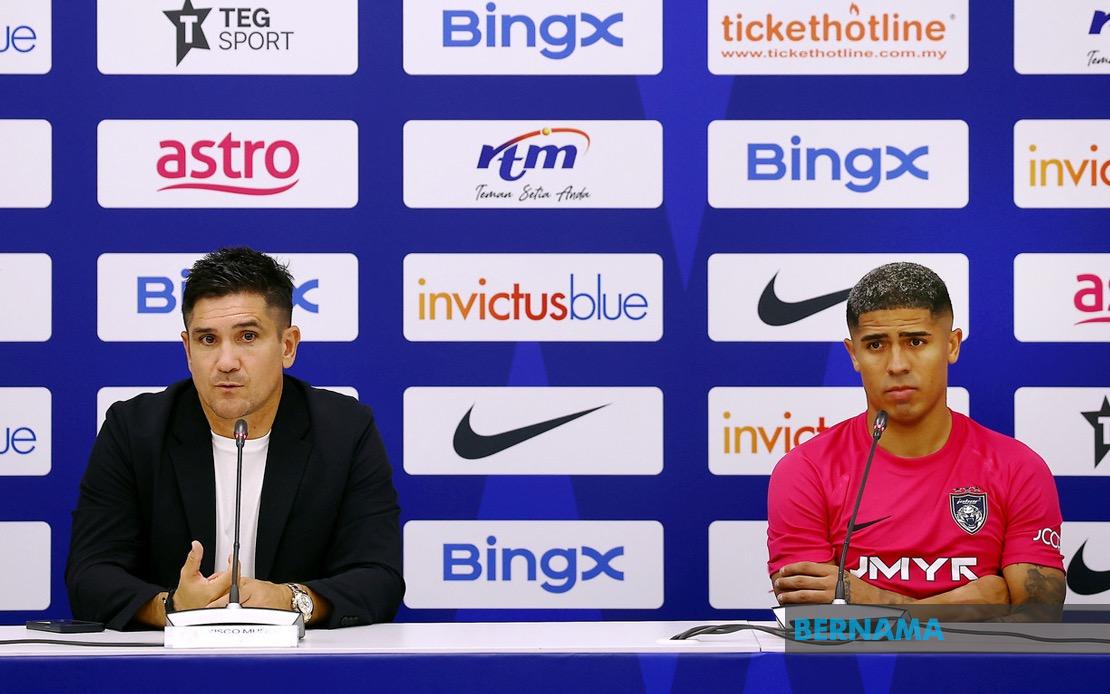
Head coach Xisco Munoz emerged from the encounter visibly satisfied, reflecting on the significance of testing his squad against world-class opposition at this critical juncture of the campaign. Speaking at the post-match media gathering, the Spanish tactician emphasized that the fixture had transcended mere competitive exercise, functioning instead as a comprehensive examination of both the physical conditioning and tactical frameworks his coaching staff had instilled throughout the pre-season period. The willingness of Chelsea, despite their global stature and recent FIFA Club World Cup triumph, to engage in such a fixture underscored JDT's standing within the regional football hierarchy.
Munoz articulated particular satisfaction with how his players executed the blueprint established in training, demonstrating the tactical flexibility required at the highest levels of competition. He highlighted the team's capacity to seamlessly transition between defensive postures—whether operating a compact low block or pressing from a middle defensive line—and their capacity to mount sustained attacking pressure when circumstances demanded. Such versatility, he suggested, represented the culmination of meticulous pre-season work and indicated that the squad possessed the technical maturity to compete effectively throughout the upcoming season.
The contribution of individual performers provided additional encouragement for the coaching staff. Arif Aiman Mohd Hanapi, Oscar Aribas, and Bergson Da Silva each found the net for JDT, demonstrating that goal-scoring threats were distributed across the squad rather than concentrated in a single player or tactical system. This distribution of attacking responsibility carries significant implications for the season ahead, as it reduces the vulnerability inherent in formations overly dependent on a solitary creative or finishing talent.
A recurring theme in Munoz's assessment concerned the depth of his squad and the competitive intensity this generated within the training environment. He stressed that no player could afford complacency given the ambitions the club harboured and the quality of alternatives available to him in selection decisions. This culture of internal competition serves a dual purpose: it maintains standards during matches while simultaneously ensuring that squad rotation, inevitable across a gruelling season, does not precipitate a decline in performance levels. The manager made clear that each player understood their obligation to the club's badge and the expectations attached to representing JDT.
The match itself demonstrated JDT's capacity to engage Chelsea on relatively equal terms, a reflection of the club's evolution over recent seasons. The Malaysian league champions have invested considerably in squad development and coaching infrastructure, and performances against established European sides provide tangible evidence of progress. For supporters and stakeholders accustomed to viewing Southeast Asian football through the prism of continental inferiority, such results carry symbolic weight extending beyond the specific fixture.
Munoz's emphasis on the players' character and resilience carried particular resonance, suggesting that JDT's strength derives not merely from technical proficiency but from a mentality suited to competitive pressure. The ability to maintain composure and tactical discipline when facing an opponent of Chelsea's calibre and reputation testifies to the psychological preparation undertaken during the pre-season phase. In Malaysian domestic football, where psychological warfare and narrative framing often influence outcomes, such mental fortitude represents a tangible competitive advantage.
Looking forward, the implications of this pre-season campaign extend beyond JDT's immediate competitive prospects. A successful Chelsea encounter elevates the club's profile within Southeast Asian football and potentially influences player recruitment and contract negotiations, as emerging talents consider the quality of opposition and coaching they would encounter. The fixture also provides valuable data for Munoz's tactical planning, revealing which systems functioned effectively against structured, attacking opposition and where vulnerabilities might persist.
The friendly has effectively served as a dress rehearsal for the challenges ahead, allowing the coaching staff to implement tactical adjustments and personnel decisions with minimal consequence. The fact that JDT held their own against a side laden with international experience suggests that domestic rivals should not underestimate the Tigers' preparation. Munoz's evident satisfaction appears thoroughly justified by the tangible evidence of a squad operating near peak efficiency as the competitive season approaches.

