Jeram Padang will stand alone as the only four-cornered contest within the Jempol state constituency during the upcoming Negeri Sembilan state election, marking a distinctive electoral configuration that sets it apart from neighbouring seats. Returning officer Amino Agos Suyub confirmed this unique arrangement after the nomination process concluded at the Jempol District and Land Office Hall on July 18, with the broader Jempol division presenting a mixed electoral landscape that reflects the competitive dynamics currently playing out across Negeri Sembilan's political terrain.
The diversity of contests within Jempol underscores the regional variation in electoral support structures. While Jeram Padang witnesses four-candidate participation, the adjacent Serting and Palong seats will experience three-cornered contests, and Bahau is set for a direct two-person battle. This fragmentation across a single state constituency reveals how political competition has become less predictable, with multiple parties now fielding candidates even in seats where they lack traditional organisational footholds. For Malaysian voters, such contests create both opportunities for genuine choice and potential complications in vote splitting that could reshape results in unpredictable ways.
The Jeram Padang battle brings together representatives from four distinct political formations. Pakatan Harapan fields G. Manivannan, defending the seat against Datuk Mohd Zaidy Abdul Kadir, the sitting member from Barisan Nasional who seeks to retain his position. Bersatu's R. Sri Sanjeevan enters as a third force, while Dayana Dal of Parti Orang Asli Malaysia (Asli) provides a historic fourth option. Dayana Dal's candidacy represents a significant development, being the only Orang Asli candidate contesting within the Jempol division, thereby elevating indigenous representation in this particular electoral cycle.
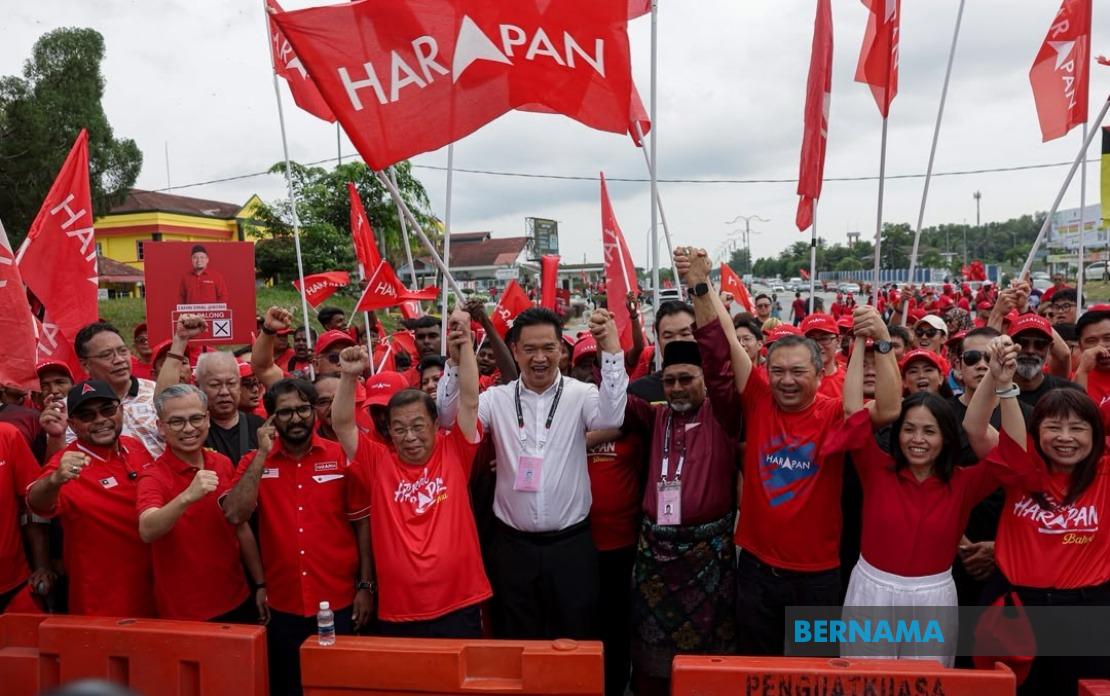
The nomination filing process on July 18 revealed the sequence of candidate registrations, with Sri Sanjeevan and Dayana Dal submitting their papers at 9.09 am and 9.12 am respectively. Manivannan followed at 9.17 am, arriving with Datuk Seri Fahmi Fadzil, the Pakatan Harapan Communications director, signifying the coalition's commitment to the contest. Incumbent Mohd Zaidy completed the registration at 9.20 am, finalising the four-way lineup. This procedural detail matters because it established the official ballot order that voters will encounter on polling day.
Serting presents a three-cornered scenario featuring Yaacob Mahmood representing Pakatan Harapan against the incumbent Mohd Fairuz Mohd Isa, who now contests under the Perikatan Nasional banner—a significant shift suggesting either internal reorganisation or a change in how the incumbent seeks to consolidate his political base. Muhammad Noraffendy Mohd Salleh, commonly known as Affendy Salleh, enters for Bersatu, continuing that party's pattern of fielding candidates across multiple constituencies within the state, even where success appears uncertain.
Palong similarly features three candidates competing for a single seat. Incumbent Datuk Mustapha Nagoor represents Barisan Nasional and seeks to maintain his position against Muhammad Zahin Zinal Abidin, the Pakatan Harapan candidate, and Rebin Birham from Bersatu. The presence of Bersatu across both Serting and Palong indicates the party's deliberate strategy to contest broadly throughout Jempol, potentially attempting to capture protest votes or carve out electoral space in constituencies where traditional two-front contests might have prevailed.
Bahau stands apart as the Jempol division's only truly direct confrontation, featuring incumbent Teo Kok Seong of the Democratic Action Party, contesting as a Pakatan Harapan representative, against Chong Fui Ming of the Malaysian Chinese Association fielding the Barisan Nasional challenge. This straight fight between DAP and MCA in an urban-leaning seat reflects the entrenched nature of competition in certain constituencies, where third-party intervention has failed to gain traction or where voter preferences remain relatively settled between the two major coalitions.
The Electoral Commission has structured the election timeline with early voting scheduled for July 28, providing voters with advanced options before the main polling day on August 1. This phasing allows for flexibility in voter participation, particularly benefiting those with work commitments or mobility constraints on the primary voting date. For election observers and analysts, the early voting results often provide preliminary indicators of overall electoral sentiment, though they may not perfectly mirror final day outcomes due to different voter demographics and participation patterns.
The configuration of contests across Jempol reflects broader shifts within Malaysian electoral politics. The presence of Bersatu candidates across multiple seats within a single state constituency indicates how that party has embedded itself as a significant electoral force following its departure from Perikatan Nasional and subsequent repositioning. Similarly, Pakatan Harapan's ability to field candidates across all four Jempol seats demonstrates organisational consolidation following its return to substantial parliamentary opposition status after the 2022 general election.
For Negeri Sembilan specifically, the state election carries particular significance as the state government framework undergoes shifts in coalition support and internal dynamics. The Jempol division results will contribute to the overall state outcome, with tight contests in multiple seats potentially influencing which coalition emerges with governing capacity. Jeram Padang's four-way contest adds unpredictability to this equation, as vote splitting could produce unexpected winners if no candidate achieves clear plurality.
The Orang Asli dimension introduced by Dayana Dal's candidacy warrants particular attention for observers tracking indigenous representation in Malaysian electoral politics. Historically, Orang Asli communities have had minimal direct representation through independent candidacies, with most indigenous voters falling within constituencies contested between major parties. Dayana Dal's entry offers an alternative voice potentially articulating community-specific concerns regarding land rights, development pressures, and cultural preservation that broader coalition structures might not prioritise.
As Negeri Sembilan voters prepare for the August 1 polling day, constituencies like Jeram Padang with their multi-candidate contests will demand careful consideration from electors seeking to align their votes with preferred outcomes. The strategic implications of voting in four-way races differ substantially from two-candidate or three-candidate contests, requiring voters to weigh not only their preferred party but also realistic prospects of achieving desired results given vote distribution patterns. The Jempol division's mixed contest types across its four seats provide a microcosm of contemporary Malaysian electoral complexity.

