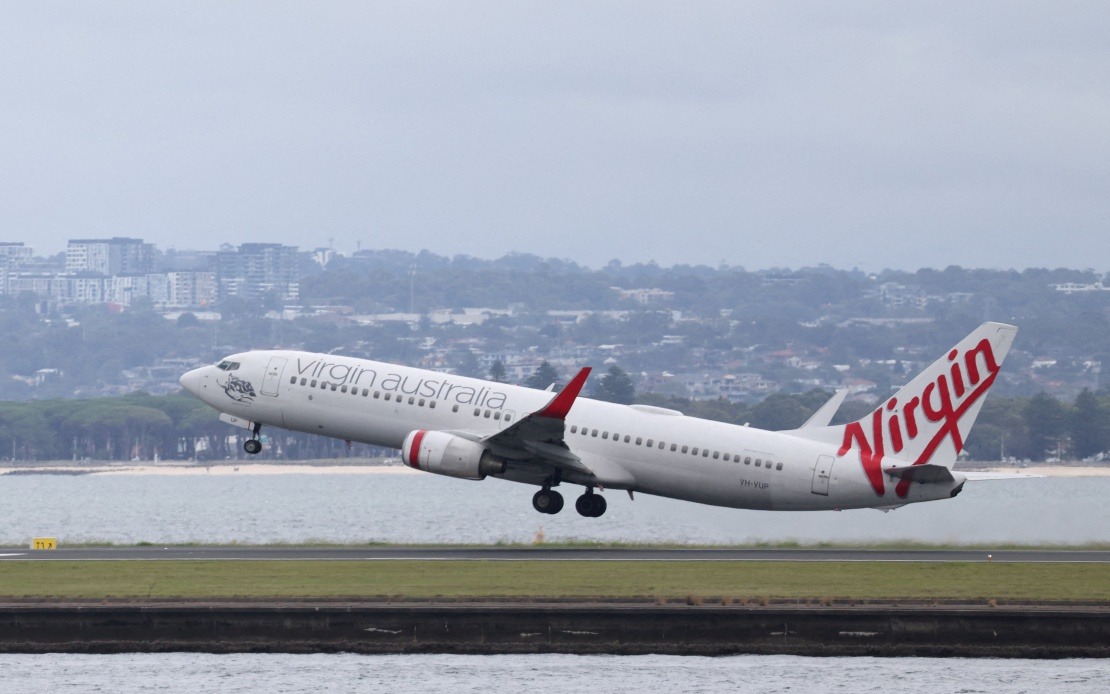
A crew member aboard a Jetstar Airways flight sustained injuries when the aircraft came perilously close to colliding with an unoccupied Qatar Airways Boeing 777 that was being towed across a runway at Sydney Airport early on Sunday morning. The potentially catastrophic incident unfolded around 7 am local time as Jetstar flight JQ402, bound for the Gold Coast, was preparing for departure and taxiing along the runway under air traffic control guidance.
The pilot of the Jetstar aircraft made an emergency decision to apply the brakes forcefully after spotting the Qatar Airways aircraft in dangerously close proximity. This sudden deceleration caused injury to a member of the cabin crew, who was subsequently attended to by ambulance paramedics at the scene. Fortunately, the aircraft was carrying passengers at the time, none of whom were physically harmed in the incident, though the experience would undoubtedly have been alarming for those on board.
Jetstar Airways, which operates as a wholly-owned subsidiary of the larger Qantas Group, moved swiftly to initiate a formal investigation into the circumstances surrounding the near-collision. A company spokesperson acknowledged the gravity of the situation while emphasising that the flight crew had been acting in compliance with instructions transmitted by Air Traffic Control. The airline stated that the pilots were forced to brake suddenly only after another aircraft entered dangerously close proximity to their own, suggesting that the critical decision to brake was reactive rather than preventative in nature.
The timing of this incident raises significant questions about operational pressures within Sydney Airport's air traffic management systems. Just days before the near-collision, the airport experienced widespread disruption when over 250 flights were delayed on consecutive days—Friday and Saturday—as a direct result of staff shortages at Airservices Australia, the government body responsible for air traffic control services at the nation's major aviation hubs. This staffing crisis meant that fewer controllers were managing the complex flow of aircraft movements across one of the Southern Hemisphere's busiest airports.
Airservices Australia provides essential navigation and safety coordination for Australia's premier airports, including Sydney, which handles hundreds of aircraft movements daily. When staffing levels fall below operational thresholds, the entire system becomes increasingly vulnerable to errors and mishaps. The proximity of the near-collision to these documented staffing problems suggests a concerning pattern of safety risk accumulation during periods of resource constraint.
For Malaysian readers and regional aviation professionals, the Sydney Airport incident underscores the critical importance of robust air traffic management infrastructure and adequate staffing levels. Southeast Asian airports, which handle exponentially greater passenger volumes than their Australian counterparts, operate under similarly complex constraints of space, capacity, and procedural coordination. The incident serves as a cautionary reminder that even well-established Western aviation systems face vulnerability when operational resources are stretched thin.
The interaction between a Jetstar aircraft and a Qatar Airways plane also highlights the multinational character of modern aviation networks. Jetstar and Qatar Airways both maintain extensive operations throughout the Asia-Pacific region, with frequent coordination required at major international hubs. Sydney Airport, as a major international gateway, regularly manages simultaneously departing and arriving aircraft from carriers operating across diverse regulatory frameworks and operational cultures.
The investigation initiated by Jetstar will likely examine multiple factors beyond the immediate cause of the near-collision. These typically include communications protocols between pilots and air traffic controllers, the adequacy of ground signalling and visual indicators for towed aircraft, spacing requirements for active runway operations, and the decision-making processes that led to the Qatar Airways plane being towed across an active runway during scheduled flight operations. Each element contributes to the broader picture of airport safety management.
The incident also raises questions about ground handling procedures and coordination between different airport operators and airlines. The Qatar Airways aircraft was being towed—a routine operation that occurs hundreds of times daily at major airports—yet somehow crossed paths with an aircraft actively preparing for takeoff. This suggests potential gaps in the communication systems between ground handling teams and air traffic control, or possibly inadequate separation protocols during simultaneous operations.
From a regional perspective, this near-miss carries implications for how Southeast Asian airport authorities and airlines evaluate their own safety protocols. Malaysia's major airports, including Kuala Lumpur International Airport and Penang International Airport, manage comparable or greater volumes of traffic and must maintain equally rigorous safety standards. The Sydney incident demonstrates that complacency has no place in aviation operations, regardless of an airport's size, experience, or historical safety record.
The injury sustained by the Jetstar cabin crew member, while reportedly non-critical based on ambulance treatment at the scene, represented a tangible human cost of the operational failure. Aviation safety protocols exist specifically to prevent such incidents and the resulting injuries that can cascade from near-misses into genuine catastrophes. The fact that passengers aboard the aircraft experienced what was likely a frightening sequence of events—sudden hard braking without warning—also highlights the passenger experience dimensions of safety breaches.
Looking forward, the investigation findings from this Sydney Airport incident will likely generate recommendations affecting not only Jetstar and Qatar Airways operations but potentially industry-wide guidance for all carriers operating at Australian airports. Such investigations typically result in revised procedures, enhanced training requirements, or infrastructural modifications that subsequently become standard practice across the industry. The incident serves as a sobering reminder that aviation safety remains a dynamic process requiring constant vigilance, adequate resources, and systemic commitment to operational excellence.

