Malaysia's badminton contingent has delivered a strong showing at the Japan Open 2026 in Tokyo, with two pairs advancing to the semifinals and keeping national hopes alive in the tournament. The performances underscore the depth of talent within the Malaysian badminton programme, particularly in the doubles disciplines where the nation has established itself as a competitive force on the international circuit.
The most eye-catching result came through the unseeded mixed doubles pairing of Jimmy Wong-Cheng Su Yin, who pulled off a significant upset against Denmark's third-seeded combination Mathias Christiansen-Alexandra Boje. The Malaysian pair's composed display yielded a straight-sets victory with a scoreline of 21-17, 21-17 in just 39 minutes, a result that demonstrates Malaysia's growing strength in mixed doubles competition. By levelling their head-to-head record against the Danish pair at 1-1, Jimmy and Su Yin have established themselves as legitimate contenders capable of toppling seeded opposition on any given day.
The path forward for the Malaysian mixed doubles team presents a fresh challenge in the semifinals, where they will encounter Hong Kong's seventh-seeded pair Tang Chun Man-Tse Ying Suet. This matchup represents unfamiliar territory, as the two combinations will meet for the first time at a major tournament. The Hong Kong pairing's lower seeding should not be mistaken for weakness, however, and Malaysian fans will recognise the quality typically produced by Hong Kong's badminton players in regional and international events.
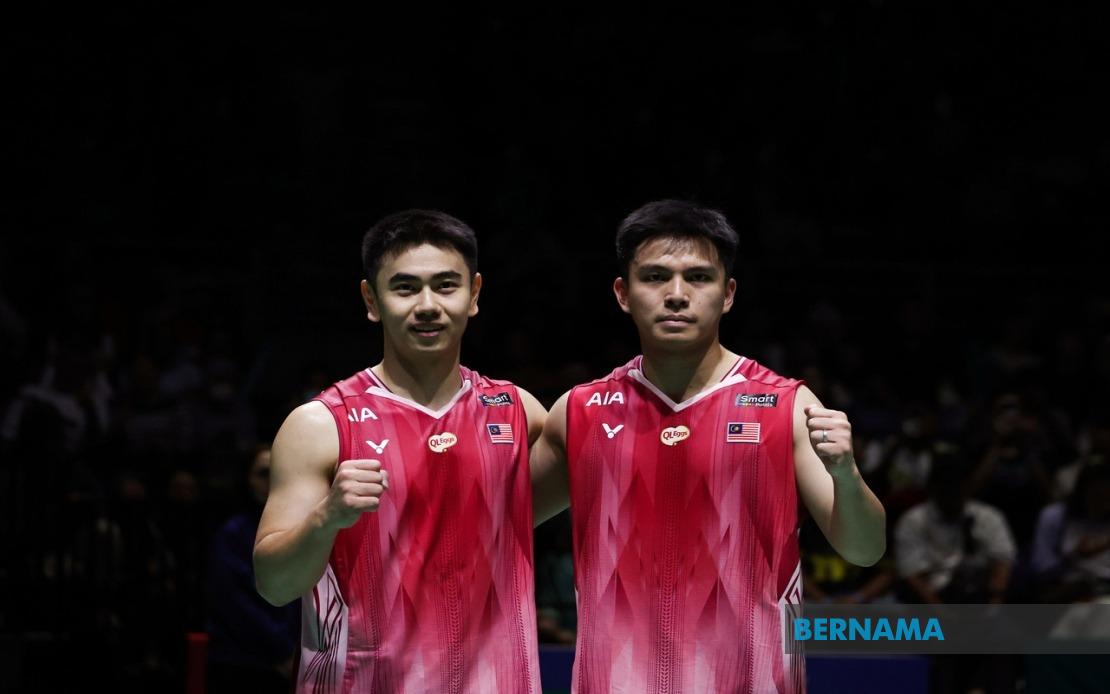
Parallel to this success, the fifth-seeded men's doubles duo of Goh Sze Fei-Nur Izzuddin Rumsani secured their passage to the semifinals following an extended battle against American opponents Chen Zhi Yi-Presley Smith. The encounter stretched the full distance, lasting 50 minutes before the Malaysians emerged victorious with a 21-18, 15-21, 21-13 scoreline. The match showcased the mental resilience required at elite levels of badminton, with the Malaysian pair recovering from a second-set loss to dominate the final set decisively.
The victory marks the fourth consecutive triumph for Sze Fei-Nur Izzuddin over the American pairing, indicating a growing psychological advantage and stylistic superiority that the Malaysians have developed through repeated encounters. Such head-to-head dominance often translates to increased confidence when facing the same opposition, and the Malaysian pair's consistency in this regard validates their status as one of the region's premier men's doubles teams.
Yet the semifinal stage presents a considerably tougher obstacle in the form of South Korea's top-seeded partnership Kim Won Ho-Seo Seung Jae. This clash carries particular significance given that the two pairs currently share an evenly split head-to-head record of 2-2, with the Malaysians holding bragging rights from a recent victory over the world number one ranked pair at the Indonesia Open 2026. That triumph on home soil in Indonesia demonstrates that Sze Fei-Nur Izzuddin possess the capability to compete at the absolute highest level and overcome the world's finest combinations when conditions align.
The Korean top seeds earned their position as tournament favourites by eliminating another Malaysian pairing, Kang Khai Xing-Aaron Tai, in the quarterfinals. The dominant 21-13, 21-10 straight-sets victory underscored the quality of Kim Won Ho-Seo Seung Jae, who entered the tournament with formidable credentials and without conceding a set to Kang and Tai. This result does not diminish the Malaysian pairs' achievement, but rather illustrates the stratified nature of elite badminton competition where the gap between top-ranked and mid-ranked teams remains substantial.
For Malaysian badminton enthusiasts and stakeholders, the presence of both pairs in the semifinals represents a meaningful achievement that highlights the nation's continued investment in developing world-class doubles players. The discipline has historically been a strength for Malaysia, and recent performances at major international tournaments, including the Japan Open, reaffirm that the talent pipeline remains robust. The coaching structures and training facilities supporting these pairs have evidently contributed to their competitive positioning.
The dual semifinal appearances also carry implications for Malaysia's broader standing within Asian and international badminton hierarchies. Success at tier-one tournaments such as the Japan Open influences world rankings, which in turn affects seeding at subsequent major events and shapes the trajectory of players' careers. Strong performances now build momentum heading into other major tournaments on the calendar, whether regional championships or global competitions.
Looking ahead, both Malaysian pairs face formidable opponents in the semifinals with contrasting circumstances. Jimmy and Su Yin enter relatively unencumbered by expectations, having already exceeded many forecasts through their quarterfinalis upset, while Sze Fei-Nur Izzuddin carry the weight of being seeded fifth and facing the tournament's standout pairing. Regardless of outcomes in the semifinals, the Malaysian badminton programme can point to these tournament results as evidence of competitive depth and the capacity to challenge established powers in global badminton.

