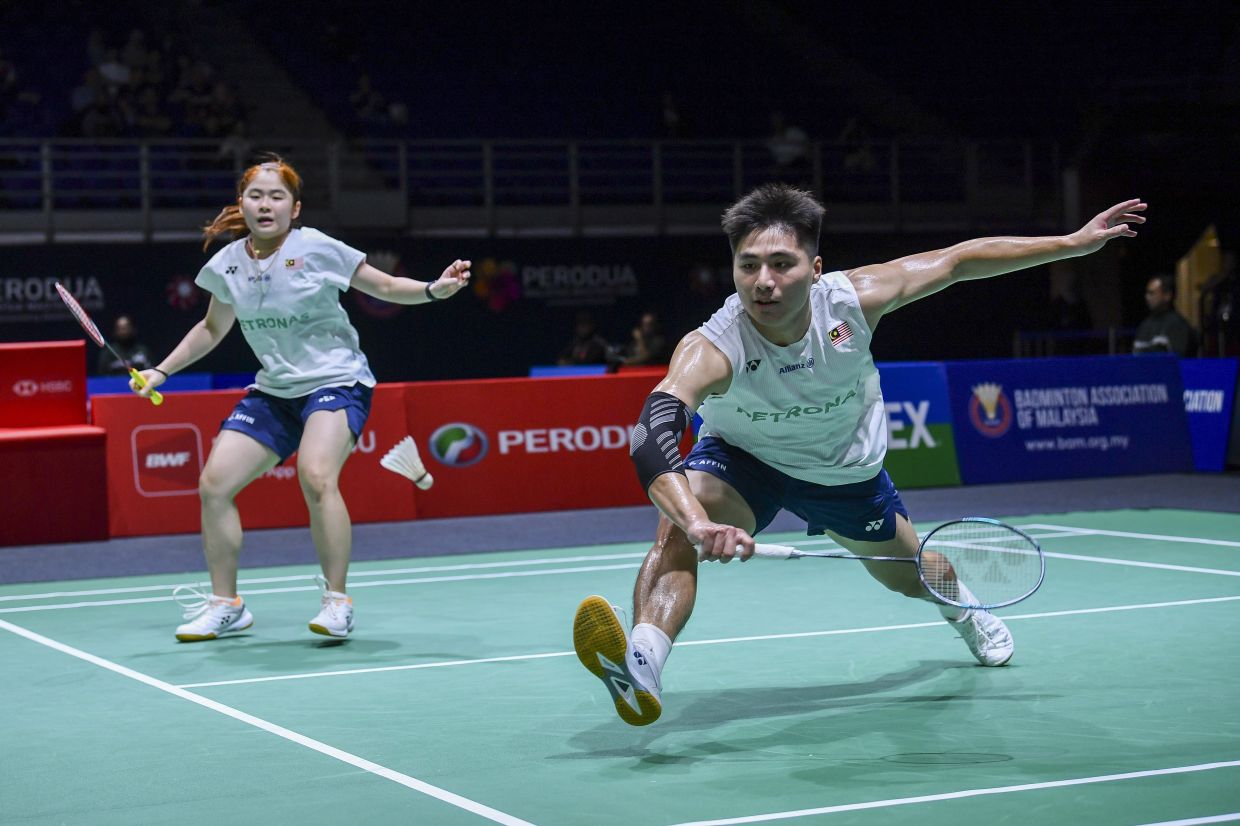
Twenty-three-year-old mixed doubles player Jimmy Wong has expressed growing confidence in his path towards Olympic glory since reintegrating into Malaysia's national badminton programme in April this year. Working alongside partner Cheng Su Yin, the shuttler views his recent return to the Badminton Association of Malaysia structure as a pivotal step in realising his goal of competing at the 2028 Los Angeles Olympics, where both athletes aim to represent the country on the global stage.
Wong's optimism stems largely from the quality of coaching and institutional support now available to him within the national set-up. Rather than burdening himself with an exhaustive list of targets that might invite unnecessary psychological pressure, the player has adopted a measured approach focused on consistent performance each time he enters the court. This pragmatic mindset reflects a maturity often lacking in younger athletes, prioritising sustainable improvement over immediate results.
Central to Wong's development is his collaboration with world-class mixed doubles coach Nova Widianto, an Olympic silver-medallist and former world champion whose credentials bring invaluable tactical and mental expertise to the partnership. The coaching relationship represents a significant upgrade for Wong, who previously lacked access to such elite-level guidance. Widianto's influence extends beyond technical instruction, helping the young player navigate the psychological complexities of competitive badminton and develop resilience during high-pressure matches.
The immediate objective for Wong and Cheng Su Yin is to break into the top 32 of the world rankings before 2024 concludes, a milestone that would unlock participation in the prestigious Super 750 and Super 1000 tournament circuits. Currently languishing at 118th in the rankings, the pair recognise that ascending this cliff requires sustained excellence across multiple competitions. These higher-tier events represent the training ground where aspiring Olympic teams build championship experience and establish themselves against the sport's elite performers.
Wong acknowledges that while his partnership with Cheng Su Yin has progressed positively through four tournaments to date, specific technical and strategic elements require refinement. This honest self-assessment suggests both players understand the considerable gap between promising potential and genuine contention. The mixed doubles category, traditionally one of Malaysia's stronger disciplines, demands flawless synchronisation, precision shot-making, and tactical acuity—qualities that develop only through repeated exposure to world-class opposition.
A particularly encouraging moment came at the Singapore Open, where the partnership executed a stunning upset against world number one pair Feng Yanzhe-Huang Dongping in the opening round. This scalp demonstrates that Wong and Cheng Su Yin possess the technical foundation and mental fortitude to challenge elite competition, even if inconsistency has prevented them from translating occasional brilliance into sustained tournament success. Their second-round elimination, while disappointing, occurred against formidable opposition and provided valuable learning opportunities.
The significance of Wong's return to the national programme extends beyond individual ambition. Malaysian badminton has undergone considerable restructuring in recent years, with the national federation attempting to rebuild competitive depth across multiple disciplines. Mixed doubles represents a strategic priority for badminton at the Paris-based Badminton World Federation, with both men's and women's doubles increasingly viewed as medal opportunities. Wong and Cheng Su Yin's progression could contribute to Malaysia's broader Olympic preparations while inspiring younger players within the domestic talent pipeline.
Wong's journey also reflects broader trends in Malaysian sports development, where overseas opportunities and foreign coaching expertise increasingly complement domestic programmes. The decision to recruit Widianto represents institutional investment in expertise beyond Malaysia's borders, acknowledging that world championship badminton demands international-standard coaching resources. This pragmatic approach contrasts with insular sports systems that resist external knowledge transfer.
The pathway to Los Angeles 2028 remains demanding and uncertain. The pair must not only achieve their ranking targets but sustain that performance across Olympic qualification windows, navigating the unpredictable nature of competitive sports where injuries, form fluctuations, and stronger rivals perpetually threaten even well-laid plans. Yet Wong's measured optimism, grounded in concrete support structures and incremental progress, suggests a player with realistic prospects of fulfilling his ambitions. The next months will prove decisive in determining whether Singapore Open heroics can translate into consistent top-32 finishes.

