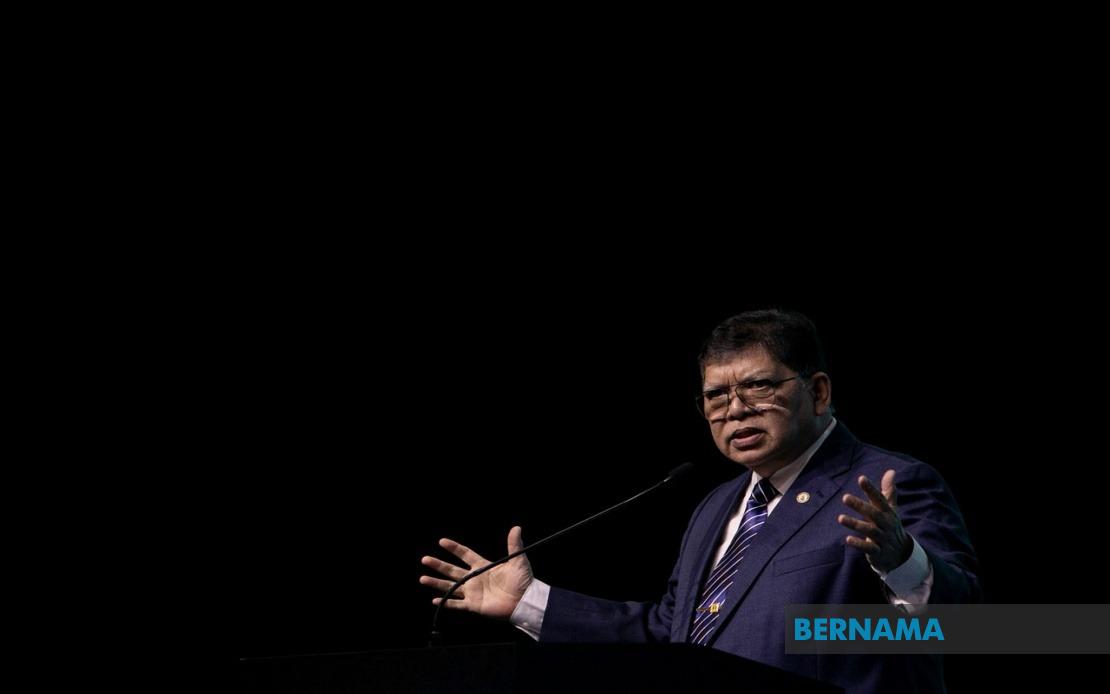
Dewan Rakyat Speaker Tan Sri Johari Abdul has identified three strategic initiatives capable of establishing robust foundations for good governance and enduring political stability in Malaysia. Speaking at the 8th World Conference on Islamic Thought and Civilisation in Ipoh on July 22, Johari articulated how Sekolah Parlimen, the National Service Training Programme (PLKN), and Youth Parliament serve as comprehensive mechanisms to develop a generation equipped to safeguard the nation's democratic institutions. Rather than viewing young Malaysians as passive recipients of existing governance structures, these programmes position them as informed custodians prepared to strengthen democracy through direct participation and critical engagement.
The Sekolah Parlimen initiative represents a deliberate effort to demystify parliamentary processes for students nationwide. By inviting secondary school representatives directly into the chambers of Parliament, the programme exposes teenagers aged 16 and 17 to live legislative debates and the mechanics of democratic decision-making. This exposure carries particular significance in an era when democratic institutions face global scrutiny and when younger generations in many countries express declining confidence in traditional governance. Johari stressed the importance of this hands-on experience, emphasizing that democracy remains vibrant and functional within Malaysia's institutional framework. The programme deliberately targets secondary school leaders, including head boys and head girls, recognising their influence within peer networks and their potential to carry understanding of parliamentary democracy back to their institutions.
Access to parliamentary proceedings through Sekolah Parlimen extends beyond symbolic gestures. The immersive nature of witnessing live debates equips students with authentic understanding of how legislation emerges from competing viewpoints, negotiation, and democratic process. For many participants from rural and underserved areas, this represents their first substantive exposure to how national decisions are formulated. Nearly 2,000 students from over 1,000 schools have participated to date, with particular emphasis placed on including rural institutions that typically lack proximity to Westminster-style legislative facilities. Johari's commitment to meeting every student cohort twice weekly demonstrates institutional acknowledgment that follow-up engagement reinforces initial exposure.
The National Service Training Programme (PLKN) operates through fundamentally different mechanisms but pursues aligned objectives. By immersing participants from diverse ethnic, religious, and socioeconomic backgrounds in a unified 45-day intensive programme, PLKN functions as what Johari characterised as a sociological incubator for national cohesion. The programme moves beyond conventional military-style physical conditioning to create sustained contact environments where young Malaysians develop genuine relationships across community divides. This informal social integration proves especially valuable in Malaysia's context, where ethnic and religious identities shape residential patterns, educational trajectories, and social networks. Structured cohabitation during PLKN forces participants to navigate differences through daily interaction rather than abstract principle.
The peer learning dimension within PLKN's 45-day framework facilitates understanding that transcends classroom-based multicultural education. Participants inevitably discover shared aspirations, concerns, and values beneath surface-level differences. This experiential learning builds the mutual empathy essential for political stability—particularly in democracies characterised by significant demographic diversity. Malaysia's historical experiences with communal tensions illustrate why programmes fostering interfaith and interethnic familiarity constitute genuine governance infrastructure rather than peripheral social activities. By designing PLKN to include participants across the socioeconomic spectrum, the programme ensures that relationships formed transcend class boundaries, building cross-cutting solidarities that strengthen social cohesion.
Youth Parliament represents the most explicitly political of the three initiatives, fundamentally restructuring how young Malaysians encounter electoral and representational processes. Unlike the first-past-the-post system governing general elections, Youth Parliament employs proportional representation, forcing participants aged 18 to 30 to engage with party formation, manifesto development, and coalition-building necessary under proportional systems. This pedagogical approach teaches practical political literacy while exposing participants to electoral alternatives that some argue better represent diverse viewpoints within plural societies. By requiring candidates to articulate party platforms and explain how their representatives embody specific constituencies, Youth Parliament encourages the deliberative thinking characteristic of mature democratic participation.
The proportional representation model employed in Youth Parliament carries particular salience for Malaysian political discourse, where ongoing debates examine whether first-past-the-post adequately represents the nation's demographic complexity. By allowing youth to experience proportional representation firsthand, the initiative generates informed perspectives grounded in practical experience rather than abstract theory. Participants develop understanding of coalition dynamics, minority representation, and the negotiation required to transform electoral mandates into functional governance arrangements. This experiential knowledge becomes valuable whether future electoral reforms occur or whether participants simply become more sophisticated voters capable of evaluating competing electoral architectures.
Collectively, these three initiatives construct an integrated developmental pathway for civic competence across adolescence and young adulthood. Sekolah Parlimen introduces parliamentary mechanics during secondary education when institutional frameworks prove formative. PLKN follows, either contemporaneously or shortly after, embedding intercommunal relationships precisely when identity formation remains fluid. Youth Parliament subsequently engages slightly older participants in electoral competition and governance representation, building on foundational understanding of both institutional function and social diversity. This sequencing reflects sophisticated understanding that civic formation requires multiple reinforcing experiences rather than isolated exposure.
The strategic coherence across these initiatives addresses a recognised challenge in democratic development: ensuring that institutional legitimacy derives not merely from inherited acceptance but from educated understanding rooted in direct experience. Youth who participate in all three initiatives develop multifaceted comprehension of how democratic governance functions, why social cohesion matters for political stability, and how their generation can contribute meaningfully to national development. This contrasts sharply with models that treat civic education as curricular content divorced from experiential engagement. Malaysian policymakers have apparently recognised that sustainable democratic stability requires citizens—particularly younger cohorts—who possess both intellectual understanding of governance principles and intuitive comfort with institutional processes through repeated exposure.
Implementing these programmes at scale presents administrative challenges that extend beyond parliamentary budgeting. Coordinating Sekolah Parlimen requires sustained parliamentary capacity beyond core legislative functions, necessitating dedicated staffing and scheduling infrastructure. PLKN's 45-day immersion demands substantial facilities management and personnel. Youth Parliament requires ongoing organisation, venue provision, and facilitation. Yet the investments reflect considered prioritisation of democracy-building infrastructure. For Malaysia specifically, investing in youth civic engagement particularly addresses concerns about political polarisation and communal fragmentation that threaten stability. These initiatives signal that governance stability derives not from restricting political participation but from expanding, deepening, and diversifying engagement beginning during youth. By positioning young Malaysians as active practitioners of democracy rather than future inheritors of existing arrangements, Johari and supporting policymakers have articulated a vision of political development grounded in sustained institutional strengthening through generational renewal.

