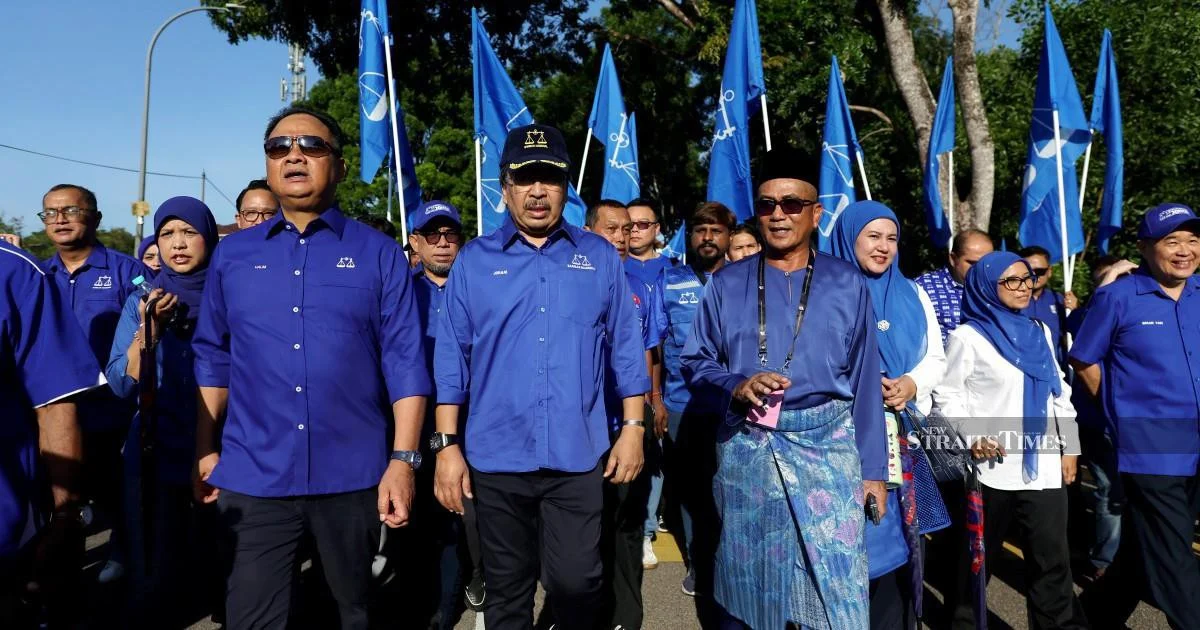
The Umno vice-president Datuk Seri Johari Abdul Ghani's appearance at the Taman Pelangi Indah community hall underscores the Barisan Nasional coalition's strategic focus on consolidating support in the Tiram seat as voting draws closer. His direct involvement in the campaign reflects the BN's broader effort to mobilise senior leadership across constituencies deemed critical to the coalition's electoral prospects in Johor.
The Tiram seat represents a microcosm of BN's challenge in the current Johor election cycle, where the coalition faces mounting pressure from resurgent opposition forces and shifting voter sentiment across urban and semi-urban constituencies. Barisan Nasional's reliance on senior party figures such as Johari to physically campaign in specific electoral divisions demonstrates the coalition's recognition that ground-level engagement remains essential, particularly in constituencies where historical support may have begun to waver.
Johari's status as Umno vice-president carries particular weight in Johor politics, given Umno's traditional dominance in the state and the party's historical claim to represent Malay-Muslim interests through the broader BN framework. His presence at a community gathering signals confidence in the candidacy whilst simultaneously reinforcing the hierarchical structure of BN's campaign machinery, where senior figures parachute into contested seats to energise local party machinery and undecided voters.
The choice of Taman Pelangi Indah, a residential community hall, suggests the BN's intent to reach grassroots constituencies through intimate gatherings rather than relying solely on mass rallies. This tactical approach acknowledges evolving voter preferences for direct dialogue with political representatives, particularly among younger and more volatile voting blocs who may demand substantive engagement on local governance issues rather than abstract party messaging.
For Malaysian observers tracking the broader political landscape, Johor's electoral dynamics carry implications extending beyond state boundaries. As Malaysia's second most populous state and a crucial economic hub, Johor's voting patterns frequently signal broader shifts in national political alignment. The presence of Umno's senior echelon in constituencies such as Tiram indicates that BN leadership views the state's electoral outcome as consequential for the coalition's standing nationally and its ability to claim legitimacy in any future federal government configuration.
The Tiram contest also reflects persistent geographical variations in political loyalty within Johor. Whilst some constituencies remain BN bastions, others have become genuinely competitive, necessitating higher levels of resource deployment and strategic attention. When senior party officials visit specific seats, it frequently signals internal assessments suggesting either vulnerability requiring urgent remedial action or strategic opportunity worth capitalising upon before opposition consolidates gains.
From a voter perspective, the appearance of prominent national figures like Johari often serves dual purposes: demonstrating state-level importance and creating momentum through media coverage. However, such visits succeed only when tethered to substantive engagement with local issues—infrastructure deficits, economic opportunities, service delivery concerns—that determine electoral calculations for most voters. The efficacy of Johari's campaign visit ultimately depends on whether the BN's Tiram candidate can translate senior leadership visibility into tangible commitments addressing constituent priorities.
The broader context reveals Barisan Nasional's ongoing adaptation to electoral realities where demographic changes, urbanisation, and higher voter sophistication demand more sophisticated campaign tactics than traditional patronage networks alone provide. Johor, with its mix of urban, suburban, and semi-rural constituencies, exemplifies this complexity. Senior party figures' hands-on involvement in specific seats suggests BN recognises it cannot assume traditional support bases remain immobile.
As the Johor election progresses, such campaign activities will likely intensify across constituencies identified as electorally critical. Johari's visit to Tiram represents one data point in a larger pattern of coalition resource allocation, revealing where BN leadership perceives the greatest stakes or vulnerability. For voters in Tiram and adjacent constituencies, such high-profile political engagement provides opportunity to articulate grievances and expectations directly to those wielding significant party influence, even if translating that access into policy outcomes remains perpetually uncertain.

