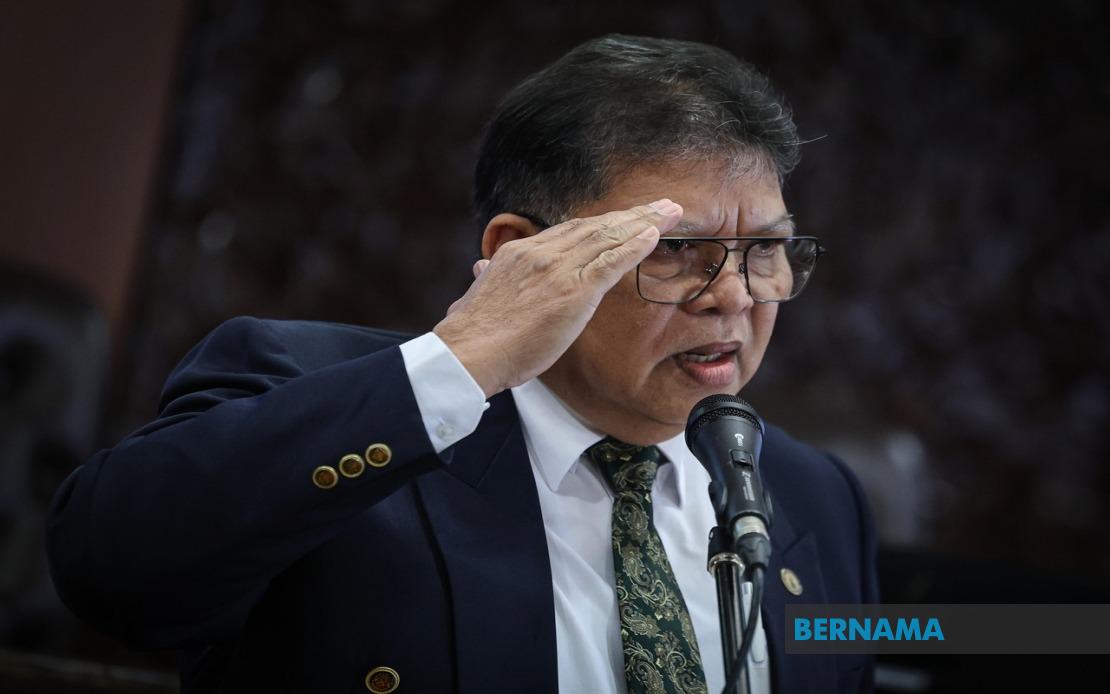
Dewan Rakyat Speaker Tan Sri Johari Abdul has made a compelling case for fundamentally restructuring Malaysia's electoral system, proposing the adoption of proportional representation as a means to protect minority voices and foster a more inclusive parliamentary body. Speaking at the Harmony Symposium held at the Parliament building, Johari articulated a forward-looking vision grounded in demographic realities that he believes should shape the nation's governance architecture over the coming decades.
The proposal emerges from a straightforward but sobering demographic projection. According to Johari's analysis, Bumiputera Malays are expected to comprise 77 per cent of Malaysia's population by 2050, a trajectory that raises critical questions about minority representation in a first-past-the-post electoral system where geographical concentration of voters determines electoral outcomes. Under the current constituency-based arrangement, this demographic shift threatens to render minorities increasingly irrelevant in parliamentary contests across most electoral divisions, where they would rarely constitute a majority capable of influencing electoral results.
Johari's concern extends beyond mere numerical representation. His intervention reflects a deeper anxiety about social cohesion and political stability in a rapidly diversifying nation that is simultaneously experiencing demographic consolidation. If minority communities lose meaningful parliamentary representation, he argues, the consequences would ripple through society far beyond the legislative chamber. The prospect of silenced voices and unaddressed grievances creates conditions for resentment and disconnection, undermining the inclusive democracy that Malaysia aspires to maintain.
The Speaker framed his position within a broader philosophical argument about temporal perspective and national planning. Rather than fixating on contemporary political concerns or historical grievances, Johari urged policymakers to adopt a genuinely forward-looking stance that contemplates Malaysia's challenges across the next century. This temporal reorientation represents a significant rhetorical move, positioning electoral reform not as a concession to present-day demands but as essential preparation for manageable governance across generational timescales.
Malaysia's ethnic landscape adds another layer of complexity to this debate. With 77 distinct ethnic groups residing within its borders, the nation confronts challenges of minority representation that extend far beyond the historically dominant Malay-Indian-Chinese framework. A proportional representation system could theoretically accommodate the political representation of smaller communities whose voices currently struggle to register within a majoritarian system, creating pathways for more granular political participation and ensuring that parliamentary diversity genuinely reflects demographic reality.
The Speaker's intervention gains additional significance through his positioning as Dewan Rakyat Speaker rather than as a partisan politician. As the custodian of parliamentary procedure and an institutional voice, Johari's endorsement of proportional representation carries weight beyond typical political advocacy. His framing positions electoral reform as a technical governance question essential for democratic functionality rather than a zero-sum political calculation.
Supporting Johari's initiative was Syahredzan Johan, chairman of the Malaysia Cross-Party Parliamentary Group on Racial and Religious Harmony and Member of Parliament for Bangi. The involvement of a cross-party parliamentary working group signals that proportional representation discussions have transcended narrow partisan boundaries and emerged as a matter commanding attention across ideological lines. This cross-party engagement suggests that demographic and representational concerns are shaping political consensus in ways that traditional party divisions may not fully capture.
Syahredzan articulated an ambitious agenda for transforming Malaysia's approach to racial and religious harmony, positioning the Harmony Symposium as a catalyst for translating conceptual commitments to inclusivity into concrete policy mechanisms and legislative reforms. The working group's strategic emphasis on forging cooperation between Parliament, government agencies, civil society organizations, and educational institutions reflects recognition that electoral architecture alone cannot sustain harmony; systemic change across multiple institutions remains essential.
The proportional representation proposal inevitably provokes practical questions about implementation that extend beyond the original proposal. Such a system would require substantial constitutional amendments and would fundamentally alter the mechanics of Malaysian electoral politics. Coalition-building and government formation would likely become more complex, potentially favoring multi-party alliances over single-party majorities. The implications for political stability, executive efficiency, and coalition management remain contested terrain where scholars and practitioners hold divergent views.
Regional context adds further dimension to this discussion. Several neighbouring democracies employ proportional or mixed electoral systems, providing instructive examples of both possibilities and pitfalls. Indonesia's increasingly sophisticated proportional system and Thailand's various electoral experiments offer laboratories from which Malaysian policymakers might extract lessons, though each nation's unique political history and constitutional framework necessarily shapes electoral outcomes and institutional dynamics.
For Malaysian minority communities—whether Indian, Chinese, Indigenous or other groups—Johari's proposal represents acknowledgment that current electoral arrangements create systemic disadvantages that pure demographic trends cannot remedy. Yet the proposal also implicitly challenges these communities to articulate interests and mobilize political participation in ways that transcend geographical concentration, requiring new political organizational strategies and coalition-building approaches.
The timing of this intervention warrants consideration alongside broader conversations about Malaysia's political future. As the nation navigates transitions in generational leadership and grapples with citizens' expectations for responsive governance, electoral architecture becomes a crucial variable in determining whether democratic institutions can accommodate evolving demographic realities and maintain political legitimacy across diverse communities. Johari's proposal, whether ultimately adopted or not, signals that Malaysia's political elite increasingly recognize that governance systems designed for yesterday's demographics require substantial modification to serve tomorrow's nation.

